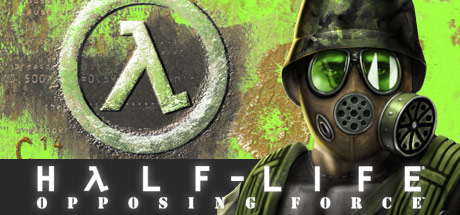
Half-Life: Opposing Force
Return to the Black Mesa Research Facility as one of the military specialists assigned to eliminate Gordon Freeman. Experience an entirely new episode of single player action. Meet fierce alien opponents, and experiment with new weaponry. Named 'Game of the Year' by the Academy of Interactive Arts and Sciences.
🎮Game Details
💬What Players Say
"It definitely peaks in the first half but you can still enjoy the second half if you turn on God mode and start roleplaying as a revived Aztec warrior shanking random black ops soldiers."
"if you liked original half life this version is for you, game does really good job for expanding lore of half life and black mesa incident and brings brand new mechanics,weapons that were not presented in original half life but also original atmosphere of game is well preserved"
"Pretty good expansion. Nice levels, some new weapons and enemies. They even made their own tutorial bootcamp, which is quite humorous with all the berating from sergeants...."
📝Editorial Analysis
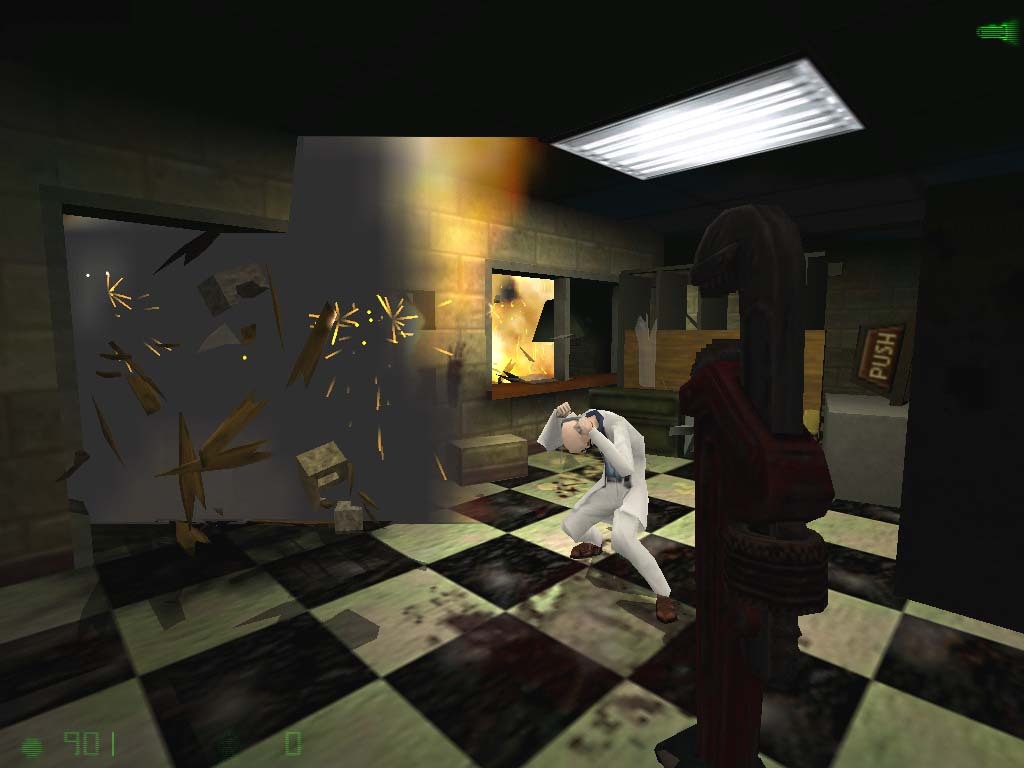
The bootcamp. That’s where it hits you—not with a crowbar or a headcrab, but with a sergeant’s voice crackling over a tinny PA, barking orders while your boots crunch on gravel and your rifle feels too heavy, too real. You’re not Gordon Freeman. You’re Corporal Adrian Shephard: nameless, rank-bound, already sweating under gear that hasn’t been properly fitted—just like the official description says you’re “one of the military specialists assigned to eliminate Gordon Freeman,” and just like player review 3 notes the “humorous” yet razor-edged tutorial bootcamp, all berating sergeants and unvarnished institutional pressure. There’s no hero music. No cutscene close-up. Just heat, static, and the low dread of being expendable before you’ve even crossed the threshold of Black Mesa.


That’s the feeling: institutional vertigo. Not fear of aliens—not yet—but the slow, grinding realization that you’re a cog dropped into a machine already spinning out of control. The original Half-Life made you feel like science had gone wrong; Opposing Force makes you feel like command has gone wrong. You’re not uncovering a mystery—you’re inside the cover-up, holding the rifle they handed you without asking why. The player review 1 line about roleplaying “a revived Aztec warrior shanking random black ops soldiers” isn’t just absurd humor—it’s a desperate, cathartic lurch away from that suffocating chain of command. And when review 2 praises how the game “expands lore” while introducing “brand new mechanics, weapons that were not present,” it’s not about novelty—it’s about disorientation. Every new gun, every unfamiliar alien, every flicker of corrupted HUD text deepens the sense that you don’t belong here, even as you’re ordered to enforce order.
Terra Formars shares that same visceral claustrophobia of hierarchy collapsing under biological horror. Its sci-fi setting isn’t about wonder—it’s about sealed habitats, rigid protocols, and bodies mutating in violation of every tactical manual. Like Shephard navigating Black Mesa’s decaying labs and barracks, the Terra Formars crew fights not just monsters, but the weight of mission parameters that no longer apply. Both live in the dimension of Body Horror & Occult not as spectacle, but as systemic failure—flesh rewriting itself while command channels go silent. And both weaponize Tactical Warfare not as clean choreography, but as frantic, improvised resistance against forces that mock doctrine.
Planetes resonates in its Adult & Dark Seinen gravity—the quiet exhaustion of professionals doing grim, necessary work in zero-G, far from glory. Its astronauts don’t shout battle cries; they calculate orbital decay, patch suits, and bury colleagues in vacuum. That same weary professionalism echoes in Shephard’s first half: the methodical clearing of corridors, the radio chatter fading into static, the way player review 1 calls the experience “peaking in the first half”—not because it’s better, but because it’s most truthful: the moment before chaos fully consumes protocol, when duty still feels like a choice, not a reflex. Both treat space—and infrastructure—not as frontier, but as fragile scaffolding holding back entropy.
Gantz: Second Stage, despite its flashier surface, anchors itself in the same Sci-Fi & Space + Body Horror & Occult axis, where power is arbitrary, rules are enforced by unseen forces, and survival demands shedding identity to become something sharper, colder. Shephard doesn’t gain powers—he gains permission to kill, then loses it, then reclaims it through sheer, brutal adaptation. Like Gantz’s unwilling recruits, he’s stripped of narrative safety, forced to reinterpret every ally, every weapon, every corridor as potentially hostile. There’s no arc of mastery—only adaptation under erasure, which is exactly what review 2 means by “expanding lore”: not adding backstory, but unraveling certainty.
Who loves this? The person who replays the bootcamp level three times—not for the guns, but to hear the sergeant yell “Eyes front! You’re not civilians anymore!” and feel their own pulse jump. The reader who underlines passages in Planetes where Hachirota stares at a cracked helmet visor and thinks, This is all we get. The viewer who watches Terra Formars’s autopsy scene not flinching, but nodding—because yes, that’s how institutions really fall: not with explosions, but with a single mislabeled vial, a skipped checklist, a boot hitting gravel one second too late. They don’t want heroes. They want pressure. They want the hum of failing air recyclers, the grit in the mouth, the moment the chain of command snaps—and the terrifying, liberating silence that follows.
→36 Anime That Match the Vibe

Connected through 2 aesthetic dimensions.

Connected through 3 aesthetic dimensions.

Black Mesa’s crumbling corridors—where soldiers scramble past twitching, half-digested corpses—echo Terra Formars’ Mars colony, where cockroach-human hybrids erupt from sealed vents with chitinous limbs and unnerving intelligence. Unlike most sci-fi, both weaponize *Body Horror & Occult* not just for shock, but to interrogate militarized hubris: Corporal Shepard’s deteriorating psyche mirrors the astronauts’ grotesque biological unraveling during the *Terra Formars* “Mars” arc. That shared dread—of flesh as battlefield, of evolution as enemy—is what makes their dark synergy so unsettlingly precise.

Connected through 2 aesthetic dimensions.

Black Mesa’s crumbling corridors echo Planetes’ silent orbital debris fields—both stage intimate human crises against indifferent cosmic scales. Where Opposing Force weaponizes tactical warfare to expose military bureaucracy’s moral rot, Planetes’ Eureka-class salvage crew treats space junk with quiet reverence, grounding its sci-fi in blue-collar dignity. This dark seinen resonance isn’t about spectacle, but how systems fail people—and how people persist anyway.

Connected through 3 aesthetic dimensions.

Black Mesa’s flickering emergency lights cast long shadows as Corporal Shephard reloads under alien fire—suddenly, Momo’s gravity-defying battle suit ignites in *To Love Ru Darkness 2nd Specials*, warping physics mid-combat. Unlike most sci-fi pairings, this resonance isn’t thematic but kinetic: both weaponize tactical warfare through disorienting spatial rupture—Shephard navigating collapsing labs, Momo bending battlefield geometry during the *Specials*’ zero-G skirmish. That shared commitment to sci-fi as embodied, unstable terrain makes their collision oddly harmonious.

Black Mesa’s crumbling corridors echo Gunbuster’s claustrophobic bridge during the *Buster Machine*’s final charge—both trap protagonists in tactical warfare where every second demands split-second spatial judgment. Unlike most sci-fi pairings, this resonance isn’t about shared aliens or tech, but how each weaponizes *space*: Black Mesa’s vertical, labyrinthine decay forces brutal close-quarters adaptation, while Gunbuster’s vacuum-bound dogfights turn orbital geometry into visceral choreography. That shared tension—between human fragility and vast, indifferent scale—makes their convergence unexpectedly profound.

Black Mesa’s crumbling corridors—where Corporal Shepard scrambles past flickering emergency lights while Xen spores drift through shattered labs—echo Border’s Season 2 tactical debriefs: cramped, sweat-slicked command rooms where Trion readings spike mid-battle. Unlike most sci-fi action, both anchor spectacle in granular warfare logistics—ammo counts, shield cooldowns, squad comms static—making every corridor breach or Neighbor incursion feel tactically urgent. That shared commitment to grounded, system-driven tension turns alien invasion into intimate, pulse-quickening procedure.

Black Mesa’s crumbling corridors—where Adrian Shephard fights alien incursions amid flickering emergency lights—echo the rain-lashed ruins of Midgar in *Advent Children*, where Cloud battles geostigma-corrupted foes amid decaying infrastructure. Unlike most sci-fi action, both commit to tactical warfare: Shephard’s squad-based suppression tactics mirror Cloud’s precise, physics-aware combat against Safer Sephiroth’s aerial assaults. This resonance isn’t just aesthetic—it’s existential: two wounded worlds rebuilding amid lingering cosmic threats, where space-age decay feels tragically intimate.






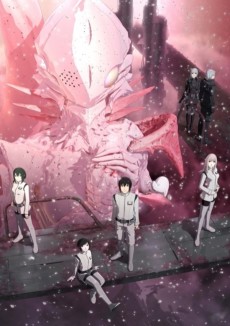













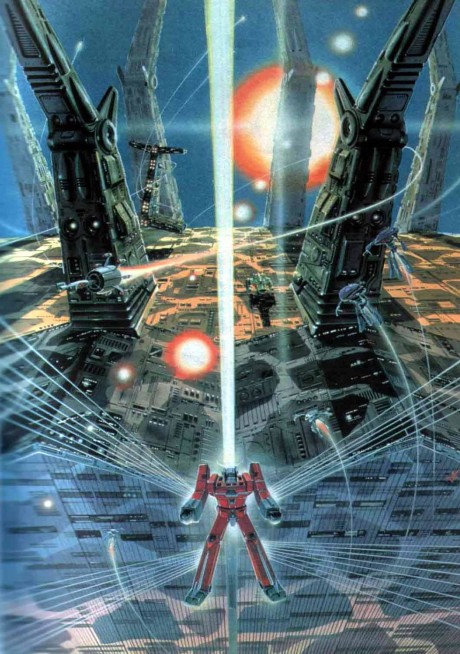

Match Dimensions Explained
❓Frequently Asked Questions
Why does Terra Formars keep coming up when I search for anime like Half-Life: Opposing Force?
Terra Formars nails the 'military squad vs. grotesque alien bioweapons in a claustrophobic, high-stakes facility' vibe — think the Black Mesa bootcamp tutorial meets the Mars base's biomechanical horrors. When Kozuka’s squad gets overrun by mutated cockroaches in the ventilation shafts or Shinjuku’s soldiers deploy flamethrowers and pulse rifles against hulking, regenerating foes, it mirrors Opposing Force’s tactical chaos and body horror escalation.
Is there an anime adaptation of Half-Life: Opposing Force?
No — Valve never licensed or produced an official anime adaptation of Opposing Force (or any Half-Life game). But fans often point to Gantz: Second Stage because of its grounded military response to sudden alien incursions: the black-ops Gantz team uses experimental gear, suffers brutal casualties mid-mission, and faces enemies with adaptive biology — much like HEV-suited Marines scrambling after Xen spores breach containment at Black Mesa.
How does Planetes compare to Terra Formars for Opposing Force vibes?
Planetes leans into the 'adult, tense, procedural realism' side — imagine the Opposing Force bootcamp scenes extended into orbital salvage ops: Hachirota’s crew debates ethics while suiting up, calibrates thrusters under pressure, and deals with lethal micrometeoroid impacts like they’re hostile headcrabs. Terra Formars is more visceral and gory; Planetes is quieter but just as morally weighty and tactically precise.
What’s the best anime like Opposing Force if I want that ‘military bootcamp + escalating alien threat’ mood?
Terra Formars is your top pick — especially the Mars arc where the squad drills relentlessly, gets chewed out by sergeants over comms (just like Opposing Force’s hilarious, abusive bootcamp), then faces off against engineered horrors that evolve mid-fight. The way characters reload, flank, and adapt using limited ammo and terrain? Pure Black Mesa Special Forces energy.