
Parasyte -the maxim-
They arrive in silence and darkness. They descend from the skies. They have a hunger for human flesh. They are everywhere. They are parasites, alien creatures who must invade–and take control of–a human host to survive. And once they have infected their victims, they can assume any deadly form they choose: monsters with giant teeth, winged demons, creatures with blades for hands. But most have chosen to conceal their lethal purpose behind ordinary human faces. So no one knows their secret–except an ordinary high school student. Shin is battling for control of his own body against an alien parasite, but can he find a way to warn humanity of the horrors to come?
(Source: Del Rey)
📺Anime Details
📝Editorial Analysis
The first time Shinichi Izumi wakes up with his right hand talking—not whispering, not pleading, but reasoning, calm and clinical, dissecting human morality like a specimen under glass—that’s when the floor drops. Not from shock, but from vertigo: the world hasn’t changed, but the rules of selfhood just dissolved. His fingernails are still his. His heartbeat is still his. But the voice in his skull? That’s Migi. And it’s already calculating the optimal way to kill the man standing three meters away—because he looked at Shinichi wrong.
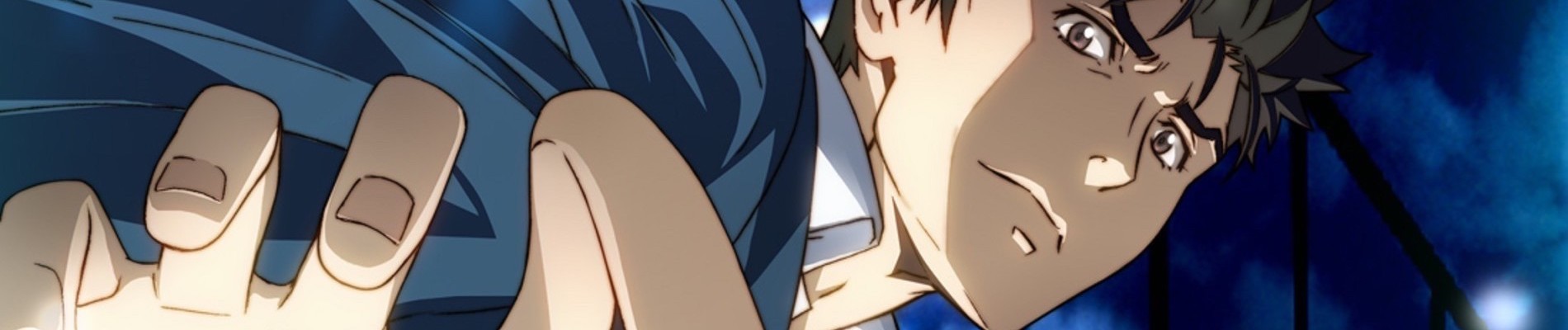
That’s the core vibration of Parasyte -the maxim-: not dread of monsters, but the slow, chilling uncertainty of the boundary between “me” and “not-me.” It doesn’t scream horror—it breathes it. You feel it in the silence after a parasite peels off a human face like latex, in the way Shinichi flinches at his own reflection, wondering if the hesitation in his blink is his, or if something else is learning to mimic hesitation. This isn’t alien invasion as spectacle. It’s alien cohabitation—a psychological siege waged in grocery aisles, high school stairwells, and the quiet hum of a refrigerator at 2 a.m. The atmosphere isn’t oppressive because of gore (though there’s plenty), but because every glance feels surveilled—not by enemies, but by the terrifying possibility that you might be the surveillance. It makes you question agency, empathy, even hunger—not as urges, but as evolutionary scripts you’ve never opted into.
The Witcher 3: Wild Hunt resonates with this same weight of coexistence. Geralt doesn’t just slay monsters—he negotiates with them, grieves them, shares wine with them. Like Shinichi, he carries a non-human consciousness inside him (not parasitic, but integrated: his mutations, his memories, his very physiology blurred by magic and trauma). The game’s emotional narrative thrives on moral ambiguity where survival demands compromise—not just of ethics, but of identity. A player review notes how the DLC arrives 11 years later, deepening Ciri’s arc—not as fan service, but as proof that identity isn’t fixed; it accrues, fractures, and reassembles across time. That’s Shinichi’s journey too: not “becoming human again,” but learning to live inside a self that’s irrevocably hybrid.
Vampire: The Masquerade - Bloodlines hits even closer to the body horror nerve. Its description explicitly names Body Horror & Occult, and its players scramble for GOG versions just to access the unofficial patch—a testament to how deeply the game’s broken, lived-in systems mirror Parasyte’s central tension: your body is no longer neutral ground. Every vampire power warps flesh, every feeding choice risks frenzy, every social interaction is a performance hiding rot. One review bluntly warns about the Steam version’s instability—echoing Shinichi’s constant low-grade panic that his own nervous system might betray him mid-sentence. Both demand you inhabit a form that’s simultaneously weapon and wound, where transformation isn’t liberation—it’s negotiation with a hostile biology.
S.T.A.L.K.E.R.: Shadow of Chernobyl, meanwhile, grounds that unease in raw, environmental dread. Its Zone isn’t fantasy—it’s irradiated, decaying, real-feeling. You fear anomalies not because they’re flashy, but because they warp physics silently, unpredictably: a shimmer in the air, a sudden weightlessness, then your limbs twist wrong. Its description says you fear “radiation, anomalies and deadly creatures”—but what lingers is the fear of your own perception failing. Like Shinichi staring at his hand, wondering if the tremor is fatigue or Migi testing control, S.T.A.L.K.E.R. forces you to distrust terrain, light, even your HUD. A player calls the map “big and beautiful”—but beauty here is menacing, layered with invisible threats. That’s Parasyte’s urban fantasy: Tokyo looks ordinary. Which makes the moment a classmate’s smile lingers half a second too long absolutely paralyzing.
This pairing isn’t for fans of clean heroics or tidy allegories. It’s for the person who replays Geralt’s conversation with the Bloody Baron not for lore, but to hear the crack in his voice when he admits he failed his daughter—and recognizes that same failure in himself. It’s for the player who boots up S.T.A.L.K.E.R. not for guns, but to stand in a ruined gas station at dawn, listening to the wind whistle through broken glass, feeling small, exposed, and weirdly awake. It’s for the reader who underlines Shinichi’s line—“I’m not a monster. But I’m not just human anymore either.”—and closes the book, then stares at their own hands, waiting for the silence to speak back.
🎮125 Games That Match the Vibe































Match Dimensions Explained
❓Frequently Asked Questions
Why is Vampire: The Masquerade - Bloodlines listed as similar to Parasyte -the maxim-?
Because both dive deep into body horror and moral ambiguity—like when Parasite takes over a host’s body, Bloodlines forces you to grapple with losing your humanity as a vampire, craving blood while trying to hold onto your soul. The game’s ‘Blood Potency’ system and degeneration mechanics mirror Parasyte’s visceral tension between control and corruption, especially in scenes where your character physically mutates or loses sanity during feeding.
Is there a Parasyte -the maxim- video game adaptation?
No—there’s no official Parasyte video game adaptation. But if you’re craving that same dark, psychological body-horror vibe with mature themes, Vampire: The Masquerade - Bloodlines (74 score) nails it: its occult dread, identity crises, and morally gray choices—like choosing whether to embrace or resist your vampiric nature—hit the same emotional and thematic notes as Shinichi’s struggle with Migi.
How does S.T.A.L.K.E.R.: Shadow of Chernobyl compare to The Witcher 3 for Parasyte fans?
Both deliver adult, dark seinen storytelling—but while The Witcher 3 leans into emotional narrative and monster-slaying contracts (like Geralt tracking Ciri amid war), S.T.A.L.K.E.R. mirrors Parasyte’s oppressive atmosphere and bodily unease: anomalies twist physics, mutated creatures lurch from the fog, and your own body degrades via radiation—just like Shinichi’s constant fear of internal betrayal or physical unraveling.
What’s the best game like Parasyte -the maxim- if I want that tense, paranoid survival vibe?
S.T.A.L.K.E.R.: Shadow of Chernobyl is your strongest match—it’s all about paranoia made tangible: scanning the Zone with your Geiger counter, dodging invisible anomalies that warp limbs or melt flesh, and watching other stalkers mutate mid-fight. That constant dread of unseen threats turning your body against you? It’s straight out of Parasyte’s early episodes, especially when Shinichi hears Migi’s voice for the first time in his head.