Shadowgrounds
Shadowgrounds breathes fresh air into the action genre with explosive combat sequences, an innovative weapon upgrade system, and an intriguing storyline. The adrenaline-pumping, top-down gameplay and audiovisual fireworks set the scene for this new action experience which also includes single computer (split keyboard or joystick) co-op...
🎮Game Details
💬What Players Say
"This is a fun top-down shooter. The great music tracks & visuals all help to build the tension, atmosphere & excitement as you delve into the alien horde. You are rewarded if you explore off the path a bit as there are weapons & other items off the main path...."
📝Editorial Analysis
The flicker of your flashlight cuts a trembling cone through the dark—then something skitters just beyond it, fast and wet, and the bassline drops like a trapdoor opening. You pivot, weapon raised, heart hammering not from panic but from anticipation: that split-second before the alien horde surges into view, all chitin and wrong angles, as the soundtrack swells with distorted synths and pounding percussion. This isn’t dread as paralysis—it’s dread as fuel. The official description calls it “adrenaline-pumping,” yes—but what sticks is how the player review nails it: the music and visuals don’t just accompany the action, they build tension, atmosphere & excitement as you deliberately step off the path, drawn by curiosity more than duty. That pull—the thrill of leaning into the unknown, even when the unknown is alive, hungry, and anatomically impossible—is Shadowgrounds’ pulse.
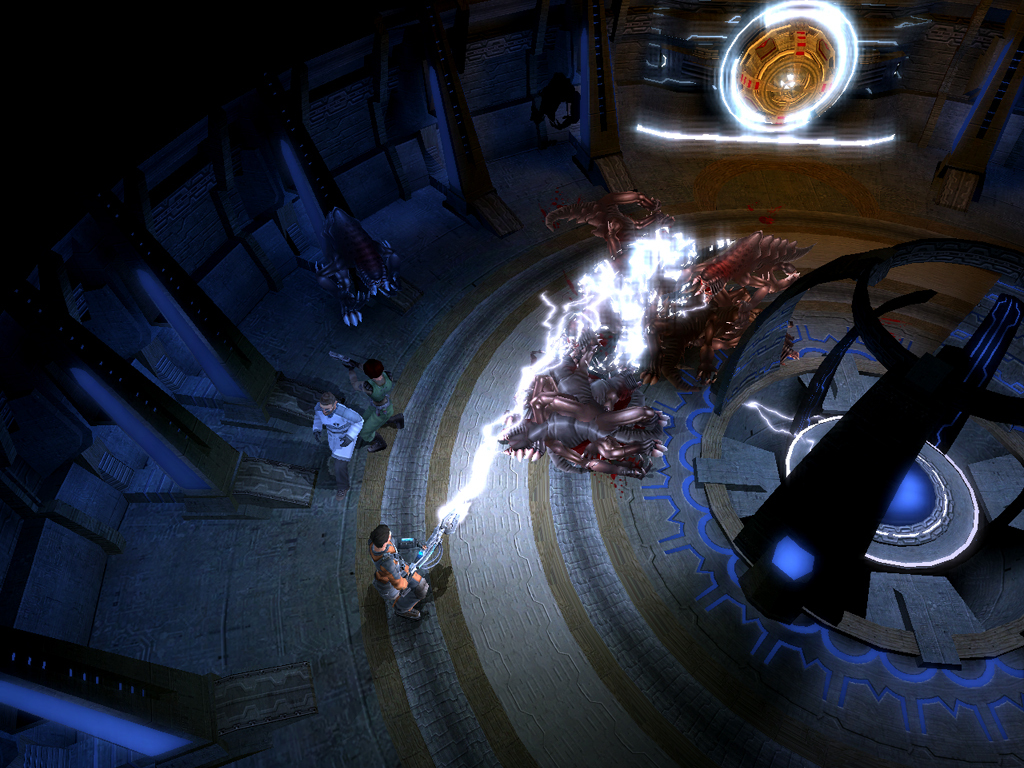
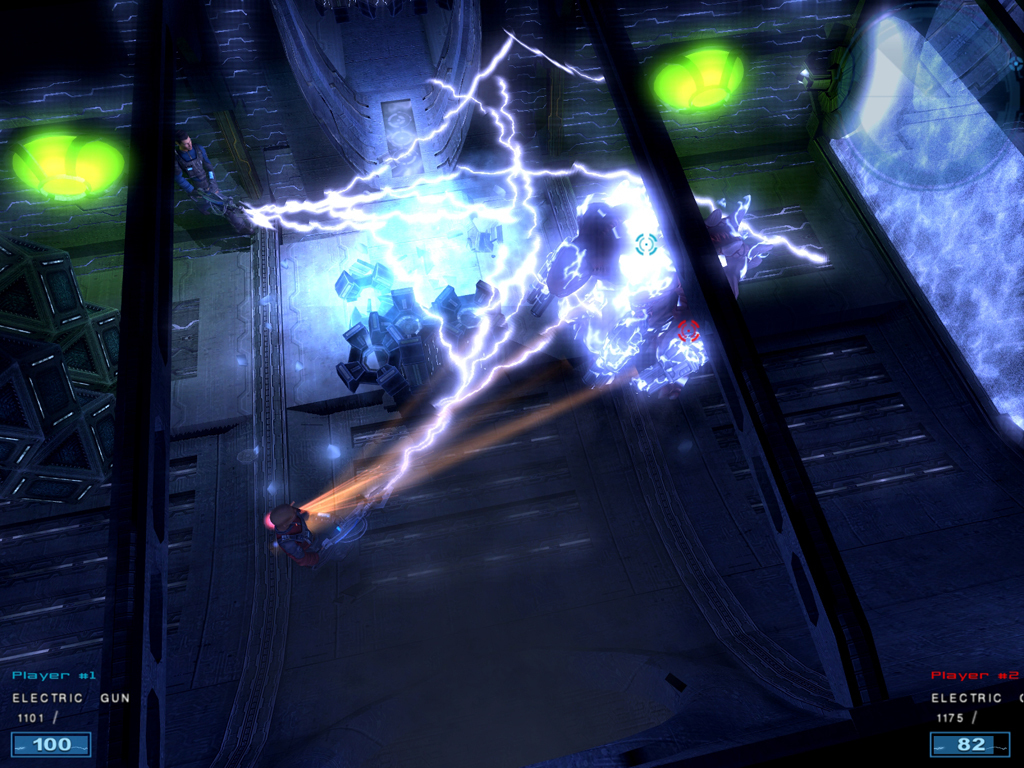
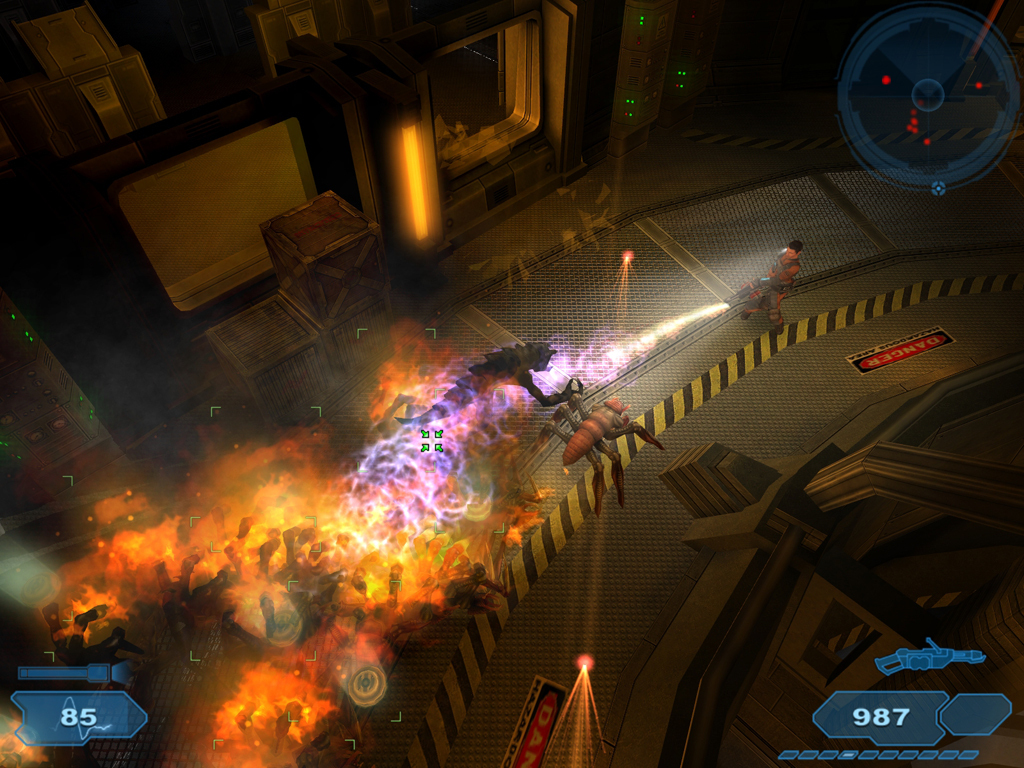
What makes this atmosphere unique isn’t its top-down perspective or its shooter mechanics—it’s how tightly it binds wonder and violation. You’re not fighting faceless grunts in sterile corridors; you’re moving through environments thick with narrative residue—abandoned labs, breached cryo-bays, ventilation shafts slick with something that glistens—and every upgrade you apply to your weapon feels less like optimization and more like adaptation, a desperate recalibration against biology gone feral. The “innovative weapon upgrade system” isn’t about stats on a menu; it’s tactile, urgent, almost surgical—you’re jury-rigging survival mid-chaos. And that “intriguing storyline”? It doesn’t unfold in cutscenes. It bleeds out of environmental decay, audio logs swallowed by static, and the way enemies move: not as AI patterns, but as emergent, twitching presences that make you question the stability of matter itself. It’s sci-fi that doesn’t ask what if?—it asks what’s already inside the walls?
That same visceral, unstable energy lives in Gintama.: Slip Arc, where the body horror isn’t just shock—it’s incongruous. A character’s arm melts into biomechanical tendrils mid-sarcastic quip; a celestial entity warps gravity while quoting Edo-period poetry. The dimension match isn’t just “Body Horror & Occult, Sci-Fi & Space”—it’s how both treat the grotesque as banal, even funny, until it isn’t. Like Shadowgrounds’ aliens, the Slip Arc’s horrors don’t announce themselves with fanfare—they leak into the frame, making the familiar feel dangerously porous.
Then there’s DAN DA DAN Season 2, where cosmic scale collides with intimate, squirming physicality. A character’s skin ripples as unseen forces reconfigure their nervous system—not as punishment, but as evolutionary friction. The shared “Sci-Fi & Space, Body Horror & Occult” dimensions here aren’t decorative; they’re structural. Both Shadowgrounds and DAN DA DAN Season 2 stage their battles in liminal zones—space stations, orbital debris fields, abandoned observatories—where the vacuum outside isn’t empty, it’s watching, and the human form is just temporary scaffolding. The tension isn’t “will I survive?” but “what will I become during survival?”
And Getter Robo: Armageddon—its brutal, geometric mecha designs clashing with organic, pulsating enemy forms—mirrors Shadowgrounds’ visual grammar exactly. No clean lines, no safe silhouettes: weapons have too many joints, enemies have too many eyes, and every explosion leaves behind viscous residue that shimmers under emergency lighting. Here, “Sci-Fi & Space” isn’t backdrop—it’s pressure, a constant gravitational and biological strain. The “Body Horror & Occult” dimension manifests not as gore, but as reconfiguration: armor plates splitting to reveal muscle fiber, cockpits flooding with bioluminescent fluid, the sense that technology and flesh aren’t merging—they’re competing for dominance in real time.
This is for the person who replays the same corridor three times—not to optimize their route, but to catch how the light catches the mucus trail on the ceiling just as the boss screeches. It’s for the viewer who rewinds Terra Formars not for plot clarity, but to study how the mandibles flex before the jump. It’s for those who feel a quiet thrill when a game or anime refuses to separate awe from unease—who crave stories where the universe isn’t hostile, exactly, but indifferently alive, humming with processes that reshape bone, circuitry, and meaning all at once. They don’t want safety. They want the flashlight beam to tremble—and then, deliberately, widen it.
→11 Anime That Match the Vibe
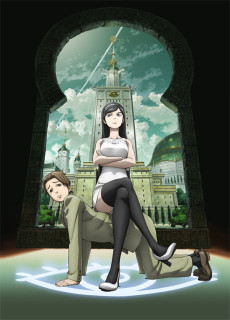
Connected through 2 aesthetic dimensions.

Connected through 2 aesthetic dimensions.
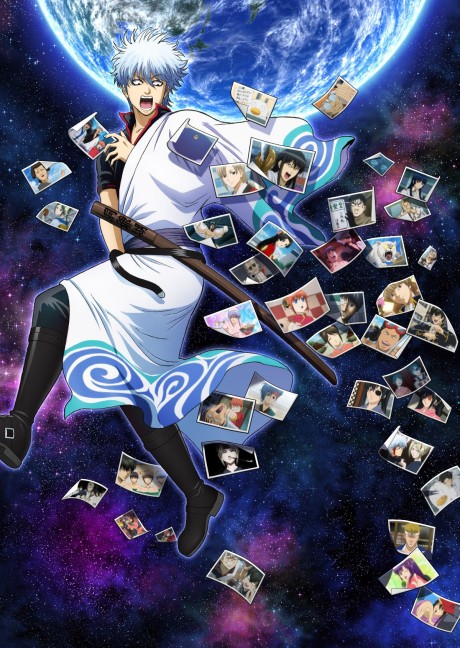
Porori’s watery onomatopoeia echoes the viscous, biomechanical ooze of Shadowgrounds’ mutated aliens—body horror made audible and tactile. Where Shadowgrounds weaponizes sci-fi dread through claustrophobic space-station corridors and escalating mutations, *Gintama.: Slip Arc* refracts that same cosmic unease through absurdist comedy: a rogue alien parasite hijacking samurai bodies mid-swordfight, all while water drips with ominous rhythm. This shared embrace of 🚀 Sci-Fi & Space as a stage for visceral, darkly playful transformation makes their resonance startlingly cohesive—not despite the tonal whiplash, but because of it.

Cockroaches scuttling across Mars’ rust-red dunes in *Terra Formars*—mutated, chitinous, and eerily intelligent—echo the biomechanical horrors swarming the derelict research station in *Shadowgrounds*. Where *Shadowgrounds* weaponizes claustrophobic top-down dread against insectoid aliens in flickering corridor light, *Terra Formars* escalates that same **Body Horror & Occult** unease into grotesque human transformations. The resonance isn’t just aesthetic—it’s visceral: both treat evolution as violent, irreversible invasion.

Ryoma Nagare’s grotesque reanimation—his flesh warping as he’s forcibly fused with Getter Robo’s biomechanical core—mirrors Shadowgrounds’ visceral body horror: infected colonists don’t just die, they *unravel*, limbs distorting into pulsating, alien biomass. Unlike most sci-fi action, both weaponize cosmic dread—space isn’t empty but *alive*, hostile, and intimately invasive. This shared obsession with the occult-infused void makes their resonance startlingly coherent: horror isn’t atmospheric—it’s anatomical, extraterrestrial, and inescapable.

The body as a site of transformation and terror — both push physical boundaries.

The body as a site of transformation and terror — both push physical boundaries.

The body as a site of transformation and terror — both push physical boundaries.

The body as a site of transformation and terror — both push physical boundaries.

A severed parasite’s twitching hand crawls across a lab floor in *Parasyte*’s chilling autopsy scene—mirroring Shadowgrounds’ grotesque, biomechanical alien corpses that writhe mid-exploding. Where *Shadowgrounds* weaponizes body horror through visceral top-down dismemberment and parasitic infestation mechanics, *Parasyte -the maxim-* deepens it with psychological dread as Migi’s symbiosis fractures human identity. Their shared sci-fi dread isn’t cosmic—it’s intimate, biological, and relentlessly terrestrial.

Match Dimensions Explained
❓Frequently Asked Questions
Why is Gintama.: Slip Arc considered similar to Shadowgrounds?
Because both lean hard into grotesque, fast-paced sci-fi chaos—like when Gintama’s Slip Arc drops you into that derelict alien ship with biomechanical tendrils and sudden body-horror transformations, mirroring Shadowgrounds’ tense corridor crawls where enemies burst from vents and your weapon upgrades (like the plasma shotgun mod) feel just as vital for survival. The shared 'Body Horror & Occult' + 'Sci-Fi & Space' dimensions aren’t just tags—they’re baked into scenes like Kagura’s mutated arm fight or the way Shadowgrounds makes you reload mid-swarm while ambient synth pulses like a dying reactor.
Is there an anime adaptation of Shadowgrounds?
No—Shadowgrounds has never been adapted into an anime. It’s a Finnish indie game (2005) with zero official manga or anime spin-offs. But if you love its vibe—tight top-down action, oppressive space-station dread, and upgrading your pulse rifle between waves—you’ll recognize that same energy in Terra Formars’ Mars base assaults or Gantz: Second Stage’s brutal, gear-focused urban combat.
How does DAN DA DAN Season 2 compare to Shadowgrounds in terms of action pacing and tone?
DAN DA DAN S2 hits *almost* the same adrenaline spike as Shadowgrounds—but swaps top-down precision for chaotic, vertical, almost slapstick energy. Think of the alien parasite fight in episode 7: bodies twist, gravity glitches, and the soundtrack slams like Shadowgrounds’ boss themes—but instead of methodically clearing rooms with upgraded shotguns, you’re dodging tentacles while yelling one-liners. Both nail ‘Sci-Fi & Space’ + ‘Body Horror & Occult’, but DAN DA DAN leans into absurdity where Shadowgrounds stays grimly tactical.
What’s the best anime like Shadowgrounds if I want that claustrophobic, upgrade-driven survival vibe?
Go straight to Getter Robo: Armageddon—it’s the closest match for that ‘cornered but kitted-out’ feeling. When Ryoma pilots the Getter Liger through collapsing asteroid tunnels, swapping between drill-mode and plasma-beam forms mid-battle, it mirrors how Shadowgrounds forces you to hot-swap weapons (like switching from flamethrower to railgun) while walls shake and alarms blare. The shared ‘Sci-Fi & Space’ + ‘Body Horror & Occult’ dimensions show up in visceral ways—like Getter’s fusion mutations versus Shadowgrounds’ infected crew turning inside-out in airlocks.