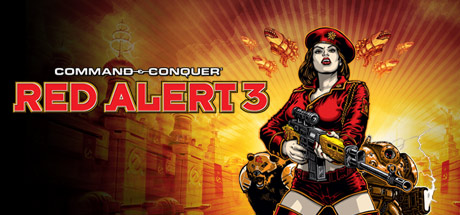
Command & Conquer™ Red Alert™ 3
The desperate leadership of a doomed Soviet Union travels back in time to change history and restore the glory of Mother Russia.
🎮Game Details
💬What Players Say
"I played hundreds of hours of this game before Steam came along, I finally have free time in my adult life."
"Honestly, I'm just here for the George Takei performance. Everything else is pretty fun, too."
"This is the game that got me into RTSs and I come back to it periodically to relive some of that nostalgia. Biggest downside is the lack of an official patch to remove the Gamespy server feature and incorporate some other way to allow friends to play together, Beyond that there's hours of fun to be had in all three campaigns."
📝Editorial Analysis
The Soviet time-travel sequence hits like a vodka shot straight to the temples—brash, burning, and weirdly celebratory. You’re not just watching history fracture; you’re hearing it: George Takei’s voice, crisp and theatrical, slicing through the chaos as if narrating a kabuki tragedy staged on a battlefield. That moment—desperate leadership rewriting time to resurrect Mother Russia—isn’t just plot. It’s tone. It’s the game’s heartbeat: absurdly earnest, emotionally overcommitted, draped in crimson banners and synth-heavy fanfare, where defeat smells like burnt steel and victory tastes like borscht served in a tank turret. One player remembers hundreds of hours before Steam existed—nostalgia, yes, but also frustration, devotion, file errors haunting their adult free time like ghosts from a lost LAN party. Another admits they’re “just here for the George Takei performance”—and that’s not irony. It’s reverence for presence, for voice-as-weapon, for performance so committed it bends reality.
This isn’t grimdark realism or sterile strategy. It’s theatrical warfare: every unit deployment feels like a stage entrance, every explosion choreographed with balletic excess. The Soviets don’t build tanks—they unveil them, with trumpets blaring and flags snapping in wind that doesn’t exist on the map. There’s no detached calculation—only urgency, pride, melodrama. You think about legacy—not just military advantage, but what it means to cling to an idea so fiercely that you’d shatter causality to keep it alive. That desperation isn’t bleak—it’s vibrant, even joyful in its extremity. It makes you feel like you’re part of something ludicrously grand, where losing a battle still earns applause if your commander delivers the line with enough gravitas. And yes, it’s deeply silly—but never mocking itself. It believes, fiercely, in its own ridiculous gravity.
World Trigger 2nd Season shares that same tactical intensity fused with survival pragmatism and crafting ingenuity. Like Red Alert 3’s engineers frantically rebuilding bases under artillery fire, Trion users calibrate gear mid-combat, improvising shields and traps with sweat on their brows and zero margin for error. Both treat war as a system you learn, adapt, and refine—not just endure. But more than mechanics, it’s the emotional weight of preparation: the quiet focus before deployment, the way a single misstep unravels everything. That shared dimension—Survival & Crafting, Sci-Fi & Space, Tactical Warfare—isn’t about lasers or timelines. It’s about the dignity in competence, the thrill of turning chaos into controlled motion.
To Love Ru Darkness 2 Specials, meanwhile, channels Red Alert 3’s Comedy & Parody, Sci-Fi & Space, Tactical Warfare DNA with uncanny precision—not through satire, but through escalation. A love triangle becomes orbital defense protocol. A misplaced kiss triggers a countermeasure cascade. The absurdity isn’t undercut; it’s amplified until physics buckle under the pressure of emotional stakes. Just like Red Alert 3’s Admiral Cherdenko ordering a battleship to launch from a submarine, To Love Ru Darkness 2 Specials treats romantic panic like a tactical emergency—deploying mecha, dimensional rifts, and bureaucratic red tape with equal seriousness. The humor lands because both commit wholeheartedly to their own internal logic—even when that logic involves a talking penguin advising nuclear policy.
And then there’s Humanity Has Declined, which mirrors Red Alert 3’s Survival & Crafting and Comedy & Parody with startling intimacy. Its world is post-collapse, but not apocalyptic—bureaucratic, whimsical, littered with half-functional relics of a forgotten order. Like Red Alert 3’s Soviet engineers jury-rigging Tesla coils from scrap metal while humming folk songs, Humanity Has Declined’s characters rebuild civilization with glitter glue and stubborn optimism. Neither flinches from decay—but neither surrenders to despair. They craft meaning, stitch by stitch, joke by joke, even as the foundations crumble. That duality—resilient absurdity—is the quiet pulse beneath Red Alert 3’s bombast.
This pairing isn’t for the irony-saturated or the hyper-critical. It’s for the person who cries at a perfectly timed tank parade, who rewatches the same 90-second cutscene just to hear George Takei sigh “The future… is now.” It’s for the viewer who pauses World Trigger to sketch out better barrier configurations, who watches To Love Ru Darkness and nods solemnly at the tactical implications of a love confession gone airborne, who finishes Humanity Has Declined and immediately starts repotting their houseplants with renewed purpose. They don’t want realism. They want conviction. They want worlds that believe in themselves so hard, they make you believe too—fierce, flawed, unapologetically alive.
→25 Anime That Match the Vibe
Build, survive, thrive — the satisfaction of carving out your place in a hostile world.
Build, survive, thrive — the satisfaction of carving out your place in a hostile world.
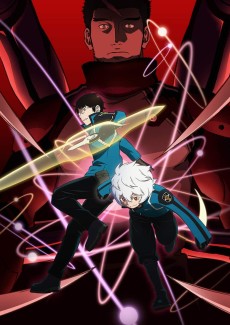
Desperate Soviet engineers jury-rig Tesla coils onto amphibious tanks while Border’s Osamu Mikumo recalibrates his Trigger’s gravity lens mid-battle—both worlds treat technology as fragile, improvisational lifelines. Unlike most sci-fi warfare, Red Alert 3’s time-paradox desperation and World Trigger 2nd Season’s border-station siege mentality fuse *Survival & Crafting* with tactical precision: every weapon feels salvaged, every victory temporary. That shared grit—where ideology meets soldering iron—is unexpectedly resonant.

Connected through 3 aesthetic dimensions.

What if time travel wasn’t about saving the world—but sabotaging a rival’s love confession with orbital artillery? In *Red Alert 3*’s absurd Soviet time-jump, absurdity becomes strategy; similarly, *To Love Ru Darkness 2 Specials* (episodes 13–14) weaponizes sci-fi tropes—like Mikan’s alien tech and Rito’s hapless “tactical” retreats from romantic entanglements—as deadpan parody. Their shared 🚀 Sci-Fi & Space dimension isn’t about realism—it’s about escalating stakes until a kiss and a Tesla tank detonate with equal comedic force.
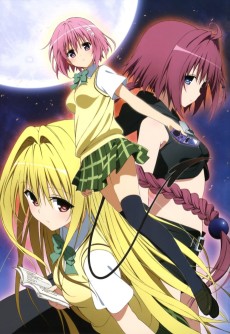
What if absurdity were a tactical doctrine? Red Alert 3’s time-traveling Soviet brass—bellowing orders from a battleship-shaped Kremlin—mirror *To Love Ru Darkness*’s Develuke royals, who deploy alien tech and emotional warfare with equal theatrical flair. Both weaponize 🚀 Sci-Fi & Space not for realism but for escalating comedic chaos: think Yuri’s psychic conscription versus Mikan’s gravity-defying panic attacks during a school festival ambush. The resonance is deliciously subversive—parodying power structures by making them gloriously, unapologetically ridiculous.
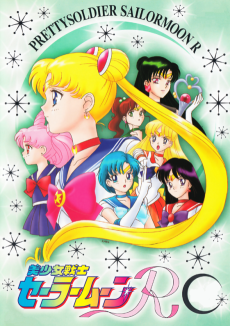
A Soviet time-traveler’s over-the-top salute clashes deliciously with Ail and Ann’s absurd alien fashion show—both weaponize 😂 Comedy & Parody to undercut apocalyptic stakes. Where Red Alert 3 stages tactical warfare as cartoonish spectacle (think Tesla tanks vs. cryo-lancers), Sailor Moon R’s first arc treats alien invasion like a rom-com heist, complete with bickering extraterrestrial siblings scheming in pastel spaceships. That shared refusal to take doomsday seriously—while layering genuine emotional weight beneath the chaos—is what makes their resonance so electrically unexpected.
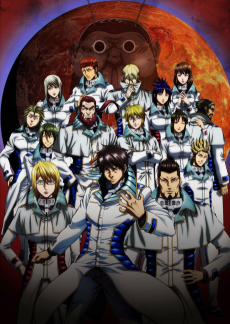
Desperation crackles in the Red Alert 3 cutscene where Soviet scientists overload a time machine amid crumbling concrete and flickering red lights—mirroring the Terra Formars crew’s grim scramble to jury-rig oxygen scrubbers from cockroach chitin aboard the *BUGS* ship. 🛠️ Survival & Crafting pulses through both: not as hopeful ingenuity, but as brutal, last-resort adaptation against forces that weaponize evolution itself. That shared grit—where tactics emerge from decay, not doctrine—makes their resonance startlingly visceral, not just thematic.
Build, survive, thrive — the satisfaction of carving out your place in a hostile world.

Connected through 3 aesthetic dimensions.






Match Dimensions Explained
❓Frequently Asked Questions
Why does World Trigger 2nd Season feel like Red Alert 3’s anime cousin?
Because both hinge on desperate, time-pressed tactical warfare with wildly inventive sci-fi tech—like World Trigger’s Trion-based border defense squads clashing in urban zones, mirroring RA3’s Soviet Chrono Legionnaires blinking behind enemy lines. Plus, the constant resource-scramble for gear and base upgrades in World Trigger’s ‘Trigger’ crafting system echoes RA3’s frantic base-building under artillery fire.
Is there an official anime adaptation of Red Alert 3?
Nope—no official anime exists, not even a short film or web series. EA never licensed one, and despite George Takei’s iconic voice work as Emperor Yoshiro (a major draw per that player review), all adaptations remain fan-made or meme-tier. The closest you’ll get is To Love Ru Darkness 2 Specials parodying RTS tropes with over-the-top 'tactical' chaos—complete with absurd mecha deployments and zero-seriousness.
How does Needless compare to Humanity Has Declined for Red Alert 3 vibes?
Needless leans hard into Survival & Crafting with its post-apocalyptic scavenging, psychic factions, and improvised weapon mods—very much like RA3’s Soviet scrap-tech aesthetic and desperate resource loops. Humanity Has Declined swaps that intensity for deadpan satire and surreal, low-stakes ‘warfare’ (think tiny fairy armies vs. candy-bar fortifications), making it more of a comedic palate cleanser than a tactical match—hence its lower score (57 vs. Needless’s 56) and missing Tactical Warfare dimension.
What if I love Red Alert 3’s over-the-top camp but hate serious military strategy?
Then To Love Ru Darkness (score: 56) is your jam—its ‘tactical warfare’ is pure parody: alien invasions get derailed by harem misunderstandings, and battle scenes cut to characters tripping into hot springs mid-laser barrage. It nails RA3’s tone—George Takei-level theatricality, absurd tech, and zero self-seriousness—without demanding you memorize unit counters or build timings.