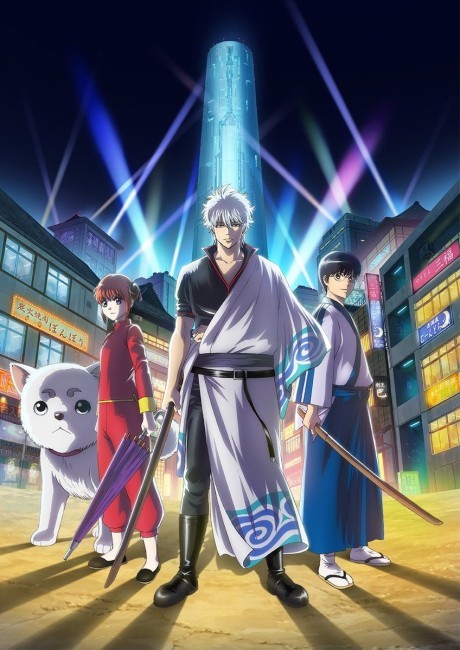
Gintama Season 4
After joining the resistance against the bakufu, Gintoki and the gang are in hiding, along with Katsura and his Joui rebels. The Yorozuya is soon approached by Nobume Imai and two members of the Kiheitai, who explain that the Harusame pirates have turned against 7th Division Captain Kamui and their former ally Takasugi. The Kiheitai present Gintoki with a job: find Takasugi, who has been missing since his ship was ambushed in a Harusame raid. Nobume also makes a stunning revelation regarding the Tendoushuu, a secret organization pulling the strings of numerous factions, and their leader Utsuro, the shadowy figure with an uncanny resemblance to Gintoki's former teacher.
Hitching a ride on Sakamoto's space ship, the Yorozuya and Katsura set out for Rakuyou, Kagura's home planet, where the various factions have gathered and tensions are brewing. Long-held grudges, political infighting, and the Tendoushuu's sinister overarching plan finally culminate into a massive, decisive battle on Rakuyou.
(Source: MAL Rewrite)
📺Anime Details
📝Editorial Analysis
Rain slicks the cobblestones of Edo’s back alleys, reflecting the sickly orange glow of a distant fire—not from battle, but from a ramen stall that’s somehow still open. Gintoki sits hunched over a bowl, chopsticks hovering mid-air, steam curling like a question mark. Behind him, Katsura argues with Takasugi’s ghost—not literally, but in tone, in silence, in the way his knuckles whiten around his sword hilt. Nobume stands just outside the light, her voice low and unflinching as she drops the revelation: Takasugi isn’t missing—he’s choosing to vanish. That moment—gritty, absurd, emotionally loaded, and soaked in the quiet weight of war—is Gintama Season 4.
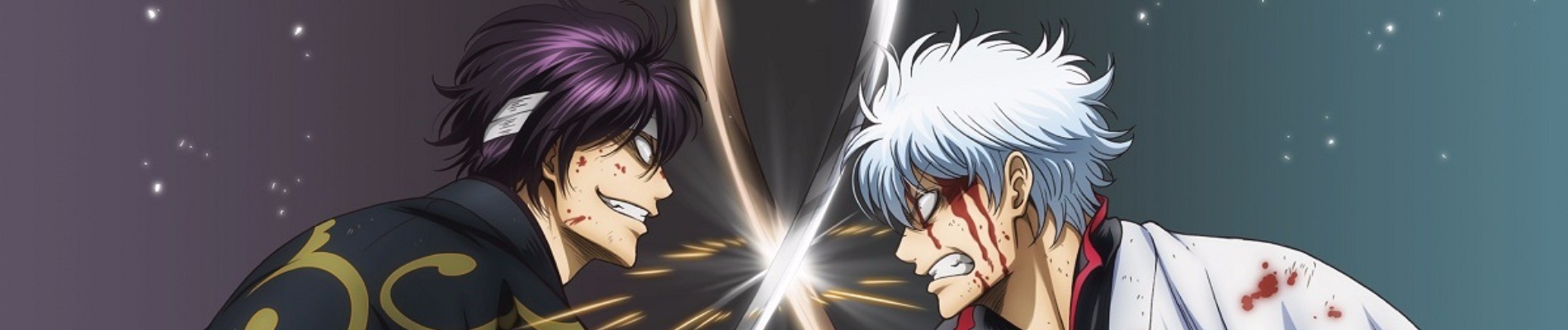
It doesn’t feel like shounen. It feels like exhaustion with punchlines. Like scrubbing blood off your sleeve and then cracking a joke about how the stain won’t come out—even though you know it’s someone else’s blood. The anachronism isn’t just aesthetic; it’s philosophical vertigo—samurai debating ethics while dodging laser fire, rebels hiding in love hotels, war waged with both katanas and kabuki theatrics. You’re never allowed to settle into one mood because the show refuses to let you forget that grief wears a clown nose, that loyalty smells like cheap soy sauce, and that found family is built not in grand oaths, but in shared, stubborn, stupid persistence. It’s raw, tender, and unapologetically messy—like holding a live wire wrapped in duct tape and a lullaby.
That emotional DNA—this collision of tactical gravity and tonal whiplash—pulses strongest in STAR WARS™ Jedi Knight - Jedi Academy™. Its description promises “a Galaxy-spanning adventure to hel…”—cut off mid-sentence, just like Nobume’s revelation hangs in the air before the Yorozuya even processes it. Player reviews call it a game where you’re “thrust into” stakes larger than yourself, yet the real resonance lies in how it mirrors Season 4’s moral architecture: you forge your lightsaber and your conscience at the same time, just as Gintoki forges alliances with former enemies while questioning whether resistance justifies becoming what you fight. Both treat war not as spectacle, but as psychological sediment—layered, unavoidable, and always leaking into the next ramen order.
Then there’s Exodus from the Earth, whose player review admits outright: “It’s jank. Let’s get that out of the way. But it’s surprisingly ‘goo…’” — that ellipsis feels deliberate, like the anime’s own refusal to finish sentences when emotions are too thick. Its description tasks you with infiltrating “the Corporation’s confines” for a “secret mineral upon which the very exis…”—again, truncated, echoing how Season 4 never fully explains Takasugi’s motives, only shows their consequences: fractured loyalties, hollow victories, and the eerie calm after a massacre where someone still insists on paying the tab. The comedy isn’t relief—it’s armor. And the jank? That’s the Kiheitai showing up in mismatched uniforms, or Kamui casually kicking a Harusame ship sideways mid-battle—physics bending not for flash, but because reality itself is unreliable when ideology cracks.
Even Portal and Portal 2, with their “Perpetual Testing Initiative” and “short, brilliant, and absolutely flawless puzzle game” reviews, channel this same energy—not through lasers or logic, but through structural irony. The Aperture Science Labs are a parody of bureaucratic control, just as the bakufu’s collapsing regime is a parody of authority clinging to ritual while its foundations rot. When GLaDOS deadpans, “The Enrichment Center is committed to the well-being of all participants,” it lands with the same dry, devastating weight as Gintoki saying, “We’re not heroes. We’re just guys who keep showing up.” Both use absurd systems to expose how easily meaning collapses—and how fiercely people cling to small, stubborn truths inside them.
This pairing isn’t for fans of “cool fights” or “deep lore dumps.” It’s for the ones who pause the episode when Gintoki stares at his reflection in a rain puddle—not because he’s brooding, but because he’s checking if he still looks like himself. It’s for players who replay Jedi Academy’s final choice not to see the ending, but to sit in the silence after the cutscene ends. For those who laugh at Portal’s cake jokes—and then read the fine print on the wall behind them, three times. People who recognize that tenderness and tactics, parody and pain, aren’t opposites—they’re the same pulse, measured in different keys. They don’t want stories that resolve. They want stories that resonate, long after the credits roll and the loading screen fades.
🎮40 Games That Match the Vibe



Match Dimensions Explained
❓Frequently Asked Questions
Why is Exodus from the Earth listed as similar to Gintama Season 4?
Because both lean hard into absurdist, fourth-wall-breaking comedy with sci-fi backdrops—like when Francis Rixon gets chewed out by a sentient toaster in Exodus, mirroring Gintama’s infamous 'Gintoki vs. Alien Ramen Vendor' arc. It’s got that same janky-but-charming energy and rapid-fire parody of corporate dystopias, just like Gintama mocks shonen tropes while fighting space yakuza.
Is there a Gintama video game adaptation for Season 4?
No official Gintama game covers Season 4 specifically—the closest are older Japan-only titles like Gintama: The Very Final or Jump Force (which includes Gintoki as DLC), but neither adapts the 'Silver Soul Arc' or its tonal whiplash. That’s why fans turn to games like Portal 2 or Exodus from the Earth instead: they nail Gintama’s blend of deadpan sci-fi satire and emotional whiplash, like Wheatley’s meltdown echoing Kagura’s over-the-top rants about alien snacks.
Portal vs. SPORE—which one captures Gintama’s vibe better?
Portal 2 wins for pure Gintama *tone*: GLaDOS’s sarcastic monologues and co-op banter between Chell and Wheatley feel like watching Gintoki and Hijikata bicker mid-battle—dry, sharp, and unexpectedly heartfelt. SPORE’s chaotic creature-building and galactic absurdity (e.g., evolving a disco-dancing squid into a space emperor) echoes Gintama’s visual gags, but Portal 2 nails the rhythm of comedic timing + sudden sincerity, like when Cave Johnson’s prerecorded messages drop a gut-punch right after a joke.
What’s the best game like Gintama Season 4 if I want that mix of ridiculous action and emotional weight?
STAR WARS™ Jedi Knight: Jedi Academy—it’s got the over-the-top lightsaber duels (think Gintama’s ‘Battle of Kabukicho’), but also quiet moments where your Padawan reflects on loss, much like Gintoki staring at his sword after a fight. Reviewers even note how its ‘Tactical Warfare’ dimension mirrors Gintama’s balance: flashy spectacle *and* grounded stakes, especially during the final confrontation with Tavion—equal parts silly, sad, and spectacular.