Nexus - The Jupiter Incident
Ambitious megacorporations monopolize the conquest of space and the colonization of the solar system. At the very edge of the solar system, the companies make a discovery that will shift the technological advantage and upset the balance. And so a new conflict is born: "The Jupiter Incident."
🎮Game Details
💬What Players Say
"Nudna i średnia fabuła"
"IT'S FKING AWESOME"
📝Editorial Analysis
The silence before the first fleet engagement—cold, absolute, punctuated only by the low hum of your command console and the distant, almost imperceptible thrum of fusion drives powering up across the screen. You’re at the edge of the solar system. Jupiter’s banded clouds hang in the periphery like a forgotten god. And then: the discovery. Not a voiceover, not a cutscene—just sensor ghosts resolving into something impossible, something that shifts the balance. That’s Nexus - The Jupiter Incident—not as lore dump or exposition, but as weight: corporate ambition made orbital, consequence measured in light-seconds and hull integrity percentages. One player calls it “nudna i średnia fabuła…”—boring, average story. Another screams “IT’S FKING AWESOME…”—raw, unfiltered awe. Both are right. Because this isn’t about plot twists. It’s about scale, tension, and the dreadful beauty of tactical calculus unfolding where one miscalculation means vaporized ships, silent debris fields, and no respawn.
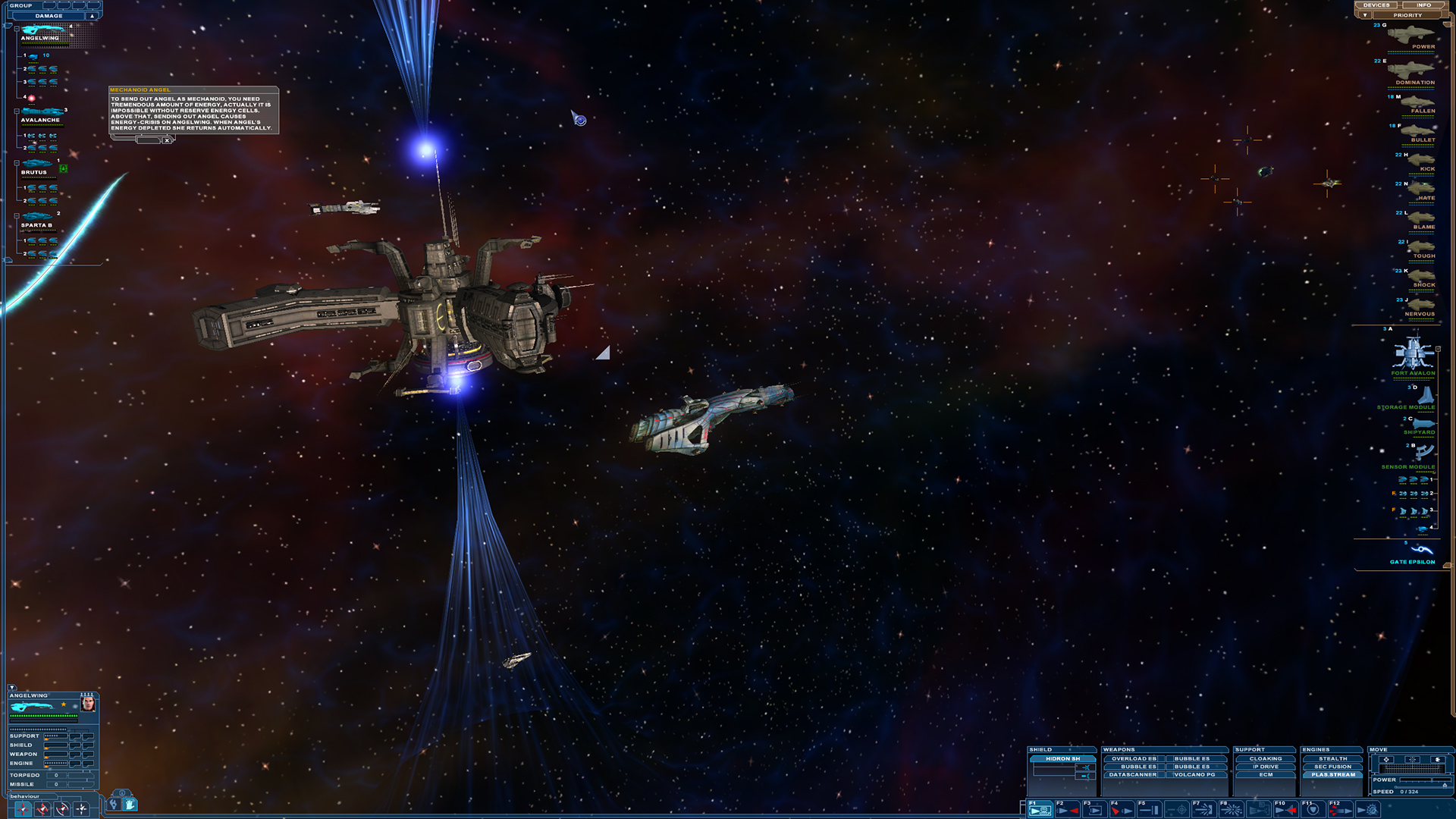
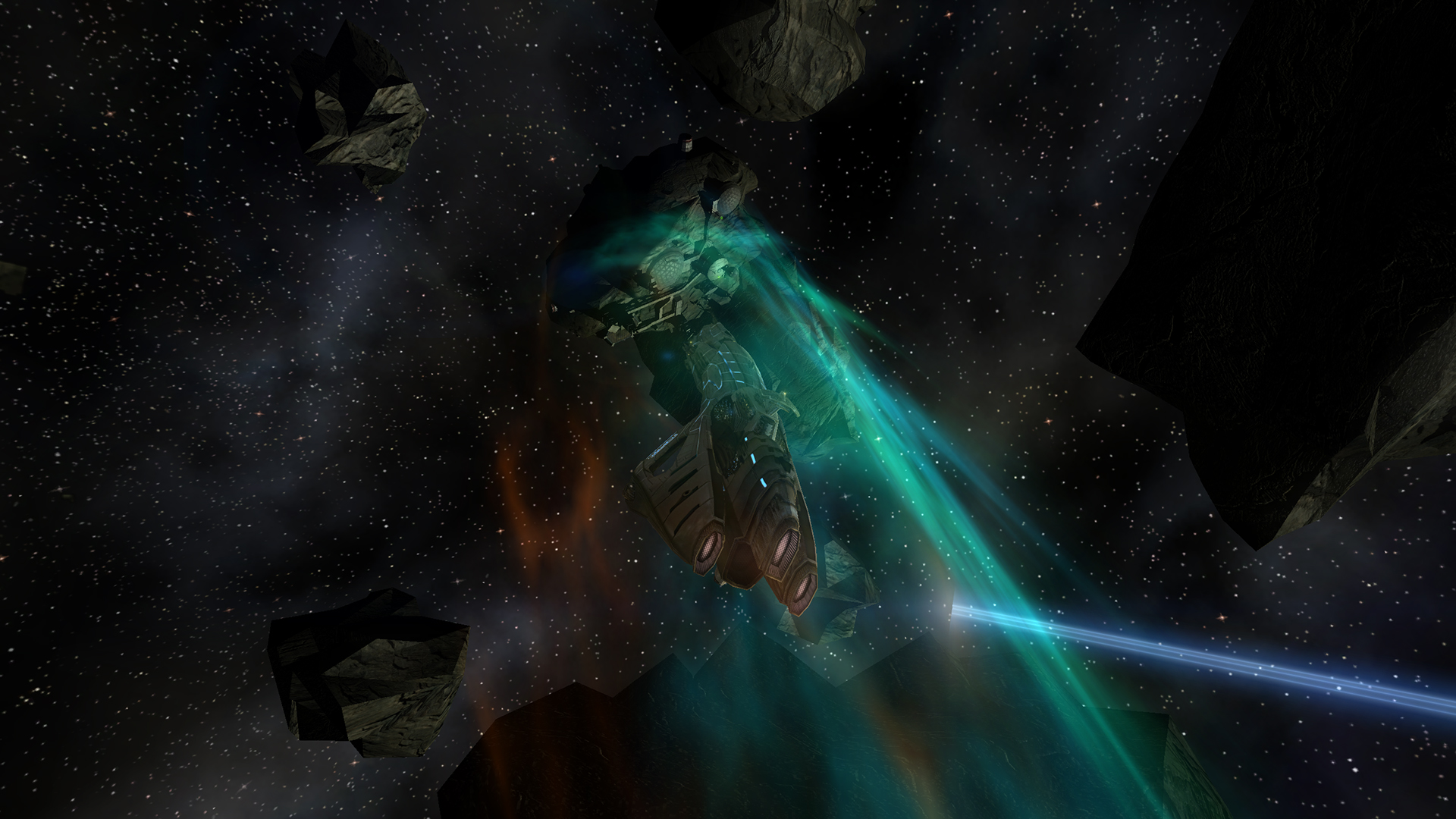
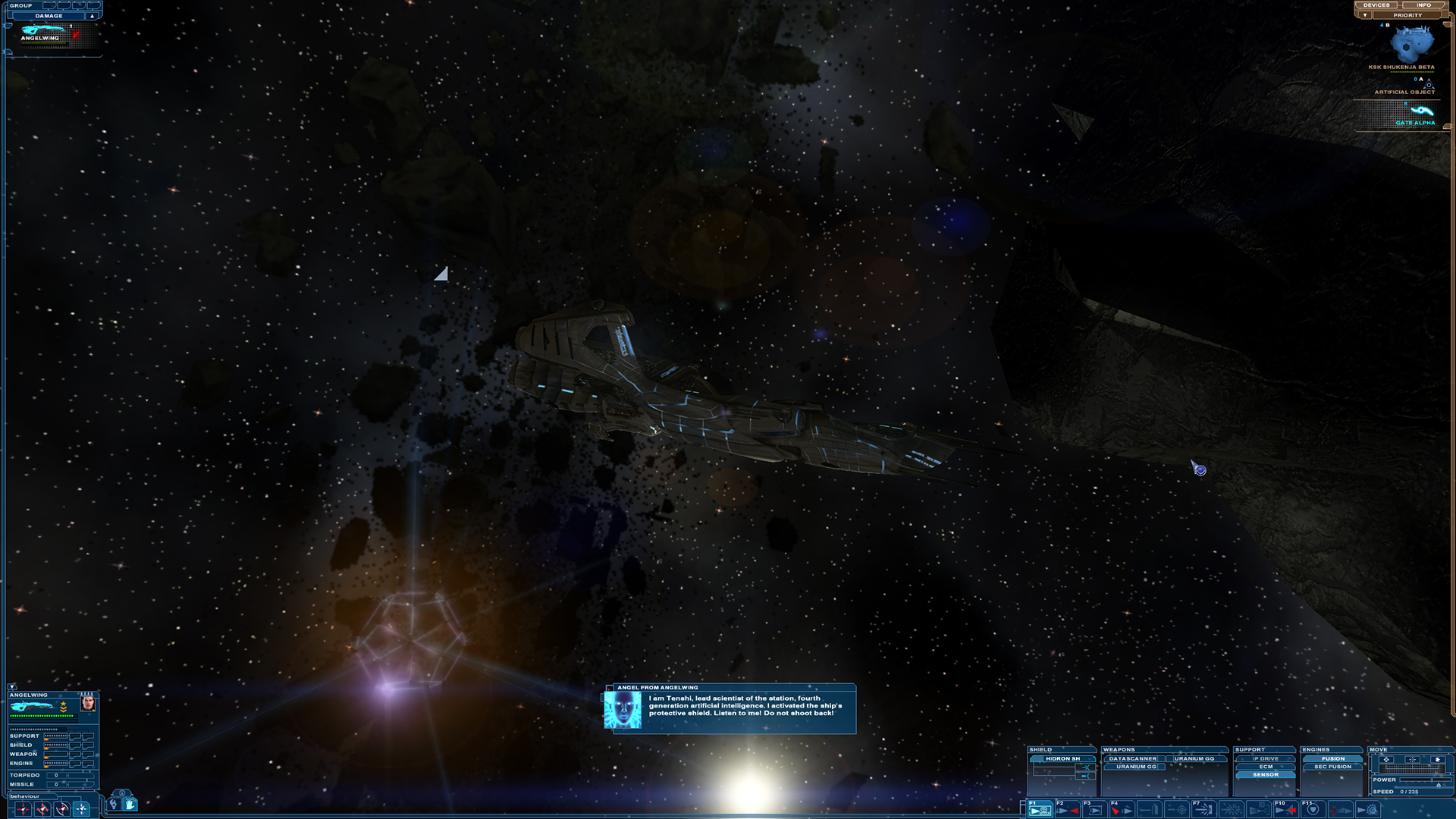
What makes Nexus - The Jupiter Incident vibrate with its own emotional frequency isn’t its setting—it’s how it withholds. No heroic monologues. No moral hand-holding. Just megacorporations moving like tectonic plates, their fleets gliding through vacuum with the quiet inevitability of gravity. You don’t feel like a savior. You feel like an operator—hands steady, breath shallow, watching missile corridors bloom across your HUD while knowing that every decision ripples across corporate balance sheets and human lives, even if those lives remain offscreen, unnamed, unvoiced. It makes you think about leverage, about asymmetry, about how power consolidates not in speeches, but in sensor range, shield harmonics, and the precise timing of a railgun volley. There’s no triumph here—only consequence, precision, and the hollow echo of victory measured in salvage rights and stock valuations.
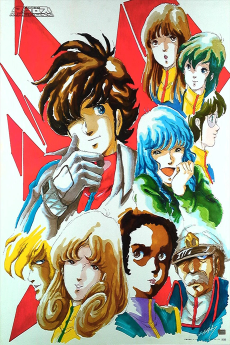
That same emotional architecture—the interplay of vast space, disciplined warfare, and systemic stakes—resonates sharply with Gunbuster. Not because of its mecha or its coming-of-age arc, but because of how it treats space combat as physics made sacred: the agonizing light-delay between command and execution, the way a single ship’s maneuver can rewrite a battle’s geometry, the reverence for procedure under duress. When Noriko fires the Buster Beam—not as catharsis, but as calibrated sacrifice—you feel the same gravitas, the same unblinking focus, that comes from holding down the pause key in Nexus to adjust shield polarization mid-engagement.
Then there’s World Trigger 2nd Season, where tactical clarity becomes character. Every border skirmish is a chess match played with spatial anchors, tracer trajectories, and real-time adaptation—no flash, just execution. The anime doesn’t glorify war; it maps it. Like Nexus, it trusts you to read intention in formation shifts, to feel tension in a held breath before a B-Rank squad breaches a gate. The shared DNA isn’t spectacle—it’s structure: how rules (of physics, of trigger mechanics, of corporate doctrine) generate meaning, and how mastery emerges not from power-ups, but from understanding the grid.
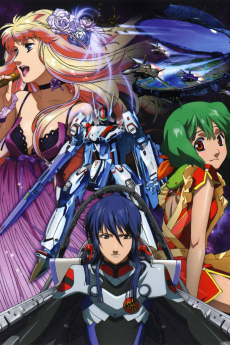
And Macross, yes—even amid its idol songs and love triangles, pulses with the same operational soul. The SDF-1 doesn’t win because it’s special. It wins because its crew adapts, reroutes power, improvises tactics within hard constraints—and does so while entire cities float inside its hull. That layered pressure—strategic, tactical, civilian—mirrors Nexus’s unspoken subtext: behind every corporate fleet lies infrastructure, labor, supply chains, families waiting on Titan or Ceres. Neither work shouts its stakes. They embed them—in radar sweeps, in comm chatter fragments, in the quiet dread before a jump drive spools.
This pairing isn’t for the lore-hungry or the emotionally spoon-fed. It’s for the ones who get chills when a fleet rotates en masse, who replay a battle three times just to perfect torpedo dispersion timing, who watch a zero-G boarding sequence and think “shield frequency mismatch—here’s why they lost.” It’s for the quiet strategist, the systems thinker, the person who finds beauty in a perfectly timed ECM burst—and grief in the silent drift of a disabled corvette, tumbling end over end past Europa’s ice cracks. They don’t need heroes. They need honesty—about scale, about cost, about how war, when stripped bare, is just light, math, and the unbearable weight of choice in the dark.
→27 Anime That Match the Vibe

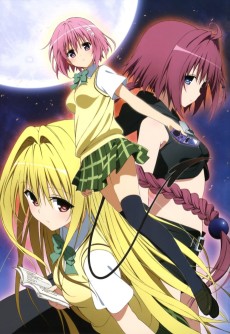
A tense bridge command scene in *Nexus*—where corporate admirals debate orbital bombardment protocols—echoes the sudden, high-stakes tactical escalation in *To Love Ru Darkness 2nd Specials*’ climax, when Momo’s combat AI activates mid-battle to shield Rito. Unlike most ecchi rom-coms, these specials weaponize sci-fi not for fan service but as structural pressure: space isn’t backdrop—it’s contested terrain where romance and warfare orbit the same gravity well. That shared 🎯 Tactical Warfare dimension transforms flirtation into frontline coordination, making the pairing unexpectedly coherent.
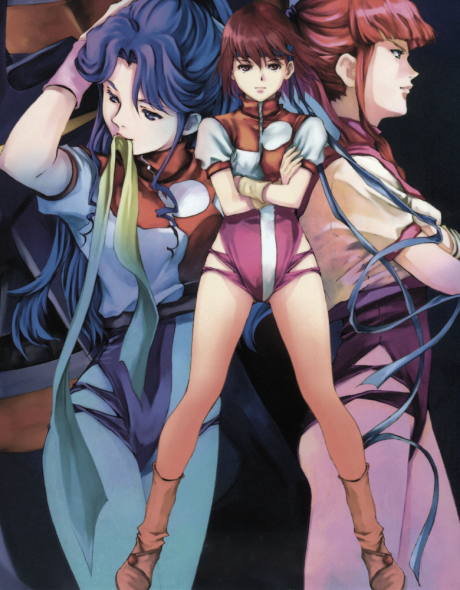
A desperate last stand near Jupiter’s magnetosphere—where corporate dreadnoughts brace against an incomprehensible alien swarm—echoes Gunbuster’s climactic sacrifice inside the black hole’s event horizon. Unlike most space operas, both anchor their 🚀 Sci-Fi & Space stakes in hard-physics tension: relativistic time dilation fractures crews across decades while tactical warfare unfolds in real-time vector combat. That shared weight—the silence before a railgun volley, the static crackle of a dying comms channel—makes their convergence startlingly intimate, not epic.
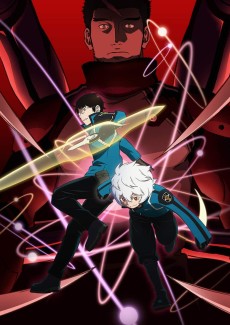
A tense standoff aboard the *Odyssey*-class carrier—where corporate admirals debate deploying experimental gravitic weapons against an unknown deep-space entity—mirrors Border’s Season 2 command room crises, as Osamu Mikumo recalibrates Trion-based tactics mid-battle against Neighbors exploiting dimensional rifts. Unlike most space operas, both anchor their 🎯 Tactical Warfare in real-time resource constraints: shield harmonics decay, Trion reserves deplete, and every maneuver carries cascading logistical weight. That shared rigor—where sci-fi isn’t backdrop but battlefield physics—makes their resonance startlingly precise, not just thematic but operational.
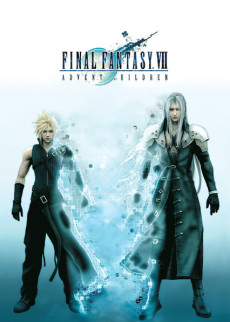
Jupiter’s icy rings shimmer in *Nexus* as corporate dreadnoughts lock phasers—cold, precise, and terrifyingly silent—mirroring the hushed tension before Cloud’s final stand against Kadaj in *Advent Children*’s ruined Midgar. Where *Nexus* weaponizes orbital mechanics and shield harmonics for tactical warfare, *Advent Children* bends materia physics into visceral, gravity-defying combat—both treating sci-fi not as backdrop but as embodied logic shaping every decision. That shared rigor—sci-fi as operational reality, not spectacle—makes their convergence startlingly coherent.
Connected through 2 aesthetic dimensions.
Connected through 2 aesthetic dimensions.
Connected through 2 aesthetic dimensions.
Connected through 2 aesthetic dimensions.
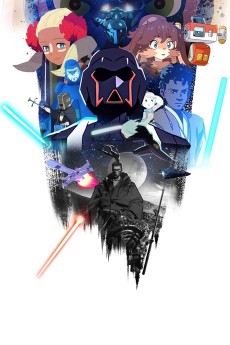
Connected through 2 aesthetic dimensions.



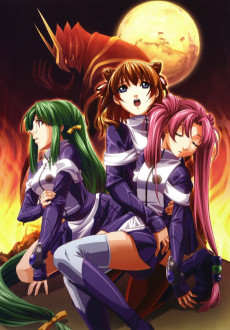
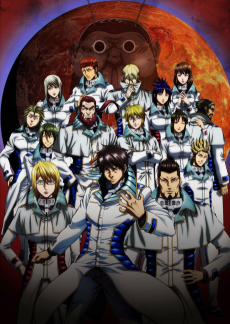
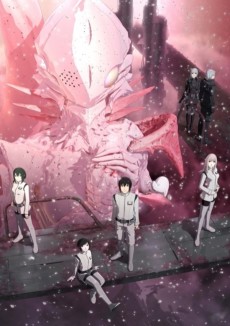


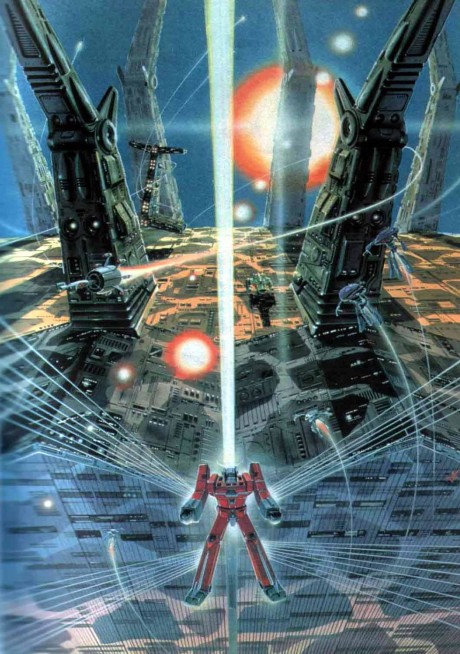
Match Dimensions Explained
❓Frequently Asked Questions
Why is Gunbuster recommended for fans of Nexus - The Jupiter Incident?
Because both hinge on desperate, large-scale space combat against overwhelming odds—like Gunbuster's final assault on the Space Monster swarm mirroring Nexus's climactic battle near Jupiter's magnetosphere, complete with tactical fleet maneuvers and shield-draining energy weapons. Plus, the sheer scale of the Nadesico-class ships in Gunbuster echoes the modular capital ships you command in Nexus.
Is there an anime adaptation of Nexus - The Jupiter Incident?
No—Nexus is a standalone PC strategy game with no official anime adaptation. But if you're craving that same vibe, To Love Ru Darkness 2 Specials surprisingly nails the 'corporate-backed space ops' aesthetic: think Rito’s school-turned-covert-command-hub scenes and the offhand mentions of interplanetary conglomerates funding black-ops mechs—very Nexus-adjacent energy, even if tonally lighter.
How does World Trigger 2nd Season compare to Nexus - The Jupiter Incident in terms of tactics?
World Trigger 2nd Season mirrors Nexus’s emphasis on real-time fleet coordination under pressure—like when Yuma’s squad executes layered Trion barrier deployments during the Neighbors’ invasion of Mikado City, directly echoing how you juggle shield harmonics, weapon arcs, and sensor jamming across multiple Nexus vessels in the Ganymede Belt skirmishes.
What’s the best anime like Nexus - The Jupiter Incident if I want hard sci-fi tension and zero romance subplots?
Macross is your best bet—especially the original series’ cold-war-in-space vibe where corporate-aligned factions (like the Meltlandi) clash over alien tech near Saturn’s rings, and every dogfight involves precise vector calculations, ECM countermeasures, and damage modeling that feels ripped straight from Nexus’s damage-per-second logs and shield recharge timers.