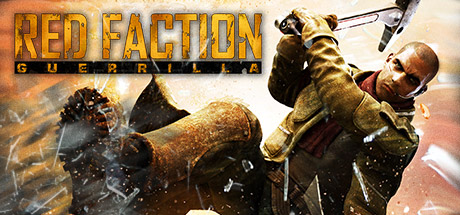
Red Faction Guerrilla Steam Edition
Set 50 years after the climactic events of the original Red Faction, Red Faction: Guerrilla allows players to take the role of an insurgent fighter with the newly re-established Red Faction movement as they battle for liberation from the oppressive Earth Defense Force.
🎮Game Details
💬What Players Say
"Red Faction: Guerrilla has an excuse plot that proceeds to:[olist] [*]Kill your brother. [*]Get you attacked by the evil corporation. [*]Forces you to join the titular Red Faction...."
"One of the best destruction games out there."
"Lowkey just here to farm cards, I'll play the remaster one day"
📝Editorial Analysis
The first time you watch a mining drill collapse under your sledgehammer swing—concrete cracking like dry bone, rebar screaming as it bends, dust blooming in slow-motion sunbeams—you don’t feel like a hero. You feel raw. That’s the game: not grand strategy, not polished spectacle, but the gut-punch immediacy of a brother dead in the dirt, an EDF patrol cruiser hovering low and humming like a wasp, and your bare hands gripping something heavy because that’s all you have left. The official description says “battle for liberation”—but the player review nails it: it kills your brother, attacks you, forces you into the Red Faction. No recruitment speech. No moral calculus. Just violence that begets violence, and rubble that becomes both weapon and witness.
This isn’t dystopia as sleek architecture or neon bureaucracy. It’s dystopia as grit under your nails, as heat-haze shimmer over cracked ferrocrete, as the low thrum of distant artillery vibrating up through the soles of your boots. The atmosphere isn’t oppressive because it’s omnipresent—it’s oppressive because it’s leaky, porous, fragile. You learn fast: walls aren’t barriers—they’re inventory. Bridges aren’t infrastructure—they’re tactical variables. That feeling? It’s agency forged in desperation, not power fantasy. It’s the quiet hum of survival, the grim satisfaction of crafting cover from collapsed storefronts, the exhaustion of tactical warfare where every shot matters because ammo is scarce and medkits are scavenged from corpses. There’s no safety net—no respawn point that feels earned, only the next crater you’ll dig with explosives you barely understand. You don’t outsmart the system—you shatter it, piece by unstable piece.
World Trigger 2nd Season resonates because it shares that same tactically grounded sci-fi pulse—not with lasers and monologues, but with shield calibration, terrain readjustment mid-combat, and squads moving like nervous systems wired to crumbling urban grids. Both treat space as functional, not decorative: a rooftop isn’t for posing, it’s for line-of-sight denial; a ventilation shaft isn’t atmospheric, it’s a chokepoint. And beneath the precision, there’s survival: characters ration breath, calculate structural integrity, and patch gear with duct tape and prayer—exactly the vibe of scrambling behind a half-collapsed bus while EDF drones recalibrate overhead.
Humanity Has Declined, at first glance absurdly mismatched, actually pulses with the same survival & crafting heartbeat—but inverted, surreal, and laced with gallows humor. Its world isn’t ruined by war, but by bureaucratic decay and cosmic indifference—and yet its protagonists build, fortify, adapt, just like you jury-rigging a mortar from scrap metal in Red Faction: Guerrilla. The tone shifts, yes, but the core rhythm remains: make do, break through, keep breathing. When the fairy protagonist painstakingly assembles a barricade from candy wrappers and broken teacups, it’s not whimsy—it’s the same stubborn, tactile crafting instinct that makes you spend ten minutes toppling a water tower just to flush out a sniper nest.
And Needless, with its scorched-earth aesthetic and ragtag cells operating inside irradiated ruins, mirrors the survival & crafting dimension again—but with jagged edges and zero irony. Its characters don’t debate ideology; they loot, barter, and blow up checkpoints using repurposed lab equipment. Like Red Faction: Guerrilla, it treats destruction not as catharsis, but as logistics: what falls, what burns, what can be dragged back to base and rewired. The shared DNA isn’t in plot—it’s in the texture of resistance: sweat-stained gloves, flickering HUDs, the smell of ozone and burnt wiring, the constant, low-grade urgency of being one step ahead of annihilation.
This pairing isn’t for the lore-obsessed or the cutscene collector. It’s for the person who replays the same alleyway three times just to perfect the timing of a collapsing awning onto a tank. It’s for the viewer who rewinds World Trigger’s border skirmishes frame-by-frame to study how a shield deforms under kinetic impact. It’s for the one who watches Humanity Has Declined’s silent, meticulous fort-building montages and feels seen—not because it’s funny, but because the act of constructing shelter in absurdity is itself a kind of sacred, stubborn truth. They’re the ones who know that liberation isn’t declared—it’s wrenched, scavenged, blasted open, one trembling, defiant, real brick at a time.
→25 Anime That Match the Vibe

Build, survive, thrive — the satisfaction of carving out your place in a hostile world.
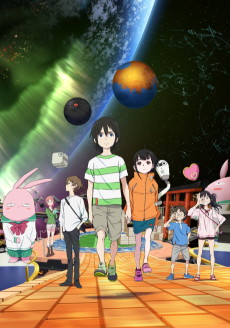
Build, survive, thrive — the satisfaction of carving out your place in a hostile world.
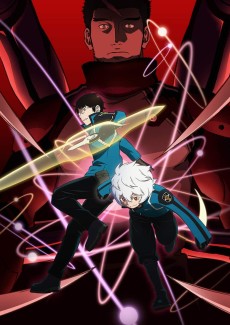
Cracks spiderweb across a crumbling Neo-Marseilles skyscraper as Alec Mason triggers a thermite charge—just as Border’s Yuma Kuga deploys his Trion-powered “Rapid Fire” rifle to collapse a Neighbors’ invasion corridor in Season 2’s Shibuya assault. Unlike most sci-fi action pairings, both weaponize *Survival & Crafting*: Alec repurposes scrap into improvised explosives; Yuma and his squad dynamically reconfigure Trion gear mid-battle to counter evolving enemy tactics. This shared logic—where environment, resource scarcity, and real-time adaptation define victory—makes their resonance unexpectedly tactile and urgent.

Connected through 3 aesthetic dimensions.

A collapsing Martian terraformer in *Red Faction: Guerrilla*—crumbling under guerrilla sabotage—mirrors the chaotic, physics-defying slapstick of Rito’s accidental harem pileups during the *To Love Ru Darkness 2nd Specials*’ zero-G school festival. Where tactical warfare meets absurd comedy, both weaponize sci-fi infrastructure (orbital arrays, alien tech) not for awe, but as punchline scaffolding—Rito tripping over a gravity modulator lands with the same tonal whiplash as a player blowing up a drill rig just to watch its debris arc into a canyon. That shared commitment to *comedy & parody* through destructive spectacle makes their resonance genuinely surprising—not despite their genres, but because of how precisely they exploit them.

Where Red Faction: Guerrilla’s Mars colony collapses under kinetic artillery and voxelized rubble, To Love Ru Darkness 2’s Develuke royal family weaponizes absurdity—Rito’s hapless stumbles into interstellar diplomacy mirror the game’s insurgent sabotage as chaotic, physics-driven farce. 🚀 Sci-Fi & Space isn’t just backdrop here: both treat alien contact as destabilizing comedy, not awe—Mars’ terraforming failures echo Momo’s “Darkness” power glitches during school festivals. That shared commitment to tactical warfare as slapstick makes their resonance genuinely surprising.
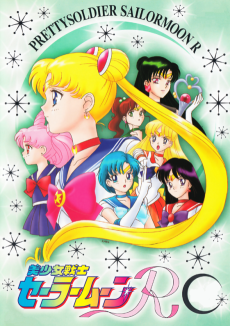
Ail and Ann’s absurdly bureaucratic alien invasion—complete with corporate jargon and malfunctioning tech—mirrors Red Faction: Guerrilla’s satirical take on colonial exploitation, where Martian mining conglomerates weaponize red tape as effectively as tanks. 🚀 Sci-Fi & Space isn’t just backdrop here; it’s the shared language of systemic absurdity, from Sailor Moon R’s parody of 90s consumer capitalism to the game’s crumbling, physics-driven cities screaming under corporate oppression. That collision of tactical warfare and deadpan comedy makes their resonance unexpectedly sharp—not despite the genre clash, but because of it.

Mars’ rust-colored dust hangs thick in both—Alex Ravel’s guerrilla strikes against the Earth Defense Force unfold amid crumbling Martian colonies, while *Terra Formars*’ crew battles mutated cockroaches in the same desolate terraformed tunnels. Unlike most sci-fi pairings, their resonance isn’t just visual: **Tactical Warfare** emerges through desperate, low-resource combat where cover, environmental destruction (Red Faction’s physics engine), and improvised weapons define survival. It’s startling how both weaponize Mars itself—not as backdrop, but as a hostile, reactive terrain demanding craft and grit.
Build, survive, thrive — the satisfaction of carving out your place in a hostile world.

Connected through 3 aesthetic dimensions.










Match Dimensions Explained
❓Frequently Asked Questions
Why does World Trigger 2nd Season keep popping up as an anime like Red Faction: Guerrilla?
It’s all about that gritty, grounded tactical warfare vibe—like when Yuma and his squad coordinate precise assaults on Border bases using real-time terrain analysis and adaptive gear, mirroring how you scout EDF outposts in Red Faction: Guerrilla before blowing up support beams to collapse entire structures. Both lean hard into sci-fi worldbuilding where survival hinges on resourcefulness, not just firepower—think Yuma’s ‘Trigger’ deployment vs. your sledgehammer-and-thermite approach to taking down the Terraformer.
Is there an anime adaptation of Red Faction: Guerrilla?
Nope—Red Faction: Guerrilla has never been adapted into an anime. The closest you’ll get is thematic resonance: Needless nails that same desperate, scrappy insurgency energy, with characters like Anna and Kaito improvising weapons from scrap and fighting a corrupt, technologically superior regime (the Church of the Sacred Star) much like Alec Mason battling the Earth Defense Force across Mars’ rust-colored wastelands.
How does Humanity Has Declined compare to Red Faction: Guerrilla in tone?
Don’t let the pastel colors fool you—Humanity Has Declined shares Red Faction: Guerrilla’s bleak-but-wry survival crafting core: the unnamed narrator constantly repurposes broken tech and abandoned infrastructure just like you jury-rigging a plasma cannon from EDF wreckage in the Dust District. Both use deadpan humor to offset grim stakes—imagine the show’s fairy bureaucrats debating supply chains while you’re silently looting a ruined EDF depot under artillery fire.
What if I love Red Faction: Guerrilla’s destruction physics and tactical chaos—what anime captures that best?
To Love Ru Darkness 2 Specials actually delivers that explosive, physics-driven mayhem—especially during the ‘Darkness Battle Tournament’, where characters smash through reinforced arena walls, trigger chain-reaction collapses, and weaponize environmental hazards in real time, echoing how Red Faction: Guerrilla lets you drop a cargo container onto an EDF APC or shatter a bridge mid-chase. It’s surprisingly tactical beneath the chaos, with Rito and Momo constantly adapting strategies on-the-fly—just like you recalculating your route after collapsing a building on your own head.