
Humanity Has Declined
For years, declining birth rates have forced what's left of the human race to cede more and more territory to other beings who have appeared to take advantage of the emptying ecological niche. Now, only a handful of humans remain among the remnants of civilization and Earth is dominated by faeries —tiny, ten-inch tall creatures of surprising intelligence. But humanity's importance isn't over quite yet, as young Watashi learns as she makes the decision to return to her hometown and assume her grandfather's position as an arbitrator between the races. Unfortunately, the job isn't going to be anywhere near as simple as she expected, and it's going to take a wisdom far beyond her years to achieve her most important mission.
(Source: Sentai Filmworks)
📺Anime Details
📝Editorial Analysis
The teacup trembles—not from fear, but from the sheer absurd weight of its own emptiness. Watashi pours honey into it, slow and deliberate, watching golden syrup coil like liquid amber into the hollow porcelain. Outside the cracked window, a fairy no taller than her thumb haggles over a rusted bicycle bell with the solemnity of a UN summit. No one shouts. No one panics. The world has ended, and all that’s left is this quiet, honey-thick stillness—a civilization reduced to bargaining over junk while humming off-key lullabies.
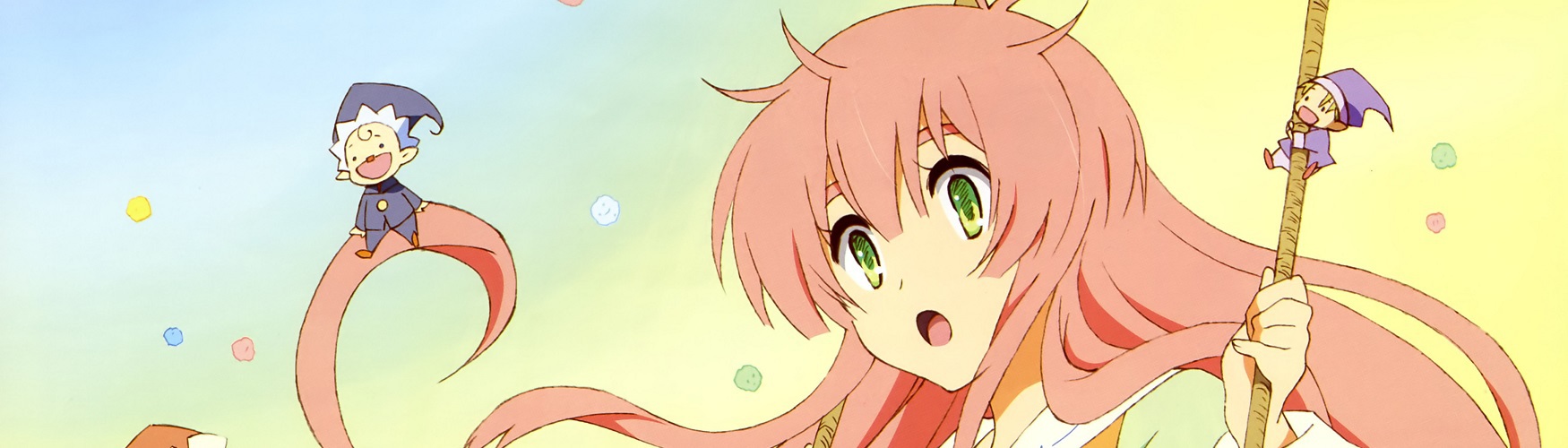
That’s the heart of Humanity Has Declined: not despair, not rage, but a deep, low-frequency melancholy wrapped in surreal comedy—a feeling of standing ankle-deep in the ruins of meaning, yet still setting the table for tea. It doesn’t mourn humanity’s fall with grand funerals or last stands. It watches humans relearn how to bake bread while fairies repurpose subway tunnels into glittering fungal farms. Time skips without warning; episodes loop, fracture, and double-back like half-remembered dreams. The post-apocalypse isn’t explosive—it’s domestic, drowsy, and threaded through with food: miso soup simmering on a salvaged stove, rice balls wrapped in foil, jam smeared thick on toast. This isn’t satire that mocks—it holds its subjects with tenderness, even as it undercuts them with ten-inch bureaucrats filing paperwork on dandelion fluff.
Which is why Garry's Mod lands with such eerie resonance. Its description says it plainly: “We give you the tools and leave you to play.” No goals. No win state. Just physics, possibility, and the quiet hum of creation unmoored from purpose. Like Watashi assembling a chair from scrap metal while fairies debate tax policy on her bookshelf, Garry’s Mod invites you into a world where meaning isn’t assigned—it’s improvised. One player review nails it: “I never bothered writing a review… but now that S&Box is out…”—that trailing hesitation, that sense of something irreplaceable slipping away without fanfare, mirrors the anime’s gentle elegy for coherence itself.
Then there’s Prince of Persia, whose description promises “an all-new epic journey” built by the same studio behind the Sands trilogy—but whose player review quietly undercuts that promise: “Prince of Persia is the 3rd reboot… completely separate from the sands…” That dissonance—the gap between marketing grandeur and lived experience—is pure Humanity Has Declined DNA. Both trade in lost legacies, fragmented mythologies, and protagonists moving through landscapes where history has curdled into folklore. The prince navigates crumbling palaces whispering half-truths; Watashi walks past abandoned schools where chalkboards still hold equations no one remembers solving. Neither offers answers—just the soft, persistent ache of melancholic exploration, where every ruin feels both sacred and slightly ridiculous.
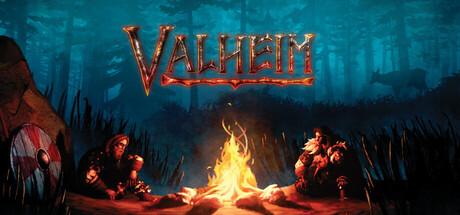
And Valheim? Its description calls it “a brutal exploration and survival game… set in a procedurally-generated purgatory”—yes, but the player review cuts deeper: “It’s like Minecraft but instead of punching trees you spend 40 minutes looking for the perfect tree, then a troll destroys your entire house…” That rhythm—careful, almost ritualistic effort, followed by sudden, absurd annihilation—is the show’s emotional cadence. Watashi painstakingly rebuilds her grandmother’s garden shed; a fairy drops a single raindrop from a leaf onto her head, derailing her train of thought for three full minutes. Valheim’s viking purgatory and Humanity Has Declined’s fairy-dappled wasteland share the same exhausted, tender patience: you build because building matters, even when the wind—or a troll, or a hyperactive pixie—will undo it all before lunch.
This pairing isn’t for fans of catharsis or closure. It’s for the ones who cry laughing at a squirrel wearing a tiny crown, who feel their chest tighten when they see an old coffee mug still sitting on a windowsill decades after everyone’s gone, who understand that the most radical act in a broken world isn’t resistance—it’s making jam. It’s for people who find beauty in the stubborn, silly, honey-slow persistence of small things: a teacup, a physics engine, a half-built longhouse, a fairy signing a lease in invisible ink. They don’t need the world to make sense. They just need enough quiet to stir the pot—and enough absurdity to keep stirring.
🎮46 Games That Match the Vibe

























Match Dimensions Explained
❓Frequently Asked Questions
Why does Humanity Has Declined feel so similar to Garry's Mod despite having no combat or story?
It’s all about that same unhinged, physics-driven absurdity—like when characters in Humanity Has Declined accidentally launch themselves off rooftops during a non-sequitur tea party, mirroring how Garry’s Mod players use the gravity gun to fling mannequins into orbit while 'roleplaying' as sentient toasters. Both lean hard into Comedy & Parody and Melancholic Exploration: you’re laughing at the chaos, but there’s this quiet, lingering weirdness—like wandering an empty, rain-slicked cityscape in Garry’s Mod with no objective, just ambient synth and distant radio static.
Is there a live-action or anime adaptation of The Ship: Murder Party like there is for Humanity Has Declined?
Nope—no anime, no live-action, not even a fan-made OVA. Unlike Humanity Has Declined (which got a full two-season anime with its deadpan narration and surreal classroom-as-purgatory vibe), The Ship: Murder Party stays firmly in its janky, early-2000s multiplayer lane—complete with voice-chat betrayals, accidental drownings in the ballroom pool, and that one guy who always hides in the dumbwaiter. It’s pure uncut parody, no adaptation needed.
How is Prince of Persia (2024) different from Valheim if both have melancholic exploration and viking-adjacent vibes?
Prince of Persia (2024) leans into lyrical, almost poetic solitude—think slow-motion sandstorms swallowing ancient ruins while the Prince whispers fragmented lore, matching Humanity Has Declined’s wistful tone. Valheim, meanwhile, is all frantic survival: you’re screaming as a troll smashes your longhouse *while* trying to remember whether you left your mead barrels in the basement—more chaotic crafting than contemplative wandering. Both hit Melancholic Exploration, but Prince is a haiku; Valheim is a drunken saga told mid-brawl.
What’s the best game like Humanity Has Declined if I want that mix of absurd humor and quiet, lonely worldbuilding?
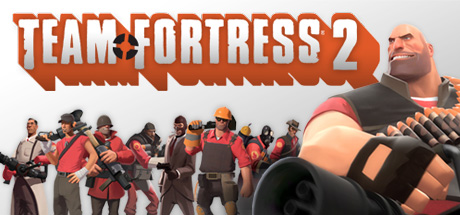
Team Fortress 2 is shockingly perfect for that exact vibe—yes, really. Picture the Scout yelling nonsense while sprinting past a crumbling, fog-draped payload map (Comedy & Parody), then pausing alone on the bridge at dawn, watching steam rise off the rails with zero enemies around (Melancholic Exploration). It’s got the same tonal whiplash: over-the-top gags undercut by sudden stillness, like when the Heavy quietly eats sandviches in an empty control point while the wind howls. Even the player review nails it—'chaotic, love men, artistic, gay'—it’s emotionally sincere *and* ridiculous, just like Humanity Has Declined.