
Go! Go! Loser Ranger!
When the Monster Army invaded Earth thirteen years ago, the Divine Dragon Rangers rose up to stop them! With the war raging on, these great heroes are mankind’s last hope!
...or are they?
In truth, the invaders were subjugated within a year, forced to continue to crank out a monster a week for the Rangers to crush in front of their adoring fans! But one monster has had enough. Something has to change! He’ll rebel against the might of the Dragon Rangers and destroy them all...from the inside!
(Source: Kodansha USA)
📺Anime Details
📝Editorial Analysis
The flicker of a cheap neon sign—Loser Ranger Bar, half its letters dead—casts jagged light across rain-slicked asphalt as a monster in a torn, ill-fitting suit stumbles into an alley, clutching his side where a Divine Dragon Ranger energy blast just seared through synthetic muscle. His breath hitches—not from pain alone, but from the crushing weight of thirteen years of scripted defeats, of weekly humiliation staged for stadium crowds who chant slogans they don’t understand. He peels back a patch of scorched skin to reveal not bone or circuitry, but something softer: a faint, pulsing bioluminescent glyph—the same one burned into every “monster” conscripted after the war ended… and never told it had.
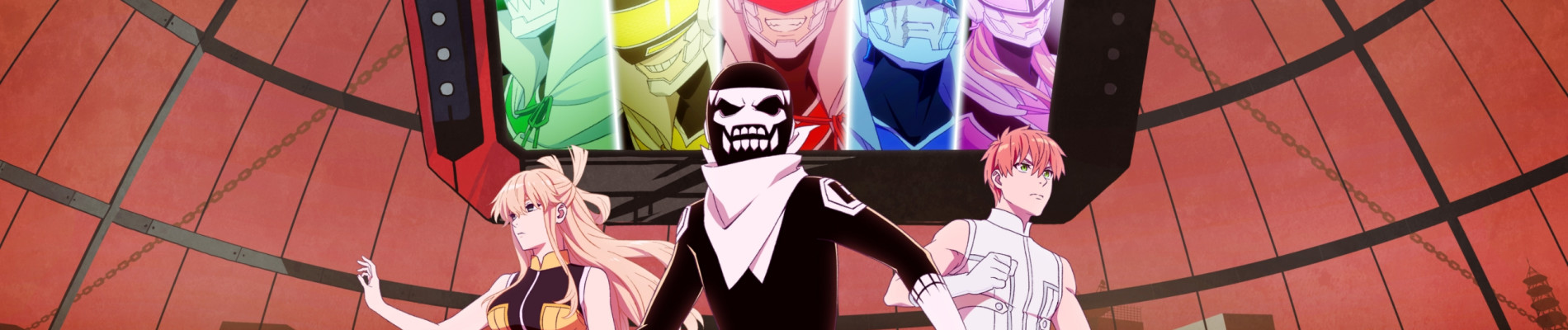
That’s the atmosphere—not grit, not satire, not even irony—but exhaustion with teeth. It’s the quiet horror of realizing your oppression is performative, your suffering commodified, and your very identity a licensed product. You don’t feel heroic watching Go! Go! Loser Ranger!. You feel vertigo: the floor drops when you remember the Rangers’ theme song plays over footage of real refugee camps repurposed as “Monster Quarantine Zones.” You don’t laugh at the absurdity of shapeshifting bureaucrats or alien espionage rings embedded in municipal waste management—you laugh because the alternative is screaming. It makes you question who writes the script, who edits the broadcast, and why survival feels less like resistance and more like staying just barely inside the frame.
That same vertigo lives in BioShock™, where the player walks past billboards advertising “Rapture: Where Your Dreams Are Guaranteed”—only to find those dreams hollowed out by objectivist dogma and genetic decay. The game’s description calls it a “shooter unlike any you’ve ever played,” and yes—the plasmids, the Big Daddies, the collapsing art deco spires—but what resonates with Go! Go! Loser Ranger! isn’t the spectacle. It’s the player review calling it “one of the most revolutionary games ever” because it changes the gaming world—just as the anime changes the tokusatsu world by revealing the war wasn’t won, it was licensed. Both force you to stare at the architecture of control until it starts breathing back.
Then there’s Aliens versus Predator Classic 2000, described as “fast, brutal, and absolutely unforgiving”—a phrase that lands like a boot heel on the chest when you recall the Loser Ranger’s first solo ambush: no music swell, no slow-mo, just a predator’s thermal vision locking on, then impact, then silence broken only by the distant roar of a crowd cheering a victory they didn’t witness. The player review says it’s “rough around the edges today,” and that’s the point—the anime’s animation glitches during henshin sequences; its aliens speak in overlapping bureaucratic jargon mid-battle; its survival isn’t about stamina bars, but about not being edited out of the feed. Both reject polish as complicity.
And S.T.A.L.K.E.R.: Shadow of Chernobyl, with its Zone where “you fear not only radiation, anomalies and deadly creatures, but other S.T.A.L.K.E.R.s”—that paranoia mirrors the anime’s urban fantasy layer, where every street vendor might be a disguised informant, every subway tunnel a contested surveillance blind spot. The player review says the story is “really good” and the map “big and beautiful,” but what sticks is how the Zone refuses to explain itself. Like the anime’s unspoken truth—that the Monster Army surrendered because they were promised autonomy, not annihilation—the Zone’s logic is buried under layers of corrupted data, half-remembered broadcasts, and documents stamped CLASSIFIED: LOSER RANGER EYES ONLY. You piece meaning together from debris, not exposition.
Who loves this pairing? Not just fans of “subversive takes” or “deconstructions.” It’s the viewer who rewatches the scene where the Loser Ranger watches his own defeat replay on a convenience store TV—and notices, in the reflection of the glass, a second figure standing behind him, unseen by the camera. It’s the player who spends twenty minutes in Valheim, not building, but mapping the fog, tracing how the terrain subtly shifts near ancient ruins marked with glyphs identical to the ones under the monsters’ skin. It’s the person who doesn’t want catharsis—they want recognition. Who finds relief not in winning, but in finally seeing the wires—and knowing, deep in their bones, that the fight isn’t for victory. It’s for the right to name the cage.
🎮55 Games That Match the Vibe




























Match Dimensions Explained
❓Frequently Asked Questions
Why does BioShock keep coming up in 'Games Like Go! Go! Loser Ranger!' lists when it’s so serious and story-heavy?
Great question—it’s all about that sharp, satirical tone and subversive power fantasy. Go! Go! Loser Ranger! mocks hero tropes with absurdity and self-aware failure, just like BioShock flips Ayn Rand ideology on its head while you wield plasmids like a deranged, philosophical carnival barker. Both games weaponize irony: one with splicers screaming ‘Would you kindly?’ and the other with Ranger losing his pants mid-boss fight.
Is there a Go! Go! Loser Ranger! anime or movie adaptation?
Nope—no official anime, film, or manga exists (yet!). But if you love its chaotic energy and genre-savvy parody, Aliens versus Predator Classic 2000 delivers that same ‘oh god, why is this happening *right now*’ adrenaline rush—especially during the Colonial Marine’s frantic hallway crawls past Xenomorphs, or the Predator’s cloaked chaos in dark vents. It’s got that same ‘over-the-top spectacle meets sudden, ridiculous consequence’ vibe.
How does Chains compare to Go! Go! Loser Ranger! in terms of pacing and humor?
They’re total opposites—but in a fun way! Go! Go! Loser Ranger! is frantic, slapstick, and loud, while Chains is chill, physics-based match-3 where you link colored bubbles with deliberate taps—like trying to zen out while your bubble chain collapses into glorious, giggly entropy. Still, both lean into absurd escalation: Chains’ stages get increasingly unhinged with gravity shifts and bouncing chaos, much like how Loser Ranger’s ‘failures’ escalate from tripping to summoning eldritch bureaucrats.
What’s the best game like Go! Go! Loser Ranger! if I want that same feeling of scrappy, underdog survival but with more building and Viking vibes?
Valheim is your guy—especially if you love Loser Ranger’s ‘I’m terrible at this but somehow winning’ energy. Picture this: you spend 45 minutes crafting the perfect longhouse in Valheim… only for a troll to stomp it flat seconds after you place the roof, *exactly* like Loser Ranger’s boss fights where victory feels earned purely through stubborn, hilarious persistence. Plus, both games reward chaotic creativity over perfection—whether it’s a crooked mead hall or a ranger who wins by accidentally launching himself into the villain’s face.