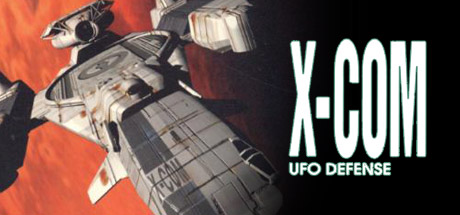
X-COM: UFO Defense
You are in control of X-COM: an organization formed by the world's governments to fight the ever-increasing alien menace.
🎮Game Details
💬What Players Say
"I've been playing this game since it was on PlayStation and still revisit it every soo often. This playthrough I am using the OpenXCom. It has QOL improvements that make the game much more enjoyable...."
"A Golden Oldie!"
"much like the og fallouts, this has its own style and uniqueness compared to the more polished squad based sequels. ufo defence makes it very clear you aren't in control, solider die and a lot of yours will early on until you get better tactics and gear but still you will lose guys. you don't have a crack team that'll clear every mission and survive...."
📝Editorial Analysis
The flicker of the geoscape screen at 3 a.m., your finger hovering over the “Launch Interceptor” command—knowing full well that this UFO could be carrying a Sectoid with Mind Control, or worse, a Chryssalid waiting to burst from the cargo bay. You’ve just lost three soldiers in the last mission—two rookies you’d named after old PlayStation save files, one veteran whose stats you’d memorized like scripture—and now the panic index in Brazil is spiking. The official description says you’re in control of X-COM, but the player reviews tell the truth: “you aren’t in control, soldier die and a lot of your…” — the sentence cuts off there, raw and unfinished, just like every debriefing after a crashed Skyranger.
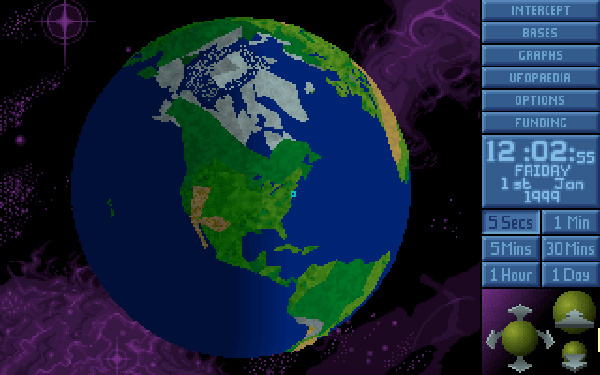
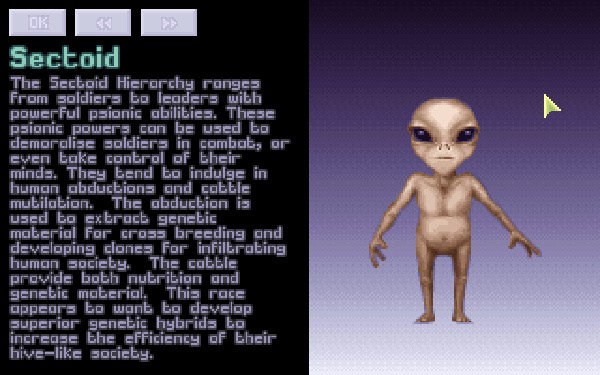
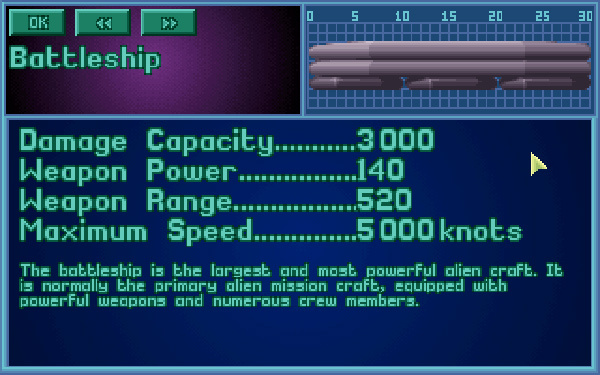
That’s the atmosphere—not dread, exactly, but weight. Not hopelessness, but fragility. It’s the feeling of holding a cracked soldering iron over a live circuit board while the world’s governments whisper behind closed doors about cutting funding. The graphics are limited, yes—but that limitation deepens the tension. Every pixelated alien silhouette on the radar isn’t just an enemy; it’s a question mark with teeth. Every turn-based decision carries the echo of real consequence because the game refuses to soften the blow. There’s no respawn, no auto-save rewind, no narrative hand-holding—just you, the geoscape’s slow pulse, and the quiet, grinding certainty that survival is temporary. You don’t win X-COM: UFO Defense—you endure it. And in that endurance, something rare ignites: not heroism as spectacle, but heroism as stewardship—of lives, of intel, of time itself.
World Trigger 2nd Season shares that same tactical gravity. It’s not about flashy combos or destiny—it’s about layered defense grids, real-time recalibration of Trion output, and squads making split-second calls under sensor blackout. Like X-COM, every battle leaves scars: a fallen comrade isn’t just a plot device—they’re a tactical liability next mission, their absence reshaping deployment options. The shared dimensions—Sci-Fi & Space, Survival & Crafting, Tactical Warfare—aren’t just tags. They’re textures: the way both use cramped corridors and shifting terrain not for spectacle, but for consequence; how resource scarcity (Trion batteries / Elerium-115) forces hard choices long before the shooting starts.
Star Blazers: Space Battleship Yamato 2199 breathes the same oxygen—Sci-Fi & Space, Survival & Crafting, JRPG Narrative. Watch the crew jury-rig warp cores mid-flight, recalibrate shield harmonics during asteroid storms, or ration oxygen while debating whether to divert power to weapons or life support. The ship isn’t a weapon—it’s a life raft with guns, its hull groaning under accumulated damage like X-COM’s aging Skyrangers. The JRPG Narrative dimension isn’t about leveling up—it’s about accumulated weight: each planet visited, each crewman lost, each diplomatic failure, folding into the next decision like fatigue into muscle memory. Both demand you care about systems and souls—not separately, but as one entangled thing.
ASTRA LOST IN SPACE lands even closer to the bone. Stranded light-years from Earth with no backup, no map, no guarantee of rescue—the crew doesn’t fight aliens first; they fight entropy. They craft tools from wreckage, diagnose failing life support with duct tape and desperation, and argue over whether to trust a signal that might be a trap—or their only lifeline. The Survival & Crafting, Sci-Fi & Space, JRPG Narrative overlap isn’t thematic window-dressing. It’s structural: every inventory slot matters, every repaired air filter buys time, every quiet conversation in the mess hall is a calibration of morale—just like reviewing a soldier’s psi stats before sending them into a mind-blast zone.
This is for the person who replays X-COM: UFO Defense every so often—not for nostalgia, but because they miss the honesty of its stakes. For the viewer who watches World Trigger’s border skirmishes and feels the knot in their stomach tighten—not from action, but from logistics. For the one who pauses Yamato 2199 not at the big battles, but when Dr. Sado adjusts a coolant valve with grease-stained fingers, knowing the entire ship hinges on that one turn of the wrench. These aren’t stories about winning. They’re about holding the line with what’s left—and finding something fiercely human in the act of counting bullets, checking oxygen levels, and choosing, again and again, to keep going.
→20 Anime That Match the Vibe
Connected through 4 aesthetic dimensions.
Connected through 4 aesthetic dimensions.

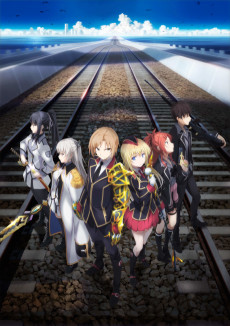
Border’s tense, rain-slicked defense of Shibuya Station—where Trion-powered soldiers coordinate under fire—mirrors X-COM’s desperate base management during a global alien panic. Unlike most sci-fi, both anchor their 🎯 Tactical Warfare in granular resource trade-offs: Osamu’s real-time shield calibration echoes X-COM engineers jury-rigging laser weapons mid-crisis. Season 2’s escalating Neighbor incursions and X-COM’s collapsing funding make survival feel earned, not heroic—a rare, grounded resonance in the genre.

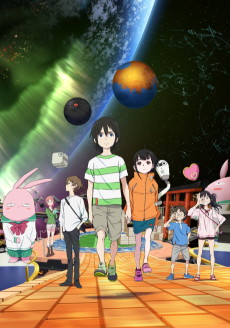
Desperation hums in the claustrophobic corridors of Earth’s last underground cities—just as it crackles over X-COM’s panicked comms when a Sectoid breaches the base perimeter. Where *Yamato 2199*’s survival hinges on salvaging, retrofitting, and jury-rigging the ancient battleship amid dwindling resources, X-COM’s *Crafting* loop mirrors that same tactile urgency: every alloy scrap, every captured alien weapon, is a fragile lifeline against extinction. This isn’t just shared sci-fi spectacle—it’s the raw, grinding weight of *Survival & Crafting* as moral calculus, not convenience.

Connected through 2 aesthetic dimensions.

That gut-churning moment when X-COM soldiers first breach a UFO’s biomechanical interior—walls pulsing with alien tissue—mirrors the horror of Terra Formars’ Mars expedition crew realizing the “cockroach” terraformers evolved into hyper-intelligent, exoskeleton-clad predators. Unlike most sci-fi, both weaponize **Tactical Warfare** not just as gameplay or choreography, but as desperate, granular survival: every cover position matters, every ammo count bleeds tension. The resonance lies in how both treat space not as wonder, but as a hostile, biologically weaponized frontier demanding ruthless adaptation.

Connected through 3 aesthetic dimensions.

Ryoma Nagare’s claustrophobic cell—cold steel, flickering light, no escape—mirrors the X-COM base’s tense command room as panic surges after a UFO breach. Unlike most mecha or strategy titles, *Getter Robo: Armageddon* leans into visceral horror and desperate resource management, echoing X-COM’s brutal *Survival & Crafting*: every repaired weapon, every recovered alien alloy, feels earned amid mounting dread. That shared sci-fi grit—where humanity scrapes by on ingenuity, not glory—makes their resonance startlingly intimate.

A battered X-COM base humming with jury-rigged alien tech feels eerily familiar beside the Loser Rangers’ repurposed junkyard command center—both worlds weaponize scarcity through 🔨 Survival & Crafting. Where X-COM’s panic-stricken soldiers scavenge plasma rifles from downed UFOs, the “heroes” of *Go! Go! Loser Ranger!* cobble together inept mecha from scrap and delusion. That shared, defiant scrappiness—turning desperation into makeshift power—is what makes their resonance so darkly hilarious and oddly tender.
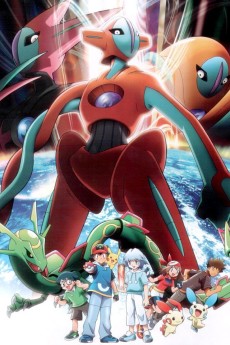
Deoxys’ crystalline, alien physiology—arriving not as invaders but as a confused, wounded entity—mirrors X-COM’s early missions where autopsies reveal terrifying yet biologically coherent extraterrestrials. Unlike most sci-fi, both anchor cosmic stakes in intimate human vulnerability: Tooi’s trauma echoes X-COM soldiers’ panic during first contact, while LaRousse’s shimmering cityscape mirrors the game’s geoscape interface—blending ✨ JRPG Narrative with 🚀 Sci-Fi & Space in startlingly parallel ways. This resonance feels quietly radical: empathy, not firepower, becomes the true interface between worlds.








Match Dimensions Explained
❓Frequently Asked Questions
Why is World Trigger 2nd Season recommended for X-COM: UFO Defense fans?
Because it nails that desperate, high-stakes tactical command vibe—like when Yuiga’s squad gets ambushed in the Border’s underground tunnels and has to fall back while managing limited Trion reserves, just like scrambling wounded soldiers after a failed UFO crash site raid. The constant resource scarcity, permadeath stakes (remember Kitora’s near-fatal injury in Episode 14?), and layered mission planning mirror X-COM’s ‘you aren’t in control’ tension perfectly.
Is there an anime adaptation of X-COM: UFO Defense?
No—there’s never been an official anime adaptation, even though the game’s legacy is huge (it’s still revisited decades later, as one player says: ‘I’ve been playing since PlayStation’). But if you want that same gritty, grounded sci-fi military feel with real consequences, Star Blazers: Space Battleship Yamato 2199 comes closest—especially scenes where Captain Okita makes brutal triage calls aboard the damaged Yamato, echoing how X-COM forces you to choose which soldiers live or die based on gear, wounds, and morale.
World Trigger vs. ASTRA LOST IN SPACE—which is better for X-COM’s survival-crafting tension?
World Trigger wins for pure tactical warfare pressure: think of the ‘B-Rank Exam’ arc where teams coordinate real-time flanking, cover use, and ammo conservation under alien fire—just like X-COM’s turn-based cover system and limited medikit uses. ASTRA’s great for isolation and resource juggling (e.g., repairing the Astra’s oxygen scrubbers on the asteroid belt), but it leans more into JRPG narrative than X-COM’s ‘soldier die and a lot of your...’ raw, unflinching consequence.
What’s the best anime like X-COM for that ‘limited graphics but killer gameplay’ golden-oldie vibe?
Star Blazers: Space Battleship Yamato 2199—it’s got that same ‘limited visuals, massive substance’ charm: chunky cel animation and practical ship models, but razor-sharp tactical sequences like the Gamilas fleet ambush in Episode 8, where Yamato’s crew improvises shield routing and torpedo salvos under time pressure. Just like X-COM’s ‘limited graphics but the game play is still great…’—it’s all about smart design, not polish.