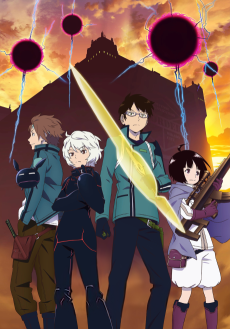
World Trigger
One day, a gate to another world suddenly opens in Mikado City. Aliens invincible to Earth’s weapons, called “Neighbors”, start coming over. Earth’s only line of defense is a mysterious group called the “Border” who are armed with weapons called “Triggers”.
Four years later, the city has recovered from initial attacks and citizens of Mikado City have started to get used to the Neighbor’s attacks. Yuma Kuga, a transfer student, and his classmate Osamu Mikumo find themselves fighting a Neighbor that suddenly appears. Osamu, who is actually a Border agent, activates his Trigger but is unable to defeat it. This leaves Yuma to activate his own Trigger and defeat the alien. Yuma reveals that he is not part of Border and is actually a Neighbor who has transferred from the other side.
(Source: Crunchyroll)
📺Anime Details
📝Editorial Analysis
The air in Mikado City hums—not with traffic or chatter, but with the low, metallic thrum of a Trigger charging. Yuma Kuga stumbles backward, breath ragged, as a Neighbor’s blade slices the pavement where his head was a half-second ago. His trigger—crude, jury-rigged, human—flickers blue at the edges. Osamu Mikumo isn’t beside him. He’s ten meters away, crouched behind shattered concrete, recalculating trajectories on a wrist-mounted AR display that overlays heat signatures, recoil vectors, and real-time threat priority tags—all while his fingers tremble just slightly. No music swells. No voiceover explains the stakes. Just the hiss of displaced air, the clank of spent casings hitting asphalt, and the quiet, urgent beep-beep-beep of a proximity alarm counting down to zero.
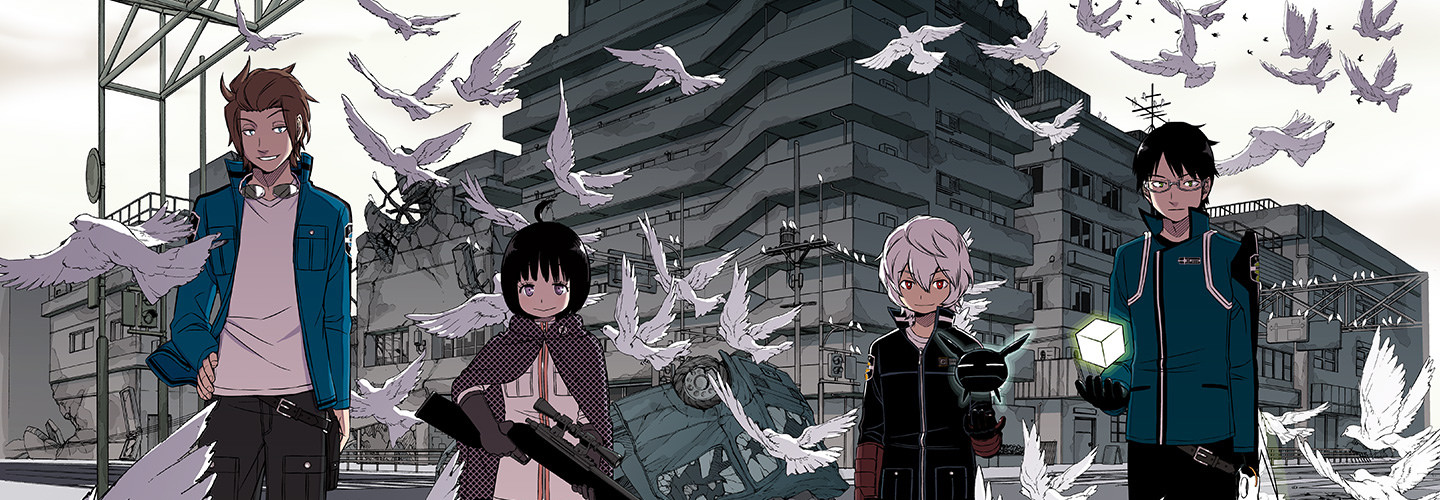
That’s the feeling: precision under pressure. Not spectacle for its own sake—but the weight of split-second decisions made by people who’ve trained for years, not because they’re chosen, but because someone has to. World Trigger doesn’t trade in destiny or lone heroes rising from ashes. It trades in squad cohesion, tactical literacy, and the quiet exhaustion of living inside a war that never ends—just pauses, resets, and resumes in calibrated, bureaucratic increments. The city rebuilds around the battlefield. Cafés reopen two blocks from a sealed-off Trigger Zone. Students take exams while Border units run live drills overhead. That duality—normalcy and near-annihilation coexisting—is what makes it ache. You don’t feel awe here. You feel responsibility. You feel the sting of a misjudged flank, the relief of a perfectly timed decoy, the hollow dread when your teammate’s AR feed cuts to static.
Which is why STAR WARS™ Jedi Knight - Jedi Academy™ lands like a physical echo. Its description promises you “forge your weapon and follow the path of the Jedi”—but the player review nails it: you’re a Padawan, thrust into a galaxy-spanning crisis not as a savior, but as a trainee. Like Yuma learning to sync his trigger rhythm with Osamu’s prediction algorithms, you’re building competence through repetition, failure, and mentorship—not mythic birthright. The tactical warfare dimension isn’t about grand strategy maps; it’s about reading enemy stance shifts mid-lunge, adjusting your saber arc while dodging blaster fire, knowing your Force push has one second of cooldown before the next wave closes in. That same measured urgency, that same respect for systems over swagger—it’s all there.
Then there’s Warhammer® 40,000: Dawn of War® - Dark Crusade, where the description drops you “deep under the central desert of Kronus” into “skull-lined tunnels” as the Necrons awaken. Not cosmic horror—archaeological horror: ancient, indifferent, engineered death stirring in layers of buried history. The player review calls it “peak, 10/10” because “the game knows what it wants to be.” So does World Trigger: a war fought not for glory, but containment; not against evil, but entropy. The Neighbors aren’t mustache-twirling villains—they’re biomechanical forces operating on logic so alien it feels geological. Like the Necrons, they don’t rage. They reclaim. And Border’s response isn’t heroics—it’s fortification, intel parsing, resource triage. The survival & crafting tag fits not because characters smith gear, but because they craft survival itself: rationing Triggers, calibrating AR overlays, retraining squads after attrition. Every victory feels salvaged, not seized.
And Aliens versus Predator Classic 2000? Its review says it’s “fast, brutal, and absolutely unforgiving”—a shooter where “FPS games were rough around the edges.” That’s Mikado City’s truth too: no auto-aim, no health regen, no cinematic invincibility frames. When Yuma takes a hit, his vision blurs before the pain registers. When Osamu’s AR flickers from interference, his targeting goes blind for three heartbeats—long enough for a Neighbor to close. The game’s action spectacle isn’t flash—it’s consequence. A missed shot means exposure. A delayed reload means death. That same unforgiving physics, that same reliance on spatial awareness and environmental reading (alleys, vents, crumbling facades) binds them tighter than any shared lore ever could.
This pairing isn’t for fans of power fantasies or mythic arcs. It’s for the ones who watch Yuma reload twice during a single chase sequence—and feel their own pulse sync to the click-clack-hiss of the mechanism. It’s for players who pause Jedi Academy mid-saber clash to adjust their stance, or who spend ten minutes scouting a Dawn of War map not for cover, but for line-of-sight choke points. It’s for people who don’t want to win—they want to endure correctly. Who find poetry in a well-timed grenade bounce, elegance in a synchronized squad retreat, and deep, quiet relief in the sound of a Trigger stabilizing—not because the battle’s over, but because they held the line, again.
🎮55 Games That Match the Vibe







Match Dimensions Explained
❓Frequently Asked Questions
Why does World Trigger feel so different from Aliens vs Predator Classic 2000 even though both have sci-fi combat and squads?
Great question—it’s all about pacing and role fantasy. World Trigger leans into precise, fast-paced tactical movement with Trion-based abilities (like Yuma’s rapid-fire triggers or Chika’s barrier control), while AvP 2000 is pure chaotic, close-quarters survival—think Colonial Marines scrambling in dark corridors against xenomorphs that *actually* climb walls and ambush you mid-air. The latter’s brutal FPS intensity and asymmetrical faction design (Predator cloaking, Alien wall-running) trades World Trigger’s squad-coordination focus for raw, unforgiving spectacle.
Is there a World Trigger anime adaptation I should watch before trying similar games?
Yep—the official World Trigger anime (2014–2021, 3 seasons) is *essential* context. It nails the core vibe: tight squad tactics, escalating Trion tech (like Osamu’s ‘Trigger’-enhanced speed bursts), and grounded-but-sci-fi stakes in Border HQ. Watching it helps you spot why games like Warhammer 40,000: Dawn of War – Dark Crusade hit the same notes—especially its Necron awakening scenes under Kronus’ skull-lined tunnels, where squad positioning and unit synergy (like Wraithguard vs. Necron Warriors) mirror Border’s layered defense strategies.
How does S.T.A.L.K.E.R.: Shadow of Chernobyl compare to World Trigger in terms of atmosphere and tension?
They’re spiritual cousins—but S.T.A.L.K.E.R. swaps Border’s sleek urban bases and team comms for oppressive, lonely dread in the Zone: radiation fog, invisible anomalies that warp physics, and mutants that stalk you silently—just like how World Trigger’s Neighbors force constant environmental awareness. Player reviews call it 'intriguing' and 'beautifully dangerous,' which matches World Trigger’s best moments (e.g., the first real Neighbor incursion in Shibuya), but S.T.A.L.K.E.R. dials up isolation and survival over squad banter and trigger calibration.
What’s the best game like World Trigger if I want that same tactical, squad-based sci-fi energy but with lightsabers and Force powers?
STAR WARS™ Jedi Knight - Jedi Academy™ is your answer—no question. You build your Padawan from scratch (choose lightsaber style, Force powers like Push or Lightning), then lead fireteams across planets like Korriban or Yavin 4, coordinating attacks just like Border squads do during large-scale invasions. With its 71 Metacritic score and emphasis on Action Spectacle + Tactical Warfare, it delivers that same 'plan, execute, adapt' thrill—imagine Yuma’s agility meets Kyle Katarn’s saber combos mid-battle.