X-COM: Terror From the Deep
The war continues... X-COM: UFO Defense brought you to a galactic battlefield. X-COM: Terror from the Deep brings the alien terror into a totally new dimension.Seeking to take advantage of a weakened Earth, X-COM's deep space foes unexpectedly change strategy and launch a powerful second front against planet Earth.
🎮Game Details
💬What Players Say
"The game is quite imaginative, interesting, and a good challenge for those who love strategy type games. The graphics, audio, and actual game play are captivating...holds your attention from start to finish...."
"Yeah, that's gonna be a no from me, dawg."
📝Editorial Analysis
The cold presses in before the first shot is fired. You’re staring at a submarine’s sonar screen—blips pulse, distant and wrong—and your hand hovers over the “panic fire” command because you don’t know what’s out there, only that it’s already breached the hull of your sub, already inside, and the oxygen gauge just dropped two percent without explanation. That’s X-COM: Terror From the Deep: not war as glory or even as spectacle, but war as drowning—slow, pressurized, suffocating. The official description nails it: “a weakened Earth,” “a powerful second front,” “alien terror into a totally new dimension.” Not outer space this time—down. Deeper. Where light fails, where comms fray, where every corridor breathes salt and static. One player calls it “captivating… holds your attention from start to…”—and the ellipsis feels intentional, like the sentence itself runs out of air.

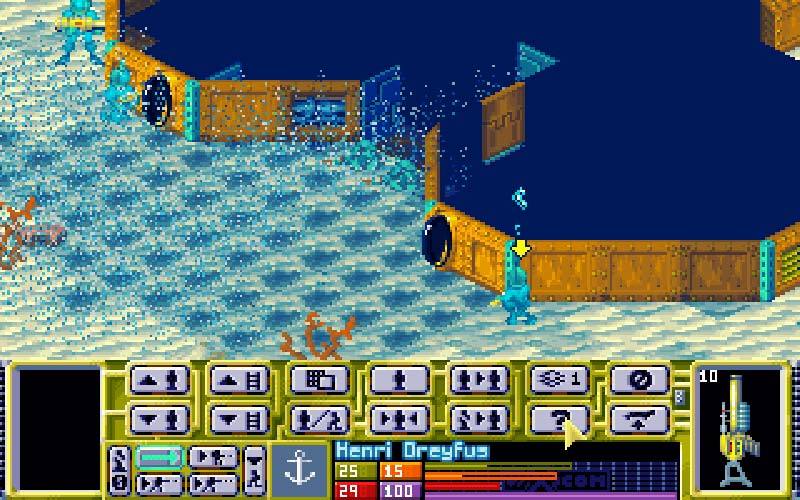
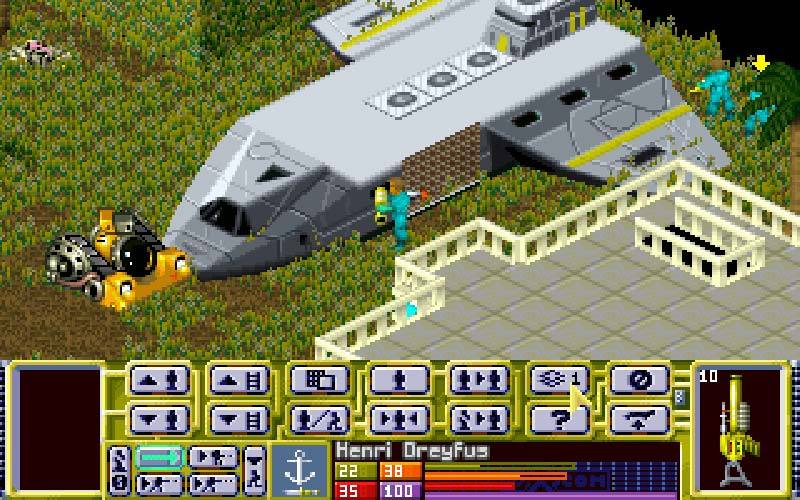
What makes it ache isn’t the turn-based tactics—it’s the weight. Every movement drags. Water resistance slows your soldiers’ reloads. Armor corrodes mid-mission. Medikits fail underwater. Your best soldier drowns because you misjudged a vent’s pressure seal. There’s no heroic last stand—just a silent, green-lit corpse sinking into blackness while your cursor blinks, helpless. It forces you to think in layers: depth, pressure, oxygen, visibility, bio-contamination. It doesn’t ask can you win? It asks how much of yourself will you lose before you understand the rules? That’s the feeling: dread, yes—but also awe, the kind that comes when you realize the enemy isn’t just hostile, it’s adapted, evolved, at home in a place you were never meant to survive. It’s not about conquering the deep. It’s about not being digested by it.
That emotional DNA—claustrophobic escalation, biological violation, tactical fragility—resonates sharply with Terra Formars, where astronauts confront engineered cockroach-human hybrids in the Mars tunnels. The shared dimensions—Sci-Fi & Space, Survival & Crafting, Body Horror & Occult—aren’t just tags. They’re textures: the way a character’s arm unfurls into chitin mid-battle mirrors how a X-COM marine’s suit ruptures to reveal gills and cartilage; how both stories treat evolution not as progress but as invasion. Then there’s Fate/Zero Season 2, where the Holy Grail War fractures into psychological attrition and ritualized decay. Its Survival & Crafting dimension isn’t about building bases—it’s about reconstructing purpose from broken oaths; its Body Horror & Occult isn’t gore for shock, but the slow unmaking of identity under magical strain—exactly like watching a X-COM scientist mutate after exposure to alien biotoxins, their notes dissolving into glyphs no one can translate. And Getter Robo: Armageddon—with its collapsing orbital platforms and biomechanical leviathans rising from abyssal trenches—doesn’t just share Sci-Fi & Space and Body Horror & Occult. Its Survival & Crafting dimension lives in the repairs: patching Getter Dragon’s cracked chassis while seawater floods the cockpit, soldering nerves back into cybernetic limbs as the hull groans under tectonic stress—the same desperate, tactile improvisation that defines every X-COM salvage op where you jury-rig an aqua-suit from three ruined ones and pray the seals hold.
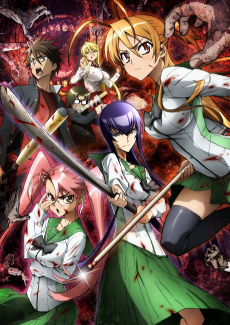
This isn’t for players who want clean victories or anime fans who crave cathartic arcs. It’s for the ones who lean in when the lights dim—not for jump scares, but for the silence between heartbeats, the moment the sonar blip stops pulsing and becomes a solid, unmoving mass directly beneath you. It’s for viewers who rewatch World Trigger 2nd Season not for the flashy Trion bursts, but for the quiet scene where a rookie recalibrates his barrier frequency while bleeding from his ears, knowing one miscalculation means implosion. It’s for those who pause High School of the Dead not at the zombie horde, but at the shot of a teacher’s glasses fogging as she tries to breathe through a gas mask clogged with her own saliva—because that’s the real horror: the body betraying itself, the mind fraying under sustained pressure, the world shrinking to the width of a flooded corridor and the weight of your own exhale. These pairings speak to people who find beauty in resistance, not triumph—who feel most alive when the odds aren’t just stacked, but submerged, and every choice is less about winning, and more about delaying the dark.
→27 Anime That Match the Vibe

Connected through 4 aesthetic dimensions.
Connected through 4 aesthetic dimensions.

Connected through 3 aesthetic dimensions.
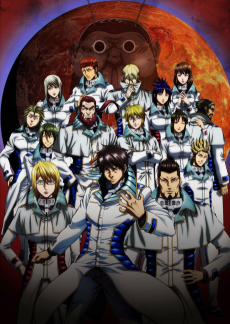
Dread pools in the crushing dark of X-COM’s flooded submersibles just as it does in *Terra Formars*’s claustrophobic Martian tunnels—both weaponize **Body Horror & Occult** through grotesque, adaptive alien biology that violates human scale and sanity. Where X-COM’s aquatoids mutate mid-combat under pressure, *Terra Formars*’s cockroach-humans warp via engineered terraforming pathogens, turning survival into a visceral, tactical unraveling of flesh. This isn’t just sci-fi spectacle; it’s horror rooted in evolutionary betrayal—biology itself turned hostile, intimate, and inescapable.

Deep-sea pressure gauges flicker red as X-COM’s submersible squad braces for a Kraken ambush—mirroring Border’s Season 2 trench warfare in the B-Rank simulation zone, where every misstep triggers cascading tactical collapse. Unlike most sci-fi, both anchor *Tactical Warfare* in claustrophobic, consequence-heavy decision-making: Osamu’s real-time shield recalibration echoes X-COM’s desperate last-turn medikit swaps amid flooding corridors. That shared dread of irreversible loss—amplified by *Survival & Crafting* constraints—makes their resonance unexpectedly visceral, not just thematic.

Drowned in bioluminescent abyssal trenches, X-COM’s submarine bases echo Getter Robo: Armageddon’s claustrophobic prison cells—both trap protagonists in decaying, water-logged spaces where sanity frays. Where Ryoma Nagare’s reanimated flesh mirrors X-COM soldiers’ grotesque aqua-organic mutations, the shared **Body Horror & Occult** dimension weaponizes biology itself: gills sprout, skin sloughs, and dead scientists whisper from corrupted data logs. It’s startling how deeply both commit to aquatic dread—not as backdrop, but as sentient, consuming theology.

Dread hangs thick in the flooded corridors of X-COM’s undersea bases—just as it does aboard the *Yamato*’s groaning hull during its desperate voyage to Iscandar. Unlike most sci-fi, both anchor their **Tactical Warfare** not in heroics but in brittle human competence: Captain Okita’s quiet resolve mirrors the player’s exhausted commander, weighing oxygen reserves against alien assault. That shared pressure—crafting survival from scarcity while racing a literal countdown—makes their resonance startlingly visceral.
Connected through 2 aesthetic dimensions.

Drowned in bioluminescent gloom, the *Terror From the Deep* submarine wreck maps echo the rain-slicked, blood-streaked alleys of Fuyuki City where Kiritsugu Emiya’s ruthless pragmatism fractures under the weight of sacrifice—both demand **Tactical Warfare** where every move risks irreversible loss. Unlike most fantasy conflicts, *Fate/Zero* Season 2’s Fourth Holy Grail War climax and X-COM’s deep-sea ops share visceral **Body Horror & Occult**: mutated human-alien hybrids mirror Berserker’s shattered sanity and the Grail’s corrupted flesh. This pairing is startlingly coherent—not because they’re similar, but because both weaponize despair as strategy.

Connected through 3 aesthetic dimensions.




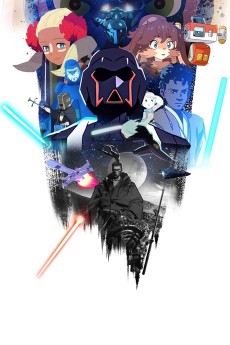





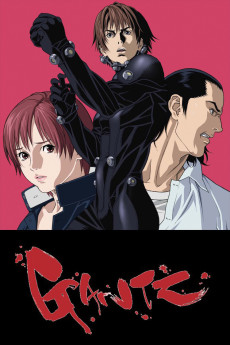
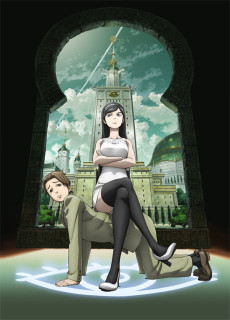


Match Dimensions Explained
❓Frequently Asked Questions
Why is Terra Formars considered the top anime like X-COM: Terror From the Deep?
Because both lean hard into desperate, tactical survival against biomechanical alien threats in claustrophobic, high-stakes environments—like when Kazuhira’s squad fights mutated cockroach-human hybrids in the Mars colony tunnels, mirroring X-COM’s underwater base defense and turn-based positioning under pressure. The body horror isn’t just aesthetic; it directly impacts strategy, just like TFtD’s alien mutations forcing constant gear and squad reconfiguration.
Is there an anime adaptation of X-COM: Terror From the Deep?
No—there’s never been an official anime adaptation of Terror From the Deep (or any X-COM game, for that matter). But fans often point to World Trigger 2nd Season as the closest *spiritual* stand-in: its Neighbourhood Defense Force uses real-time tactical grids, layered cover systems, and mission-based squad rotations—very much like managing X-COM’s submarine crews during deep-sea ambushes off the Mariana Trench.
How does Getter Robo: Armageddon compare to Terra Formars for X-COM vibes?
Getter Robo: Armageddon nails the 'desperate deep-space counteroffensive' energy—especially in Episode 4, where the crew scrambles to reconfigure their mecha mid-battle after alien bio-weapon corrosion disables shielding, echoing TFtD’s resource-scarce engineering dilemmas. Terra Formars leans heavier on body horror and slow-burn dread, while Armageddon matches X-COM’s escalating tech arms race and sudden alien escalation—just like how TFtD’s foes pivot from UFOs to oceanic invasion without warning.
What’s the best anime like X-COM: Terror From the Deep if I want tense underwater/space survival with squad-based tactics?
World Trigger 2nd Season is your best bet—it’s built around real-time tactical warfare in shifting 3D environments (like the Underworld’s flooded ruins), where Trion shields act like X-COM’s hit-point-and-cover system, and characters like Yūma constantly adapt formations mid-fight, just like rotating your X-COM operatives between sonar sweep, torpedo reload, and emergency repair roles during a Leviathan assault.