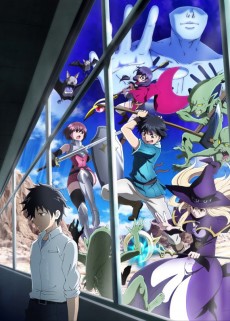
I'm Standing on a Million Lives
📺Anime Details
📝Editorial Analysis
The first time Yuuto’s hand shatters—not breaks, but fractures into jagged, crystalline shards that hover midair before reassembling like broken glass sucked back into place—that’s when the world tilts. No scream, no blood, just quiet horror as he flexes his fingers and watches veins pulse with something other. It’s not pain he feels first—it’s recognition: this body isn’t his anymore, and it never will be again.
That moment isn’t spectacle. It’s philosophy made flesh—literally. I'm Standing on a Million Lives doesn’t trade in wish-fulfillment isekai comfort. It trades in weight: the weight of decisions that calcify into irreversible consequences, the weight of memory that won’t stay buried, the weight of survival that hollows you out even as it keeps you breathing. This isn’t about leveling up—it’s about watching your own reflection warp in the cracked lens of a dying world. You don’t feel empowered; you feel accountable. Every spell cast, every ally lost, every time Yuuto chooses silence over truth—you carry it like shrapnel under the skin. The fantasy isn’t escape. It’s excavation. And the body horror isn’t grotesque for shock value—it’s the physical manifestation of moral erosion, of identity dissolving under pressure so immense it bends biology.
That same suffocating accountability hums through BioShock Infinite’s floating city of Columbia—not as spectacle, but as consequence. Booker DeWitt isn’t chasing redemption—he’s running from it, debt written in blood and baptismal water. The player review nails it: “I know that some people are still bitter about the Bioshock Infinite we could have gotten.” That bitterness? It mirrors Yuuto’s quiet resentment—not at fate, but at the necessity of his role. Both stories force you to stare at the architecture of your own complicity: Columbia’s propaganda, the Tower’s hierarchy, the way choice is illusion dressed as freedom—all echo the anime’s unflinching gaze at systemic violence disguised as salvation. When Elizabeth tears open reality and reveals the branching rot beneath, it’s not wonder you feel—it’s dread, identical to Yuuto realizing his “power” was never his to wield, only to inherit—and betray.
Then there’s Prince of Persia: Warrior Within, where Dahaka doesn’t hunt the Prince—he unmakes him. The description calls him “an immortal incarnation of Fate,” and that’s the key: this isn’t a boss fight. It’s inevitability given claws and breath. The player review says, “Dahaka chase is still as goated as it was before”—and yes, it’s thrilling, but what lingers is the relentlessness, the way time itself becomes an antagonist that refuses to let you forget what you’ve done. Just like Yuuto’s body reassembling after shattering, the Prince’s sand-wrought powers aren’t gifts—they’re curses that mutate him, visibly, physically, with every rewind, every kill. Body horror here isn’t decoration—it’s ontology. You become what you survive. And survival leaves scars that glow faintly in the dark.
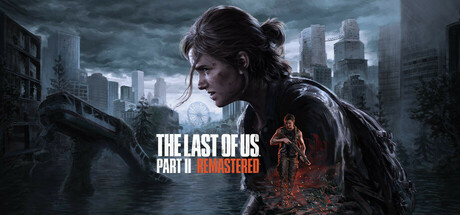
And then—The Last of Us™ Part II Remastered, where survival isn’t heroic—it’s grinding, tactile, exhausting. The description flags “Survival & Crafting” alongside “Emotional Narrative,” but the real resonance lies deeper: in the way trauma reshapes perception, how grief warps memory into something occult—not supernatural, but unmoored, repeating like a cursed incantation. The player reviews don’t mention mechanics—they mention replay, not for trophies, but because “completing it was a journey.” So is Yuuto’s path—not toward victory, but toward a kind of unbearable clarity. When Ellie swings her guitar case like a weapon, or Yuuto stands motionless as another life flickers out in his periphery, it’s the same ache: the cost isn’t measured in HP bars or mana pools—it’s measured in the silence after the scream fades.
These pairings aren’t for fans of “cool powers” or “epic battles.” They’re for the ones who pause mid-fight to watch dust motes hang in sunlit air—knowing they’ll vanish. For the ones who replay scenes not to win, but to witness the fracture again, slower. For readers who underline sentences not for plot, but for how the syntax makes their throat tight. You don’t enjoy these stories—you endure them, and in that endurance, find something rare: recognition. Not of fantasy—but of what it costs, truly, to stand—even if it’s on a million lives.
🎮88 Games That Match the Vibe
















Match Dimensions Explained
❓Frequently Asked Questions
Why does I'm Standing on a Million Lives feel so similar to Prince of Persia: Warrior Within?
It’s all about that relentless Dahaka chase—how the game weaponizes time itself while you’re hunted through crumbling, sand-choked ruins. Both lean hard into the 'Time & Memory' and 'Body Horror & Occult' dimensions, with Warrior Within’s visceral sword combat, time-bent arenas, and psychological weight echoing ISOTML’s fractured timelines and moral decay.
Is there an anime or live-action adaptation of I'm Standing on a Million Lives?
No official adaptation exists yet—but fans keep drawing parallels to BioShock Infinite’s twisty, emotionally gut-punching narrative and Last Epoch’s layered time-loop worldbuilding. That said, if one *did* happen, it’d likely borrow Elizabeth’s tear-manipulation scenes or Last Epoch’s Chronomancer class mechanics to visualize reality unraveling.
How does TimeShift compare to I'm Standing on a Million Lives in terms of time manipulation?
TimeShift is way more hands-on and chaotic—you’re literally rewinding bullets mid-air as Dr. Krone, freezing enemies to shatter them like glass, all while the world glitches into body-horror distortions. It shares ISOTML’s obsession with causality collapse and alternate realities, but trades emotional ambiguity for pure kinetic time-warfare, much like Warrior Within’s sand-powered combat.
What’s the best game like I'm Standing on a Million Lives if I want something deeply emotional but still steeped in occult dread?
The Last of Us™ Part II Remastered—it nails that suffocating blend of intimate character pain and eerie, almost ritualistic body horror (think the Seraphites’ scarification or the infected’s grotesque mutations). Its 'Emotional Narrative' + 'Body Horror & Occult' dimensions hit the same nerve as ISOTML’s quiet moments before violence erupts, like Ellie’s raw vulnerability mirroring the protagonist’s fractured identity.