
Fate/Zero Season 2
As the Fourth Holy Grail War rages on with no clear victor in sight, the remaining Servants and their Masters are called upon by Church supervisor Risei Kotomine, in order to band together and confront an impending threat that could unravel the Grail War and bring about the destruction of Fuyuki City. The uneasy truce soon collapses as Masters demonstrate that they will do anything in their power, no matter how despicable, to win.
Seeds of doubt are sown between Kiritsugu Emiya and Saber, his Servant, as their conflicting ideologies on heroism and chivalry clash. Meanwhile, an ominous bond forms between Kirei Kotomine, who still seeks to find his purpose in life, and one of the remaining Servants. As the countdown to the end of the war reaches zero, the cost of winning begins to blur the line between victory and defeat.
(Source: MAL Rewrite)
📺Anime Details
📝Editorial Analysis
Rain slicks the asphalt of Fuyuki City like oil on a blade—cold, reflective, treacherous. Kiritsugu Emiya stands in the ruins of the Einzbern castle, smoke curling from his silenced pistol, Saber’s armor cracked and bloodied at his feet—not from enemy steel, but from his own command spell, forced through her flesh to override her will. Her eyes don’t hold betrayal. They hold recognition. She sees the man who chose the world over her honor, the man who believes love is a liability in war. That silence—not the gunshot, not the explosion—is the sound of Fate/Zero Season 2’s heart cracking open.
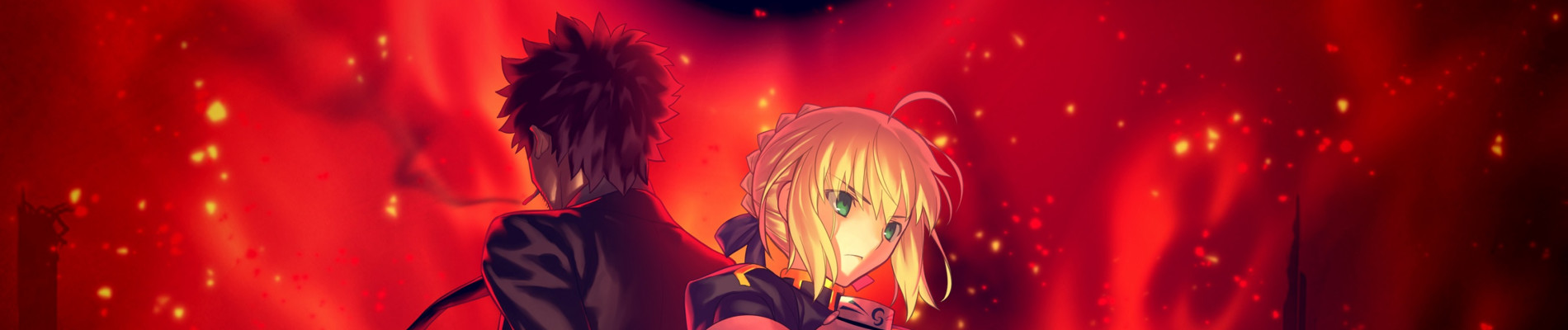
This isn’t fantasy dressed as war. It’s war wearing myth like a shroud. The feeling isn’t adrenaline or awe—it’s dread with weight, the kind that settles behind your ribs when you realize every noble ideal has already been compromised, and the only thing left to measure is how much of yourself you’re willing to incinerate for a victory that tastes like ash. There are no safe spaces: not the Church’s hollow sanctity, not the Einzbern snow, not even Saber’s unwavering code—because here, conviction isn’t armor. It’s the first thing stripped away. You don’t watch Fate/Zero Season 2 to escape. You watch to witness—how dignity buckles under pressure, how loyalty curdles into calculation, how even sacrifice can be a form of arrogance.
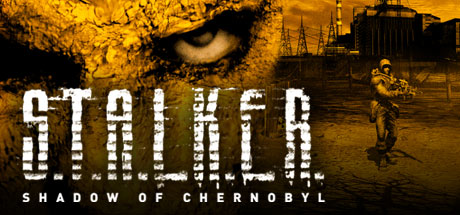
That emotional DNA—the suffocating gravity of moral erosion, the quiet horror of systems collapsing from within—echoes in unexpected places. Take S.T.A.L.K.E.R.: Shadow of Chernobyl. Its description names radiation, anomalies, deadly creatures—and other S.T.A.L.K.E.R.s. Not monsters first. People. Like the Masters in Fuyuki, they’re not cartoon villains; they’re desperate, armed, and operating inside a broken covenant (the Zone’s unspoken rules, the Holy Grail War’s brittle truce). A player review calls it “a story about survival” where you fear “not only the radiation… but other S.T.A.L.K.E.R.s”—exactly the pivot in Fate/Zero Season 2, when Risei Kotomine’s truce dissolves and Kiritsugu watches Kariya Matou choose vengeance over alliance, not with a roar, but with a slow, exhausted blink. Both make you feel the loneliness of being surrounded by allies who’ve already decided you’re expendable.
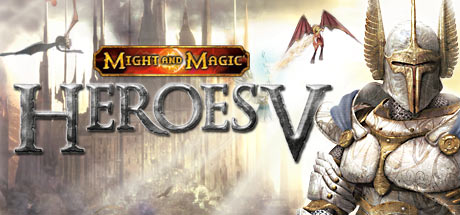
Then there’s Heroes of Might & Magic V, described as melding “classic deep fantasy with next-generation visuals and gameplay”, built on “Tactical Warfare”. Its player review declares it “Best HoMM game ever made” — not for flash, but for structure under strain: turn-based command where every resource decision echoes consequence, where alliances shift mid-campaign because supply lines fail or a hero falls not to spectacle, but to attrition. That’s the rhythm of Fate/Zero Season 2’s final acts—not grand duels, but Kiritsugu calculating bullet trajectories while Saber bleeds out from his own order, or Kariya weighing whether to burn his sanity to save Sakura, knowing it will cost him everything after the war ends. Both prize the agony of choice where “winning” means losing something irreplaceable—and doing it tactically, with chilling precision.
Even Jade Empire™: Special Edition, with its binary path of “open palm or closed fist”, resonates—not in its kung fu flourishes, but in its Emotional Narrative dimension. The description frames it as stepping into a role where philosophy is combat doctrine. A player review mentions needing obscure technical steps just to launch the game—a meta-frustration mirroring Kiritsugu’s own struggle: he follows a brutal, self-made code (“closed fist”) not out of cruelty, but because he’s convinced gentler paths have already failed the world. His tragedy isn’t that he’s evil. It’s that his logic is airtight, and that makes his descent feel horrifyingly inevitable—like choosing a path so narrow, so absolute, that mercy becomes the first casualty.
This pairing isn’t for fans of triumphant heroes or clean resolutions. It’s for the ones who linger on the last frame of a ruined cathedral, who replay a boss fight not to win faster, but to study the exact moment their character’s hand trembles before pulling the trigger. It’s for people who feel relief, not sadness, when a character finally stops lying—to others, and to themselves. Who understand that the heaviest magic isn’t in spells or relics, but in the unbearable lightness of a promise you know you’ll break.
🎮103 Games That Match the Vibe
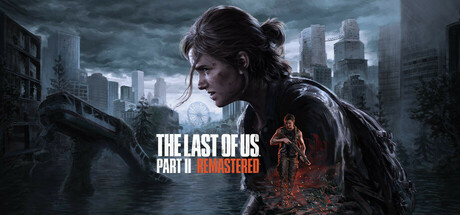
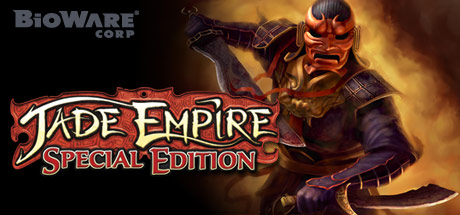
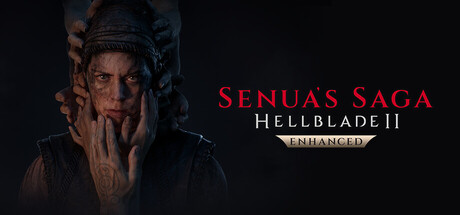










Match Dimensions Explained
❓Frequently Asked Questions
Why does Jade Empire™: Special Edition keep showing up in 'Games Like Fate/Zero Season 2' lists?
Because both lean hard into morally gray emotional narratives where your choices shape relationships with complex characters—like Li Xiao’s tragic loyalty arc in Jade Empire mirroring Kiritsugu’s agonizing compromises in Fate/Zero. The game’s ‘Open Palm vs. Closed Fist’ path system echoes the show’s constant tension between idealism and ruthless pragmatism, and critics specifically highlight its Mythology & Folklore dimension as a tonal match for Fate’s blend of mysticism and human drama.
Is there a Fate/Zero Season 2 video game adaptation?
No—there’s never been an official Fate/Zero Season 2 game. The closest narrative experiences are games like Jade Empire™: Special Edition (82 score) and Heroes of Might & Magic V (77 score), both praised for their JRPG-style emotional weight and layered character writing—think Kiritsugu’s flashbacks or Saber’s internal conflict, not cutscene-heavy licensed tie-ins.
Chains vs. S.T.A.L.K.E.R.: Shadow of Chernobyl—which one better captures the oppressive, brooding atmosphere of Fate/Zero Season 2?
S.T.A.L.K.E.R. wins hands-down for that vibe: its decaying Zone, radiation-scarred landscapes, and ever-present dread mirror the psychological weight and body horror of Fate/Zero’s later arcs—like Kotomine’s twisted experiments or the visceral toll of magecraft. Chains is soothing and abstract (bubble-linking physics), while S.T.A.L.K.E.R. nails the grim, atmospheric tension—and its 77 score reflects how deeply players connect with its oppressive worldbuilding.
What’s the best game like Fate/Zero Season 2 if I want something emotionally heavy but not combat-heavy?
Jade Empire™: Special Edition is your best bet—it’s a story-first JRPG where dialogue choices, relationship-building (e.g., with Master Li or Dawn Star), and moral consequences drive the experience, much like Kiritsugu’s haunting introspection or Irisviel’s quiet resilience. Its 82 score and strong Emotional Narrative + Mythology & Folklore dimensions make it far more resonant than action-focused picks like RAGE or S.T.A.L.K.E.R.