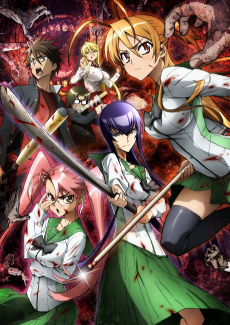
High School of the Dead
The lockers are splattered with blood, the student bodies are piling up and that's not mystery meat they're eating in the cafeteria… it's the faculty! And that's just the start of the worst day of school ever when a nightmarish virus is unleashed, turning humans into flesh eating zombies and converting Fujimi High School into a literal hell on Earth. Now it's a crash course in survival, and the only test or skill that matters is the ability to keep moving, breathing and fighting. Because if nerds, jocks and the surviving staff can't find a way to work together to escape this carnal house of education, they're all going to end up on the menu. And that's assuming there's anyplace safe left to escape to.
(Source: Sentai Filmworks)
📺Anime Details
📝Editorial Analysis
The cafeteria floor is slick—not with spilled milk or dropped lunch trays, but with warm, copper-scented blood pooling around a half-eaten arm still wearing a teacher’s ID badge. A student stumbles backward, tripping over a locker that gapes open like a ribcage, its interior smeared in arterial spray. There’s no music, no dramatic pause—just the wet crunch of bone under boot and the sudden, guttural inhale of something that used to be human, now turning its head toward fresh meat. That’s not the start of the apocalypse. That’s lunch period.
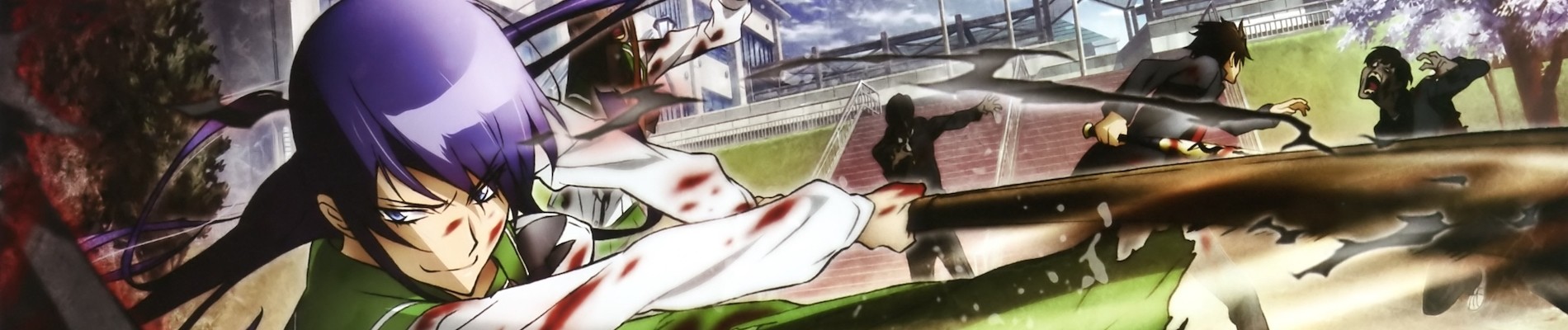
What makes High School of the Dead vibrate with such uneasy intimacy isn’t its zombies—it’s the profanity of the mundane. It weaponizes the banality of high school: fluorescent lights humming over stained linoleum, the echo of sneakers on empty halls, the way panic smells like cheap perfume and adrenaline and old gym mats. It doesn’t ask you to believe in monsters—it asks you to believe in what happens when the fire drill alarm doesn’t stop, when the principal’s voice crackles over the PA one last time before dissolving into static and a wet gurgle. You feel the weight of unpreparedness: teens gripping baseball bats like holy relics, their hands shaking not from fear alone—but from the sheer, humiliating ordinariness of being seventeen and suddenly responsible for staying alive. It’s less about surviving the undead—and more about surviving the collapse of every social contract you were taught to trust.
That same fraying-at-the-edges dread lives in BioShock™, where the player descends into Rapture—a city built on ideology, now rotting from within, its grandeur choked by leaking pipes and the distorted lullabies of dead children. The description calls it “a shooter unlike any you’ve ever played,” but what sticks is the body horror & occult dimension—the way splicers twist, twitch, and scream with voices layered like broken records. One player review hails it as “one of the most revolutionary games ever!”—not for its guns, but because it makes you question your own reflexes: every plasmid upgrade feels like a surrender to the very decay you’re fighting. Like Fujimi High’s lockers splattered with blood, Rapture’s art deco corridors are beautiful because they’re ruined—and that dissonance hurts in the same way.
Then there’s Vampire: The Masquerade - Bloodlines, where the description promises “a new type of RPG experience—one that blends all the core elements of a traditional RPG with the graphical richness, immediacy and brutal combat of a first-person shooter.” But the real resonance lies in its dark fantasy and body horror & occult DNA. You play someone who’s just been turned—your reflection flickers out, your hunger pulses behind your eyes, and every choice risks losing yourself to the Beast. A player insists: “*BUY IT ON GOG; if you want to use the steam version you need to download the unofficial patch…”—a plea born of devotion to something broken but essential. Just like High School of the Dead’s ensemble cast stumbles through trauma without exposition dumps, Bloodlines trusts you to feel the rot in your bones*, not your logbook.
Even Assassin's Creed™: Director's Cut Edition, buried under dated textures and political thriller scaffolding, shares this pulse: the description frames it as redefining action “while other games claim to be next-gen with impressive graphics and physics”—but what matters is the tactical warfare beneath the spectacle. A player admits, “some of the models and textures are quite dated but no issues with me”—because the tension isn’t in polish, it’s in motion: climbing, hiding, choosing when to strike, knowing one misstep unravels everything. That’s Fujimi High all over again—not a battlefield, but a school where every stairwell is a choke point and every classroom door could swing open on death.
This isn’t for fans of clean apocalypses or heroic last stands. It’s for the ones who flinch at the sound of a locker slamming too hard—who remember how terrifying it felt to walk past the nurse’s office during flu season and wonder, what if she’s already bitten?—who replay BioShock’s opening sequence just to hear Andrew Ryan’s voice crack, or reload Bloodlines’ first alley fight because the weight of that first kill—the hesitation, the sweat, the way your character’s breath hitches—feels true. They don’t want safety. They want the shiver of recognition: that horror isn’t elsewhere. It’s in the fluorescent hum. It’s in the pause before the bite. It’s in the quiet, trembling second after the bell rings—and no one comes.
🎮88 Games That Match the Vibe























Match Dimensions Explained
❓Frequently Asked Questions
Why is Assassin's Creed: Director's Cut Edition listed as similar to High School of the Dead?
Because both lean hard into tense, grounded tactical warfare amid collapsing social order—think Takashi’s squad coordinating ambushes in the school gym versus Altaïr using rooftops and crowd blending to isolate targets in Jerusalem. The political thriller dimension also matches: just like the anime’s slow reveal of government betrayal and cover-ups, Assassin’s Creed layers conspiracy and ideological conflict beneath its action.
Is there a High School of the Dead video game adaptation?
No—there’s never been an official licensed game based on High School of the Dead. But fans seeking that same blend of high-stakes survival, morally grey choices, and body horror-infused zombie chaos often land on BioShock (80) or Vampire: The Masquerade – Bloodlines (77), especially for scenes like BioShock’s Little Sisters or Bloodlines’ visceral blood-feeding mechanics and infected Nosferatu transformations.
How does BioShock compare to Vampire: The Masquerade – Bloodlines for High School of the Dead vibes?
BioShock nails the oppressive, decaying atmosphere and shocking narrative twists—like when you first see Fontaine’s betrayal mirrored in the anime’s sudden betrayals—but Bloodlines wins for raw interpersonal tension and moral ambiguity, like Saeko’s conflicted leadership or Rei’s trauma-driven choices. Both deliver body horror (Big Daddies / Nosferatu mutations) and occult-tinged dread, but Bloodlines lets you *be* the monster in ways BioShock doesn’t.
What’s the best game like High School of the Dead if I want that desperate, claustrophobic school siege vibe?
Disciples II: Gallean’s Return (77) might surprise you—it’s turn-based, but its dark fantasy siege mechanics and oppressive atmosphere (think defending the fortress-city of Gallean against waves of undead legions) echo the school lockdown tension. Pair that with Heretic: Shadow of the Serpent Riders (77), where you’re a lone Sidhe mage fighting through corrupted, maze-like temples—very much like navigating the blood-slicked halls of Fujimi High during the initial outbreak.