
ASTRA LOST IN SPACE
Itʼs the first day of Planet Camp, and Aries Spring couldnʼt be more excited! She, along with eight other strangers, leave for Planet McPa for a weeklong excursion. Soon after they arrive, however, a mysterious orb appears and transports them into the depths of space, where they find an empty floating spaceship…
(Source: VIZ Media)
Note: The first and last episode aired with a runtime of ~48 minutes as opposed to the standard 24 minute long episode.
📺Anime Details
📝Editorial Analysis
The airlock hisses open—not with a bang, but a sigh—on that hollow, drifting ship. Nine teenagers stand in silence, helmets fogged, breath loud in their ears, staring at the infinite black through a cracked viewport while Earth hangs impossibly small and silent behind them. No music swells. No villain monologues. Just the low thrum of failing life support and the weight of how very far they are from home—not just in kilometers, but in certainty, in childhood.
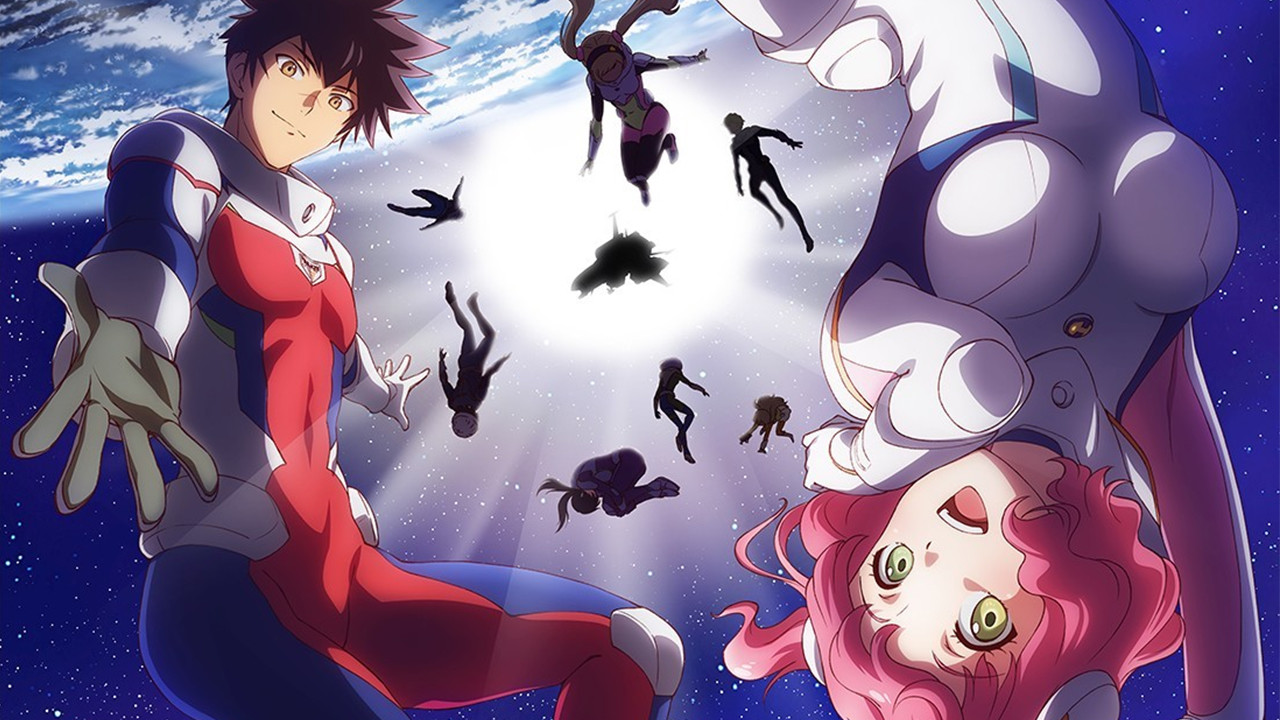
That moment isn’t about spectacle. It’s about disorientation as intimacy. ASTRA LOST IN SPACE doesn’t thrill you with velocity or dazzle you with scale—it makes you feel the quiet dread of shared vulnerability, the slow dawning that survival isn’t about strength, but about who you choose to trust when every assumption has been unmoored. Its atmosphere is tender exhaustion: the ache in your shoulders after hauling oxygen tanks across an asteroid field, the way laughter cracks like thin ice after a near-fatal decompression, the way a glance between two characters holds more history than exposition ever could. It’s sci-fi stripped of grandiosity—no galactic empires, no AI gods—just kids learning how to hold space for each other while floating in literal nothingness. You don’t watch it to escape. You watch it to remember what it feels like to be found, not by destiny, but by stubborn, stumbling care.
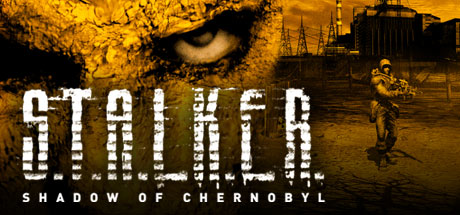
That emotional DNA pulses strongest in games where isolation isn’t backdrop—it’s texture. Take S.T.A.L.K.E.R.: Shadow of Chernobyl, whose description names “survival in the Zone—a very dangerous place, where you fear not only the radiation, anomalies and deadly creatures, but other S.T.A.L.K.E.R.s.” The player review calls the map “big and beautiful,” but what lingers is the silence between encounters: the rustle of wind through dead grass, the distant groan of metal, the way your own footsteps echo too loudly in your helmet. Like ASTRA, it trusts emptiness to speak louder than dialogue—where danger isn’t just external, but the slow erosion of self-reliance. Both make you scan horizons not for enemies, but for signs of others who haven’t given up.
Then there’s Beyond Good and Evil™, described as a mission to “expose a terrible government conspiracy” alongside “your loyal pig friend Pey’j.” The player review praises its “crazyyy” energy—but the resonance lies deeper: in the melancholic exploration dimension shared with ASTRA, and in how both frame conspiracy not as a puzzle to solve, but as a wound in the world that forces characters to redefine loyalty. Jade doesn’t fight alone; she leans on Pey’j, trusts Double H, protects her community—not because it’s efficient, but because care is the only compass that works when institutions lie. That same quiet fidelity binds ASTRA’s ensemble—the way Aries Spring’s optimism isn’t naive, but resistant, how Kanata’s stoicism isn’t cold, but protective. Both ask: What do you build when the ground you stood on was never real?
Even BioShock™, tagged with political thriller and sci-fi & space, echoes this—not in its underwater dystopia, but in how its player review calls it “one of the most revolutionary games ever” for changing the gaming world. Why? Because it weaponizes narrative dissonance: the gap between what you’re told and what you experience. ASTRA does the same, not with audio logs or genetic splicers, but with glances held too long, with memories that flicker like faulty holograms, with a clone reveal that lands not as shock, but as grief for a self you never knew you’d lost. Both understand that the deepest conspiracies aren’t about control—they’re about erasure. And healing begins not with answers, but with someone saying, “I remember you. Even if you don’t.”
This pairing won’t grip someone chasing adrenaline or lore dumps. It’s for the viewer who watches Kanata wipe grease off his goggles and feels their throat tighten—not because he’s cool, but because he’s trying. It’s for the player who pauses mid-mission in Beyond Good and Evil™ just to sit beside Pey’j on the roof, watching the twin moons rise, because that stillness matters more than the next objective. It’s for anyone who’s ever been lost—not in space, but in transition—and found that the only thing holding them together wasn’t a map, but the steady, imperfect, unwavering presence of people who chose to stay.
🎮66 Games That Match the Vibe


































Match Dimensions Explained
❓Frequently Asked Questions
Why does ASTRA LOST IN SPACE feel so similar to Beyond Good and Evil?
Both lean hard into melancholic exploration and political thriller vibes—like when Jade sneaks through the DomZ-infested lighthouse or uncovers propaganda in the IRIS News Network, it echoes ASTRA’s quiet tension aboard the ship and its slow-burn revelations about the Federation. They also share that grounded sci-fi warmth: no sterile corridors here, just lived-in worlds with loyal companions (Pey'j and the ASTRA crew both steal your heart), and a score that swells with equal parts hope and sorrow.
Is there an ASTRA LOST IN SPACE anime or movie adaptation?
No official anime or film adaptation exists yet—unlike BioShock, which inspired multiple comic series and a long-rumored (but still unproduced) movie, ASTRA remains purely a manga and game property. That said, fans often compare its visual storytelling to Beyond Good and Evil’s cinematic cutscenes, especially Jade’s solo moments on the beach or in the catacombs—quiet, atmospheric, and emotionally precise.
How does S.T.A.L.K.E.R.: Shadow of Chernobyl compare to ASTRA LOST IN SPACE?
They’re both sci-fi survival stories where atmosphere *is* the antagonist—but where ASTRA leans into isolation and cosmic mystery (think the crew floating silently past a derelict satellite), S.T.A.L.K.E.R. throws you into the Zone’s chaotic, radiation-scarred chaos (like stumbling into the abandoned Pripyat hospital with anomalies crackling overhead). Both demand resourcefulness and emotional stamina, but ASTRA’s crafting is subtle—jury-rigging oxygen filters—while S.T.A.L.K.E.R.’s is visceral: patching armor mid-chase from a bloodsucker.
What’s the best game like ASTRA LOST IN SPACE if I want that quiet, reflective space-voyage vibe?
Go straight to Beyond Good and Evil—it nails that same hushed, starlit melancholy: Jade piloting her hovercraft over the ocean at dusk, radio static humming, mission logs piling up like ASTRA’s log entries after a near-miss with a gravity well. BioShock has the sci-fi setting, but its Rapture is claustrophobic and loud; Beyond’s open skies and deliberate pacing—plus that gentle, investigative rhythm—match ASTRA’s soul more closely than any other on the list.