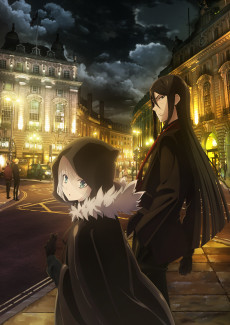
Lord El-Melloi II's Case Files {Rail Zeppelin} Grace note
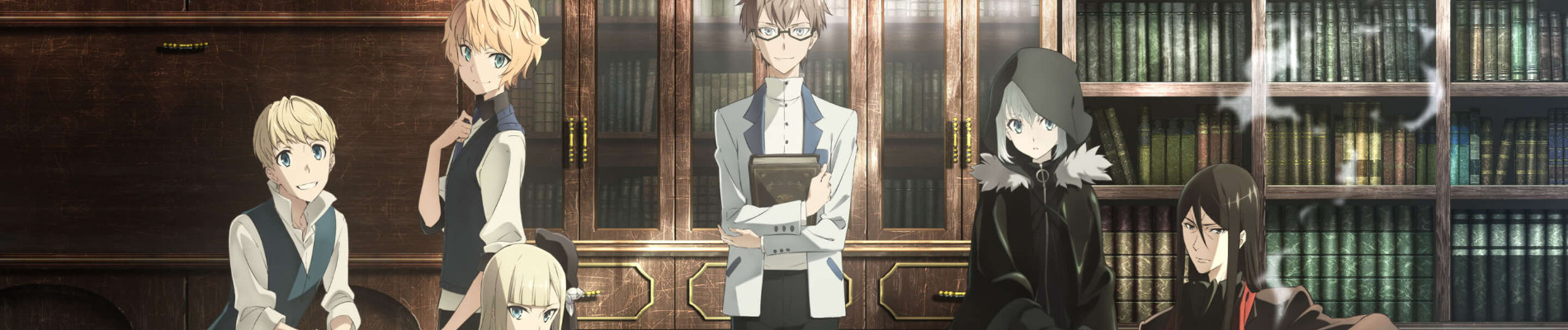
Ten years after facing defeat in the Fourth Holy Grail War, Waver Velvet, now Lord El Melloi II, teaches classes at the Clock Tower—the center of education for mages. However, his new status as "Lord" comes with a caveat: obey the orders of Reines, the younger sister of the deceased Kayneth El Melloi, until she is old enough to rule the House of El Melloi.
Waver, along with his mysterious apprentice Gray, takes on a series of cases assigned by Reines and the Mages Association. With each case proving to be more complex than the last, could there be more to the Clock Tower than meets the eye, and what secrets does Reines hide?
📺Anime Details
📝Editorial Analysis
The desert wind howls through the cracked windows of the Rail Zeppelin, dust swirling around Gray’s quiet hands as she adjusts her gloves—not to fight, but to steady a trembling teacup for Lord El-Melloi II. Waver doesn’t drink it. He stares at the shifting dunes outside, his reflection fractured in the glass: a man who won nothing and yet carries everything—his mentor’s name, his student’s silence, Reines’ unblinking orders, the weight of a House that isn’t his. That single suspended moment—tea cooling, dust settling, duty humming beneath every breath—is where Lord El-Melloi II's Case Files {Rail Zeppelin} Grace note lives.
This isn’t magic-as-spectacle. It’s magic as burden, as bureaucracy, as the slow erosion of self under inherited expectation. The fantasy here feels worn, like old leather on a train seat—sun-bleached, salt-stained, threaded with quiet grief. You don’t feel awe watching necromancy unfold; you feel the exhaustion of explaining spectral taxonomy to a disinterested aristocrat while your apprentice watches from the doorway, saying nothing. The desert isn’t exotic—it’s isolating. The trains aren’t romantic—they’re claustrophobic conduits, hurtling forward while characters stay emotionally stranded. What lingers is the ache of unresolved loyalty, the hush before a ghost speaks not in screams, but in sighs—and the terrible, tender realization that some debts can’t be paid, only carried.
That emotional resonance flickers in games where the frontier isn’t just geography—it’s moral ambiguity made manifest. Red Dead Redemption 2, with its Body Horror & Occult dimension and relentless Tactical Warfare, mirrors this same exhaustion of principle. Arthur Morgan doesn’t ride toward glory—he rides away from consequence, his body breaking as his ideals fray. Like Waver, he’s bound by oaths to people who no longer exist—or who never truly saw him. A player review calls it “a roller coaster of emotions”—but what hits hardest isn’t the chaos, it’s the stillness: Arthur sitting alone by a campfire, rifle across his knees, listening to Dutch’s sermon while knowing, knowing, it’s already hollow. That’s the same silence between Waver and Gray on the Rail Zeppelin—not emptiness, but pressure.
Then there’s Call of Juarez, tagged with Body Horror & Occult and built on dual perspectives—one fugitive, one reverend—where faith and violence bleed into each other without resolution. Its description frames it as an “epic adventure western themed FPS,” but the player review highlights something quieter: “the shooting felt very natural… smoke particles and physics was probably the best part.” That tactile realism—the grit of gunpowder, the weight of recoil—is the game’s version of Gray’s gloved fingers adjusting that teacup. Both anchor the supernatural in physical detail so the horror (or holiness) lands not as spectacle, but as consequence. When Reverend Ray prays mid-gunfight, it’s not catharsis—it’s ritual as armor. Just as Waver recites incantations not to win, but to hold the line.
Even GUN™, described as a “cult classic” rooted in betrayal and vengeance, echoes this. Colton White trusts only his GUN—not because it’s powerful, but because it’s the one thing life hasn’t stolen yet. That raw, stripped-down fidelity to loss—no grand mythos, just a man and the tool he’s reduced to—is kin to Waver’s relationship with the El-Melloi name: not identity, but inheritance as liability. A player calls it “better than most AAA titles”—not for flash, but for staying power, for making you feel the weight of that revolver long after the credits roll.
These pairings belong to the person who watches a train cross the desert and doesn’t think adventure—they think what’s left behind. To the player who pauses mid-mission not to strategize, but to watch dust settle on a dead man’s coat. To those who love stories where magic isn’t a spellbook, but a ledger—and every page is written in regret, duty, and the fragile, stubborn warmth of tea that goes untasted.
🎮58 Games That Match the Vibe






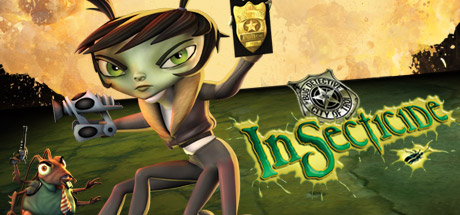

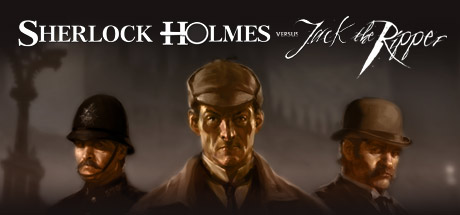
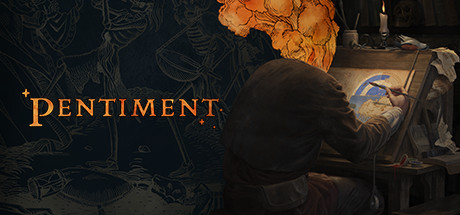














Match Dimensions Explained
❓Frequently Asked Questions
Why is Red Dead Redemption 2 listed as similar to Lord El-Melloi II's Case Files {Rail Zeppelin} Grace note when it’s not an anime visual novel?
It shares the same blend of grounded Western atmosphere and eerie, occult-tinged mystery—like when Arthur investigates the cult at Shady Belle or uncovers the body horror of the 'Blackwater Pox' outbreak, echoing Grace Note’s tense, railway-bound investigations into forbidden magecraft. Both lean hard into morally gray characters, slow-burn dread, and set-piece moments where tactical awareness (e.g., planning a train heist or ambushing agents in the Grizzlies) matters more than pure action.
Is there a visual novel or anime adaptation of Desperados 2 or Helldorado?
No—neither Desperados 2 nor Helldorado has been adapted into a visual novel or anime. They’re strictly tactical Western games: Desperados 2 is all about precise, real-time stealth with characters like Cooper and Doc using lassos, dynamite, and environmental traps across 3D frontier towns, while Helldorado expands that with new missions in Santa Fe and deeper squad-based coordination—but no voice-acted cutscenes or branching narrative like Grace Note’s dialogue-driven investigation scenes.
How does GUN™ compare to Call of Juarez in terms of occult themes and Western tone?
GUN™ leans harder into the occult—Colton White faces literal Aztec mummies, cursed artifacts, and ritualistic murders tied to ancient bloodlines, much like Grace Note’s exploration of forbidden Clock Tower lore. Call of Juarez, meanwhile, keeps its supernatural elements ambiguous and psychological (Reverend Ray’s visions, Billy’s guilt-fueled hallucinations), with less overt body horror and more moral duality—think less 'railway-bound magecraft autopsy' and more 'confession booth tension'.
What’s the best game like Grace Note if I want that slow-burn, train-based mystery vibe with tactical planning?
Helldorado is your best bet—it’s built around mission-based railroad operations in 1883 Santa Fe, where you coordinate squads across moving trains and depot ambushes, mirroring Grace Note’s methodical pacing and confined, high-stakes environments. You’ll plan timed takedowns like Grace Note’s 'rail zeppelin' infiltration sequences, and the story’s kidnapping plot hits that same noir-meets-occult detective tone—just swapped out for six-shooters and saloon standoffs instead of mystic codes and thaumaturgy.