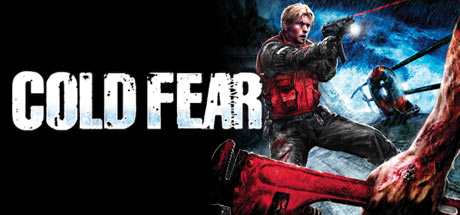
Cold Fear™
In a ferocious Arctic storm, distress signals are sent from a mysterious Russian whaler. As leading Coast Guard veteran Tom Hansen, you board to investigate and discover unthinkable horrors lurking beneath the ship's bloodstained decks.
🎮Game Details
💬What Players Say
"Underrated old-school horror that still hold up. Short, a bit janky by todays standards, but great for Resident Evil-era games fans. It doesn`t work for me in Windos 11...."
"like resident evil but more gross and creepy and cooler soundtracks lol"
"add workshep suport an d maybe we can talk"
📝Editorial Analysis
The first time Tom Hansen steps onto the Valkyrie’s deck, the wind doesn’t just howl—it tears. Salt ice stings your eyes before you even see the blood. That’s not atmosphere; it’s assault. The official description nails it: a ferocious Arctic storm, distress signals from a mysterious Russian whaler, unthinkable horrors lurking beneath the ship’s bloodstained decks. No exposition, no safe harbor—just cold, wet dread, and the immediate, gut-level understanding that this vessel isn’t abandoned. It’s occupied. And whatever’s inside doesn’t breathe like you do. Player Review 2 says it plainly: “like Resident Evil but more gross and creepy”—and that word gross lands like a boot heel on frozen metal. Not just gore, but violation: flesh unspooling, surfaces breathing, corridors slick with something that shouldn’t be warm.
This isn’t isolation-as-quiet. It’s isolation as pressure. The ship groans—not from wind, but from weight, from things shifting below the floorboards. You don’t feel hunted so much as digested. Every creak is a jaw flexing. Every flicker of light feels like a pupil dilating in the dark. The player reviews call it “old-school horror,” but what they mean is tactile horror: clunky controls force you to wrestle the camera, to lean into the stumble—making evasion feel earned, not effortless. That jank isn’t broken; it’s embodied. You’re not watching terror—you’re shivering through it, breath fogging the screen, fingers stiff on the controller. It makes you think about containment—not just locked doors, but the illusion of control over biology, over gravity, over the very architecture holding you upright. When the storm rages outside and the walls pulse within, the line between environment and enemy dissolves. What remains is visceral unease, raw and unmediated.
Mob Psycho 100 II shares that same body horror & occult, tactical warfare dimension—not in tone, but in logic. Mob’s powers warp reality at the cellular level: limbs elongate, faces split open, bodies invert or liquefy mid-combat. Like the Valkyrie’s infected, these aren’t monsters wearing human skin—they’re biology gone occult, where flesh becomes a battlefield and a weapon. The tactical layer isn’t about cover or reload times—it’s about timing the rupture, reading the tremor before the collapse. Both demand you watch how the body fails, not just that it does.
Tokyo Ghoul √A, too, lives in that exact dimensional overlap. Kaneki doesn’t just fight—he unmakes himself in real time: kagune bursting from his spine, nails splitting, eyes bleeding black. The horror isn’t metaphorical. It’s textural: the wet rip of tendon, the grind of bone reshaping. Like Hansen navigating flooded engine rooms where walls sweat and floors buckle under unseen weight, Kaneki moves through spaces where his own anatomy is both shield and sabotage. The “tactical warfare” here is internalized—every step risks transformation, every breath risks exposure. Both are stories where the most dangerous thing isn’t the enemy across the room—it’s the thing growing inside your ribs.
And Dororo, with its scarred, limbless, spirit-haunted landscapes, carries the same occult weight. Hyakkimaru doesn’t just reclaim stolen body parts—he reassembles himself from cursed matter. Each recovered limb arrives with teeth, with memory, with hunger. Like the Valkyrie’s decks, his body is a haunted architecture: not a home, but a site of violation and return. The tactical element isn’t strategy—it’s endurance: how long can you hold your shape while something ancient reknits itself through you?
These pairings won’t click for someone who wants clean scares or polished action. They’ll ignite for the person who leans in when the camera shakes—not to look away, but to see the grain of the rot. For the one who hears a low-frequency hum in a silent room and wonders if it’s the furnace… or the floor. For the player who misses the heft of old controllers, the grit of unfiltered sound design, the way a game used to make your palms sweat before the monster even turned. They’re for the viewer who watches Kaneki’s hair writhe and thinks, That’s not animation—that’s biology remembering how to scream. Who sees Mob’s head crack open and feels the same vertigo as Hansen stumbling down a corridor where the ceiling just breathed. This isn’t nostalgia. It’s recognition—of a specific, unflinching kind of dread, where the horror isn’t out there. It’s in the joints, in the steam, in the silence between heartbeats.
→17 Anime That Match the Vibe

Tom Hansen’s trembling hands fumbling with a rusted hatch aboard the *Takamaru* echo Mob’s clenched fists as he suppresses psychic tremors during the Divine Tree arc—both bodies betraying inner collapse under occult pressure. Unlike most psychological thrillers, *Cold Fear™* weaponizes Arctic claustrophobia while *Mob Psycho 100 II* stages its most brutal body horror not in gore, but in Mob’s liquefying, dissolving form during the Claw HQ assault—a visceral surrender to overwhelming force. This shared tension between tactical discipline and bodily disintegration makes their resonance startlingly intimate: control isn’t broken by chaos, but by the self’s own unraveling.

The body as a site of transformation and terror — both push physical boundaries.
The body as a site of transformation and terror — both push physical boundaries.

The body as a site of transformation and terror — both push physical boundaries.
The body as a site of transformation and terror — both push physical boundaries.
The body as a site of transformation and terror — both push physical boundaries.

A frozen whaler’s corridor, slick with viscous black ichor—Tom Hansen’s flashlight trembles as something *unfurls* from a crewman’s spine. Unlike most fantasy epics, the *Record of Lodoss War* OVA roots its supernatural dread in visceral, grounded stakes: Parn’s sword-arm shakes not from magic, but exhaustion and moral weight after the Battle of Marmo. Their shared body horror—rotting flesh, violated anatomy, occult corruption—anchors cosmic terror in trembling hands and splintered bone. That collision of tactical grit and eldritch violation feels startlingly rare: war as both strategy and sacrilege.
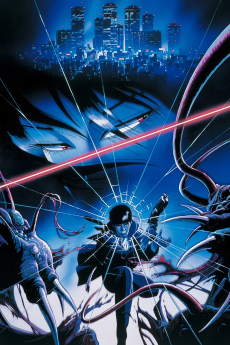
The body as a site of transformation and terror — both push physical boundaries.
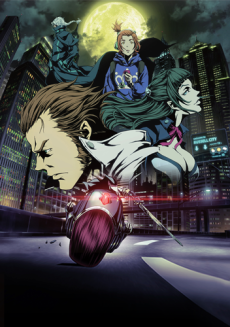
The body as a site of transformation and terror — both push physical boundaries.

The body as a site of transformation and terror — both push physical boundaries.
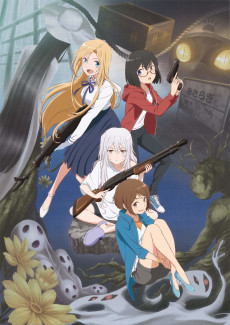


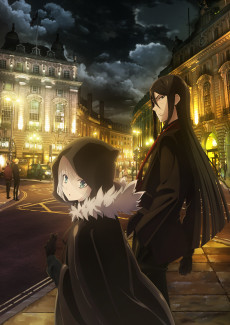



Match Dimensions Explained
❓Frequently Asked Questions
Why is Mob Psycho 100 II on a 'Cold Fear™' anime list when it's mostly about psychic teens and not Arctic horror?
Great question — it’s not about the setting, but the *body horror escalation* during Mob’s breakdowns (like his arm liquefying or limbs splitting mid-fight), plus the occult-tactical vibe of the Divine Tree arc where he and Reigen coordinate under extreme psychological pressure — very much like Tom Hansen trying to hold it together while navigating the whaler’s blood-slicked corridors and facing grotesque, mutating threats. The score (54) reflects how tightly those dimensions align with Cold Fear’s core pillars.
Is there an anime adaptation of Cold Fear™?
No — Cold Fear™ was never adapted into an anime. It’s a standalone 2005 survival horror game (no manga, no anime, no prequel series). That’s why the 'Anime Like Cold Fear™' list pulls from *existing* anime that match its specific blend: body horror + occult dread + tactical, close-quarters combat — like Tokyo Ghoul √A’s brutal CCG raids or Dororo’s visceral demon-possessed limbs tearing through armor.
How does Tokyo Ghoul √A compare to Dororo for Cold Fear™ vibes?
Tokyo Ghoul √A nails the claustrophobic, blood-splattered tension — think Kaneki’s fight in the Anteiku basement, where every kagune strike feels desperate and messy, just like Tom Hansen’s shaky flashlight scans and frantic shotgun reloads aboard the whaler. Dororo, meanwhile, leans harder into grotesque, mythic body horror (Hyakkimaru’s stolen limbs regrowing as writhing demons), echoing Cold Fear’s Russian whaler full of twisted, half-human abominations — both hit the 52-score mark, but √A’s urban decay and tactical squad fights feel more ‘Coast Guard vs. infected crew’ than Dororo’s feudal wilderness.
What’s the best anime like Cold Fear™ if I want that same isolated, grimy, ‘running low on ammo’ panic?
Go straight to Lord El-Melloi II's Case Files {Rail Zeppelin} Grace Note — especially the ‘Frozen Prison’ arc where the train crawls across a blizzard-blasted tundra, the lights flicker, and you’re trapped with occult parasites warping bodies in real time (like the frostbitten stewardess melting into black ichor). It’s got that exact same suffocating, resource-scarce dread — no open fields, no safe rooms — just narrow corridors, failing systems, and horrors that *move* like Cold Fear’s mutated crew.