
Chainsaw Man – The Movie: Reze Arc
Theatrical follow-up to Chainsaw Man.
Denji became “Chainsaw Man”, a boy with a devil’s heart, and is now part of Special Division 4’s devil hunters. After a date with Makima, the woman of his dreams, Denji takes shelter from the rain. There he meets Reze, a girl who works in a café.
(Source: MAPPA CHANNEL)
📺Anime Details
📝Editorial Analysis
Rain slicks the pavement like oil on hot metal—Denji huddles under a narrow café awning, steam curling from his cup, Reze’s fingers brushing his as she passes it over. Her smile is quiet, practiced, warm—but the air hums with something else: the low, metallic thrum of a heart that isn’t human, the scent of wet concrete and burnt sugar, the unbearable lightness of being seen—truly seen—by someone who might already be deciding how to end you. That moment isn’t safe. It isn’t sweet. It’s trembling, suspended between breath and blade.

What makes Chainsaw Man – The Movie: Reze Arc ache so deeply isn’t its demons or its chainsaws—it’s how tenderly it treats devotion as vulnerability. This isn’t urban fantasy dressed in leather and blood; it’s a story where love is the first wound and the last confession, where every café date feels like standing barefoot on broken glass. You don’t just watch Denji fall—you feel the vertigo of trusting someone whose kindness might be calibrated down to the millisecond. The horror isn’t in the shapeshifting or the assassins—it’s in the realization that intimacy, in this world, is the most dangerous kind of supernatural contract. It leaves you raw, not scared—exposed, not exhilarated.
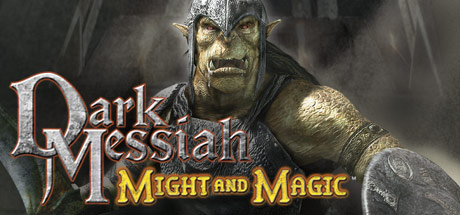
That emotional DNA pulses strongest in Dark Messiah of Might & Magic, where ferocious combat lives alongside a narrative that refuses to flinch from consequence. Its description names it a “dark and immersive” Action-RPG—and the player review confirms it: “A fantastic melee combat game that still holds up pretty well today.” Like Denji’s fights, its battles aren’t flashy spectacle for spectacle’s sake—they’re desperate, physical, close, where every parry risks a throat slit and every choice echoes in silence later. The emotional weight isn’t in cutscenes—it’s in the exhaustion of your arms after three back-to-back encounters, in the way your character’s breath hitches when cornered. That’s the same rhythm as Denji laughing through rain while Reze watches him with eyes that already know his heartbeat.
Then there’s The Witcher 3: Wild Hunt, whose description drops Geralt into a “war-torn, monster-infested continent”—a world where monsters wear faces, contracts bleed into confessions, and love is measured in choices with no clean endings. The player review says it best: “DLC announced 11 years after release, my favourite game keeps getting better…” That longevity isn’t about content volume—it’s about emotional resonance that deepens with time, like remembering how Reze’s laugh sounded before you knew what her hands could do. Both The Witcher 3 and Chainsaw Man – The Movie: Reze Arc treat tragedy not as punctuation—but as atmosphere. You breathe it. You carry it home.
And though Rise of the Argonauts scores identically (85) and shares the mythic weight of loss—“Jason had everything… When she was killed on their wedding day, he vowed to do anything to restore her life”—its player review cuts deeper: “If you love games based on ancient history this one does it right…” That devotion—to memory, to vow, to the ghost of a future stolen—is Reze’s entire posture. Not vengeance as rage, but love as ritual. Her café isn’t neutral ground—it’s an altar. Her date with Denji isn’t flirtation—it’s invocation.
This pairing isn’t for fans of “cool powers” or “epic battles.” It’s for the person who rewatched Denji’s rainy shelter scene three times—not to catch plot details, but to feel again how his shoulders drop when Reze leans in, how his voice cracks just once when he says “I like you.” It’s for the player who paused The Witcher 3 mid-conversation with Yennefer—not to check quest markers—but because Geralt’s silence felt too much like their own. It’s for those who understand that the most devastating monsters aren’t the ones with fangs or claws—but the ones who remember your favorite drink, who hold your gaze a beat too long, and make you want to believe—just for tonight—that warmth isn’t camouflage.
🎮100 Games That Match the Vibe

















Match Dimensions Explained
❓Frequently Asked Questions
Why does Chainsaw Man: Reze Arc feel so much like Rise of the Argonauts?
Both hit that exact same mythic-action-spectacle sweet spot—Rise of the Argonauts has Jason’s brutal, cinematic combat during the wedding-day massacre and his myth-driven quest for the Golden Fleece, mirroring Reze’s emotionally charged, high-stakes action sequences. The dim match score (85) in Mythology & Folklore + Action Spectacle isn’t accidental: it’s about operatic tragedy, personal stakes wrapped in ancient symbolism, and set-piece fights where every swing feels consequential.
Is there a Chainsaw Man: Reze Arc video game adaptation?
No—there’s no official Chainsaw Man: Reze Arc game yet. But if you’re craving that blend of emotional narrative and visceral action, Dark Messiah of Might & Magic nails it: its Source Engine-powered melee combat (think Reze’s razor-wire precision meets Geralt’s parry-and-counter flow) and dark fantasy tone—especially in the grim, morally messy Siege of Khorinis—hit similar notes. Player reviews even compare it to Arx Fatalis, which shares that grounded-yet-uncanny physicality.
How does The Witcher 3 compare to Jade Empire for Chainsaw Man: Reze Arc vibes?
Jade Empire leans into mythic duality (Open Palm vs. Closed Fist) and intimate character bonds—like Reze’s tragic loyalty and identity conflict—while The Witcher 3 digs deeper into layered moral consequences and world-weary melancholy. Both score 82 in Emotional Narrative, but Jade Empire’s Eastern mythology framing and martial-arts choreography (e.g., duels in the Imperial Arena) mirrors Reze’s stylized, rhythm-driven tension better than Geralt’s more grounded monster hunts.
What’s the best game like Chainsaw Man: Reze Arc if I want intense, fast-paced action with emotional weight?
Dark Messiah of Might & Magic is your best bet—it’s got that rare combo of ferocious, physics-driven melee (crushing skulls, kicking enemies down stairs, disarming mid-combo) *and* a dark, character-driven story where choices reshape relationships. Its 84 score in both Dark Fantasy *and* Action Spectacle—and player praise for its still-fresh combat—makes it way closer to Reze’s blend of razor-sharp spectacle and raw feeling than something purely mythic like Loki or Rise of the Argonauts.