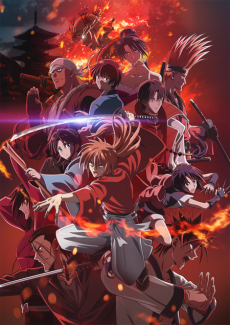
Rurouni Kenshin -Kyoto Disturbance-
📺Anime Details
📝Editorial Analysis
The scent of rain on hot stone. Kenshin standing motionless in the Kyoto alleyway, blood dripping from his sword’s tip—not his own—while the distant chime of a temple bell cuts through the silence like a knife through silk. No triumphant music swells. No slow-motion flourish. Just breath held, eyes closed, then opened—not with rage, but with grief. That moment isn’t about victory. It’s about the weight of every life he’s severed, every vow he’s broken just to keep breathing.
That’s the quiet thunder of Rurouni Kenshin -Kyoto Disturbance-: not adrenaline, but resonance. It’s the ache of history pressing down—not as backdrop, but as living gravity. You feel the Meiji era not in costumes or maps, but in the way Kenshin’s hand trembles before he draws, in how Kaoru’s laughter stutters when she sees his back turned too long, in the way Shishio’s fire doesn’t roar—it consumes, silently, relentlessly. This isn’t action as spectacle; it’s action as consequence. Every slash echoes with memory. Every stillness hums with unspoken loyalty, guilt, and the fragile, trembling hope of redemption earned—not given. It makes you think about time not as progress, but as sediment: layer upon layer of choice, loss, and quiet courage buried beneath the present.
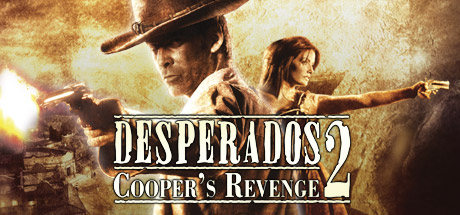
Desperados 2: Cooper's Revenge shares that same tactile tension. Its description calls it “tactical warfare” set in the Western frontier—where split-second decisions carry irreversible weight, where positioning isn’t strategy for points, but survival rooted in terrain, light, and human limitation. A player review admits it’s “made during a time when everything…”—that trailing ellipsis mirrors Kyoto Disturbance’s own suspended breath, its sense of being caught between eras, where old codes clash with new rules and no one walks away unmarked. Like Kenshin navigating Kyoto’s narrow streets under moonlight, Desperados 2 forces you to move through consequence—not around it.
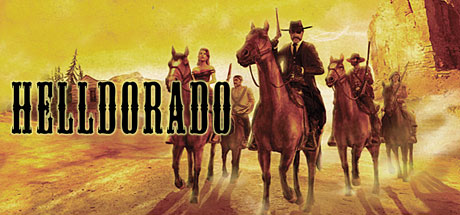
Helldorado, described as a standalone expansion to Desperados 2 set in 1883 Santa Fe, deepens that resonance. Its premise—“Peace… shattered by a shocking kidnapping. Gather your men and ride on a series of challenging missions”—echoes Kyoto Disturbance’s core architecture: a fractured peace, a personal mission wrapped in communal stakes, and a journey measured in loyalty, not miles. The player review notes it’s “Desperados 2: Cooper's Revenge” repackaged—but that repetition matters. Just as Kenshin returns to Kyoto not for glory, but because the past won’t stay buried, Helldorado’s missions feel less like objectives and more like reckonings. Both demand presence—not speed, but attention: to shadow, to timing, to the quiet space between action and aftermath.
And then there’s Prince of Persia, scoring 82 with dimensions labeled “Action Spectacle, Romance & Shoujo, Melancholic Exploration.” Its description promises “an all-new epic journey” built by Ubisoft Montreal—a reboot, yes, but one anchored in melancholy. That word is the key. Not sorrow, not despair—but melancholic exploration: the prince moving through ruins not just to survive, but to understand what was lost, what remains, and who he becomes in the echo. A player review confirms it’s “completely separate from the sands…”—yet emotionally contiguous. Like Kenshin walking Kyoto’s riverbanks at dawn, the Prince’s traversal feels ritualistic, weighted, tender. Romance here isn’t flirtation—it’s shared silence, guarded glances, devotion worn thin by time and duty. That tenderness, that reverence for fragility amid violence, is pure Kyoto Disturbance.
Who lives for this? The person who watches Kenshin kneel in the rain and doesn’t reach for tissues—they hold their breath instead. The player who reloads a Desperados checkpoint not to win faster, but to get the timing right, to honor the rhythm of human movement. The one who pauses Prince of Persia mid-leap—not to admire the animation, but to feel the wind shift, to remember how rare it is to move with grace, not just through it. They don’t seek escape. They seek resonance: stories where every blade drawn, every horse ridden, every silent step forward carries the quiet, unmistakable weight of what it costs to stay human.
🎮34 Games That Match the Vibe











Match Dimensions Explained
❓Frequently Asked Questions
Why does Desperados 2 feel so different from Rurouni Kenshin -Kyoto Disturbance- even though both have tactical swordfights?
Great question — it’s all about *how* the tactics play out. Kyoto Disturbance leans into precise, cinematic sword clashes (like Kenshin vs. Saito in the Shishio arc) with timing-based parries and stance shifts, while Desperados 2 swaps katanas for revolvers and stealth takedowns across open frontier maps — think Cooper silently snaring a guard near a saloon, not dueling on a rain-slicked rooftop. The vibe is more 'tense Western siege' than 'shogunate-era honor duel', even if both demand patience and positioning.
Is there a Rurouni Kenshin game adaptation that actually covers the Kyoto Disturbance arc?
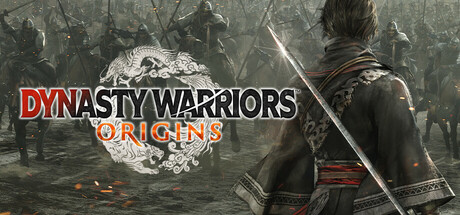
No — and that’s why fans love digging into games like Prince of Persia (2008) or DYNASTY WARRIORS: ORIGINS. Prince of Persia nails the melancholic exploration and romantic tension you get in Kyoto Disturbance’s quieter moments — like Kenshin wandering Kyoto at dusk before the final battle — plus fluid acrobatic combat that echoes his Hiten Mitsurugi style. ORIGINS gives you that same epic scale with crowd-sweeping sword combos (think Sanosuke’s Gatotsu against waves of Shinsengumi), but in a wuxia-flavored feudal Japan setting.
How does Helldorado compare to Desperados 2 for someone who loves Kyoto Disturbance’s tight mission structure?
Helldorado is literally built on Desperados 2’s engine and mechanics — it’s a standalone expansion set in 1883 Santa Fe, so missions are just as tightly scripted and layered (e.g., infiltrating a train yard during a sandstorm, coordinating your team to flank outlaws). But unlike Kyoto Disturbance’s emotionally charged, character-driven pacing, Helldorado trades Kenshin’s moral weight for gritty Western pragmatism — no soul-searching monologues mid-gunfight, just sharp tactical execution and high-stakes rescues.
What’s the best game like Kyoto Disturbance if I want that bittersweet, poetic-feeling samurai atmosphere?
Prince of Persia (2008) is your strongest match — it’s got that same haunting, lyrical tone: misty ruins, slow-motion leaps over crumbling arches, and a quiet, introspective hero wrestling with legacy and loss (just like Kenshin after Tomoe). The romance subplot with Elika even echoes Kaoru’s emotional anchor in Kyoto, and the combat flows with rhythmic grace — no button-mashing, just well-timed dodges and elegant finishers that *feel* like a master swordsman moving through stillness.