Saga of Tanya the Evil: Operation Desert Pasta
📺Anime Details
📝Editorial Analysis
The desert wind doesn’t whistle—it grinds. Grit scours Tanya’s goggles as she crouches behind a shattered concrete barrier, her breath shallow, rifle steady, magic runes flaring cold blue at her fingertips—not for spectacle, but because the enemy artillery spotter must die before he radios coordinates. No fanfare. No heroic monologue. Just the dry click of a bolt cycling, the low hum of mana stabilizers, and the distant, indifferent thrum of a drone overhead. That’s Saga of Tanya the Evil: Operation Desert Pasta: war not as tragedy or triumph, but as logistics made lethal, where pasta rations are debated with the same gravity as fire discipline, and a well-timed suppression spell is measured in milliseconds and meal calories.
What hits first isn’t the magic—it’s the weight. The weight of sand in your boots, of gear straps biting into shoulders, of orders delivered flatly over crackling comms. This isn’t fantasy escapism; it’s fantasy interrogation. It makes you feel exhausted, yes—but more precisely, responsible. Every decision carries arithmetic: ammo counts, heat signatures, unit fatigue, caloric intake. You think about supply lines when characters argue over tomato paste viscosity. You think about command hierarchy when Tanya adjusts her cap after downing a sniper—not with satisfaction, but with the weary precision of someone recalibrating a spreadsheet mid-battle. There’s no grand moral crescendo—just the persistent, low-frequency hum of systems under strain: human, mechanical, magical. It’s clinical, yet deeply human, because the humanity leaks out sideways—in a shared can of beans, a muttered complaint about sand in the coffee, the way a lieutenant checks his watch not for drama, but to sync the next wave of coordinated fire.
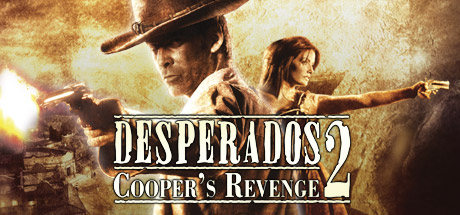
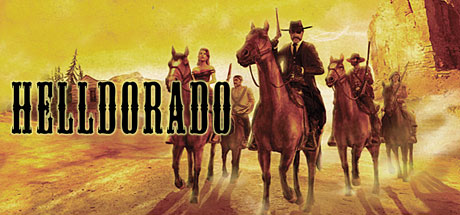
That emotional DNA—the tactical exhaustion, the systemic tension, the quiet dignity of competence under duress—echoes unmistakably in Desperados 2: Cooper's Revenge. Its description nails it: “tactical possibilities in a beautiful 3D env,” where success hinges on timing, positioning, and reading environmental tells—not reflexes alone. A player review admits it’s “not so much” about flash, but about process: “It was made during a time when everything…”—implying a deliberate, almost archival attention to procedure, just like Operation Desert Pasta’s obsession with doctrine, ration logs, and radio protocols. Then there’s Helldorado, explicitly framed as “a standalone expansion to the second game in the Desperados series,” built on the same bones: “Gather your men and ride on a series of challenging missions to stop treacherous, marauding outlaws.” The phrase “challenging missions” lands with the same dry weight as Operation Desert Pasta’s mission briefings—no flourish, just terrain, threat vectors, and consequences. And though Oddworld: Stranger's Wrath HD diverges into sci-fi-western absurdity, its player review cuts deep: “the best Fantasy-SciFi-Western game about being a bounty hunter ever made… Solid FPS and 3rd person 3d platforming.” That hybrid identity—fantasy, tactical, grounded in physical consequence—mirrors Operation Desert Pasta’s own genre splice: magic as ordinance, spells as loadouts, desert as both setting and antagonist. Even the Stranger’s desperate, bodily stakes (“something very wrong with your health”) resonate with Tanya’s constant, unspoken calculus of survival—where every spell cast risks mana burn, every patrol risks ambush, every meal is a tactical asset.
This pairing isn’t for the casual escapist or the lore-hound chasing mythic arcs. It’s for the person who maps supply routes in their head while watching anime, who pauses a cutscene to wonder about ammunition resupply timelines, who feels a quiet thrill when a character double-checks their chronometer before initiating a feint. It’s for the player who replays a Desperados level not to win faster, but to shave off half a second on a distraction—because that half-second means the difference between clean extraction and a firefight that burns through three days’ rations. It’s for those who find poetry in procedure, beauty in restraint, and profound respect in the sheer, stubborn competence of people doing difficult, necessary things—under sun-scorched skies, with rifles slung, spells coiled, and pasta boiling just out of frame.
🎮6 Games That Match the Vibe

Match Dimensions Explained
❓Frequently Asked Questions
Why does Desperados 2: Cooper's Revenge keep showing up in lists for 'Saga of Tanya the Evil: Operation Desert Pasta'?
Because both lean hard into tactical, mission-based warfare with tight squad control and environmental precision—like when Tanya orders her unit to flank using cover, Desperados 2 makes you coordinate Cole, Isabelle, and Doc to silently take out sentries using smoke, dynamite, or distraction—exactly the same cerebral, pause-and-plan energy. It’s not about flashy action; it’s about outthinking enemies in layered, reactive spaces.
Is there an anime adaptation of Helldorado?
No—Helldorado is *not* an anime adaptation; it’s a standalone expansion to Desperados 2: Cooper's Revenge, set in 1883 Santa Fe with outlaw raids and cavalry chases straight out of a Sergio Leone storyboard. Think less 'Tanya-style military bureaucracy' and more dusty showdowns where your sharpshooter lines up a shot while your dynamite expert waits behind a saloon door—pure Western tactical grit, zero anime licensing.
How does Oddworld: Stranger's Wrath HD compare to Red Dead Redemption 2 for bounty-hunting vibes?
Stranger’s Wrath leans into surreal, physics-driven bounty hunting—you literally shoot live critters as ammo (like Wrangler beetles for stun), then drag stunned targets to outposts while dodging alien coyotes and sandstorms. RDR2 is grounded, emotional, and sprawling: Arthur Morgan’s moral weight, slow-burn NPC routines, and that heartbreaking epilogue contrast sharply with Stranger’s snarky, high-stakes sci-fi-Western absurdity—but both nail the 'lone hunter surviving hostile terrain' vibe.
What’s the best game like 'Operation Desert Pasta' if I want dry, deadpan military satire and precise tactics?
Desperados 2: Cooper's Revenge—it’s got that same sardonic tone (think Cole’s weary one-liners undercutting brutal takedowns) and hyper-precise, time-managed combat where one misstep blows your whole op. You’ll feel Tanya’s cold calculus when you freeze time to position three agents for a simultaneous takedown—no fluff, no fanfare, just clean, ruthless efficiency backed by a 80-score tactical foundation.