
Re:ZERO -Starting Life in Another World- Season 4
The fourth season of Re:Zero kara Hajimeru Isekai Seikatsu.
To save his stricken allies, Subaru faces a deadly desert to find the Sage at Pleiades Watchtower.
(Source: Crunchyroll News)
Note: Episode 1 pre-screened at Lucca Comics & Games on November 1, 2025, before the Japanese television broadcast.
📺Anime Details
📝Editorial Analysis
The sand doesn’t just blow—it grinds. Not like wind-blown grit, but like time itself wearing down bone. In the first moments of Re:ZERO -Starting Life in Another World- Season 4, Subaru stumbles across that desert—not with fanfare, not with a spell or summons, but with cracked lips, blistered hands, and the weight of every death he’s lived and un-lived pressing into his ribs like shrapnel. He’s not chasing glory. He’s dragging himself forward because someone—someone—is still breathing back there, barely, and memory isn’t a record for him anymore; it’s a wound that reopens every time he blinks.

That’s the feeling: relentless erosion. Not despair as spectacle, but despair as physics—inescapable, granular, cumulative. This season doesn’t trade in grand monologues about fate; it lives in the tremor of a hand trying to hold water, in the way Subaru’s breath hitches before he even realizes he’s holding it. The desert isn’t metaphorical terrain—it’s psychological topography made real: no cover, no rewind, no reset button that spares him the heat, the thirst, the slow unraveling of certainty. Memory manipulation here isn’t a puzzle mechanic—it’s amnesia with teeth, dissociative identities not as plot twist but as fractured syntax of survival. You don’t watch this anime—you endure its rhythm. It makes you think about how much of identity is just the story you keep telling yourself between one collapse and the next.
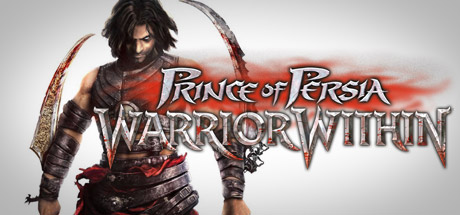
Prince of Persia: Warrior Within hits that same nerve—not with magic daggers or sand gods, but with Dahaka’s pursuit: relentless, inevitable, personal. The description calls it “an immortal incarnation of F”—and though the sentence cuts off, the player review confirms what matters: “Dahaka chase is still as goated as it was before.” That’s the resonance. Like Subaru in the desert, the Prince isn’t fleeing danger—he’s fleeing consequence, a force that remembers everything he’s tried to outrun. Both are men shaped by time loops they didn’t choose, haunted not by ghosts but by their own unspooled timelines. The “Dark Fantasy” and “Adult & Dark Seinen” dimensions aren’t aesthetic—they’re tonal gravity wells pulling everything toward exhaustion, moral ambiguity, and the quiet horror of realizing your worst self is always one misstep behind you.
Then there’s BioShock Infinite, where Booker DeWitt enters a world built on collapsing timelines and borrowed memories—and where Elizabeth isn’t just a damsel but a fracture point in causality itself. The description frames it as debt, consequence, rescue—but the player review hints at something deeper: “the Bioshock Infinite we could have gotten.” That phrase aches. It mirrors Subaru’s endless recalibrations—not of strategy, but of meaning. Every loop in Re:ZERO isn’t just about saving someone; it’s about salvaging a version of himself worth saving. Like Booker, Subaru’s journey isn’t linear redemption—it’s recursive reckoning. The “Time & Memory” dimension isn’t backdrop; it’s the architecture of guilt, love, and identity stacked like sedimentary layers—each new loop exposing another stratum of damage.
And then, quietly, there’s Hollow Knight—not with time loops, but with melancholic exploration. Its description promises “a vast ruined kingdom,” “tainted creatures,” and “bizarre bugs”—but the player review nails the soul: “-Beautiful art style. -Great OST. -Lovely story. -Hard gameplay.” That juxtaposition—beauty, sorrow, difficulty—is Re:ZERO’s emotional grammar too. The Pleiades Watchtower isn’t just a location; it’s a ruin humming with lost purpose, like Hallownest’s crumbling cathedrals. Both worlds reward patience, punish haste, and make loneliness feel tactile—the silence between notes in Hollow Knight’s score, the hollow echo of Subaru’s footsteps across dunes where even hope feels like an echo.
This isn’t for people who want catharsis served neat. It’s for those who recognize relentlessness as intimacy—who’ve ever walked home at 3 a.m. replaying a conversation they can’t change, who know the weight of a promise made in panic and kept in exhaustion. It’s for players who replay Prince of Persia: The Sands of Time not for the acrobatics, but for the relief of that first rewind—the gasp when time bends just enough to let you try again, softer, smarter, kinder. It’s for viewers who watch Subaru’s hand shake—not as weakness, but as proof he’s still holding on, raw and trembling, to something real. Not hope. Not destiny. Just this: the next breath, the next step, the next chance to mean something—to someone, to himself—before the sand closes over his name again.
🎮38 Games That Match the Vibe







Match Dimensions Explained
❓Frequently Asked Questions
Why is Prince of Persia: Warrior Within recommended for Re:ZERO S4 fans despite being so old?
Because its relentless Dahaka chase sequences mirror Re:ZERO’s visceral time-loop dread—especially Subaru’s panicked, high-stakes escapes in the Sanctuary arc. The game’s dark fantasy tone, morally grey choices, and constant tension around memory and consequence (like the Prince’s fractured identity) hit the same emotional notes as Season 4’s psychological weight and adult-seinen intensity.
Is there a Re:ZERO visual novel or RPG adaptation with time-loop mechanics like Season 4?
No official Re:ZERO game exists—but Hollow Knight delivers the closest *spiritual* fit: its melancholic exploration of decayed kingdoms, fragmented lore about fallen heroes (like the Pale King), and emotionally heavy narrative echoes Season 4’s themes of sacrifice and inherited trauma. You won’t get Subaru or Rem, but the oppressive atmosphere and slow-unfolding tragedy feel deeply resonant.
How does BioShock Infinite compare to Prince of Persia: The Sands of Time for Re:ZERO fans who love time manipulation + emotional stakes?
Both nail time-and-memory storytelling, but differently: Sands of Time gives you tactile, rewind-based platforming (like Subaru’s frantic do-overs in the Royal Capital), while Infinite layers metaphysical time paradoxes through Elizabeth’s powers—mirroring Season 4’s heavier focus on causality and identity collapse. If you want *mechanical* time control, go Sands; if you want *narrative* time-as-trap, go Infinite.
What’s the best game like Re:ZERO S4 if I’m craving that oppressive, emotionally exhausting ‘trapped in a broken world’ vibe?
Hollow Knight—hands down. Its decaying kingdom of Hallownest, haunting soundtrack, and quiet, devastating reveals (like the Abyss or the Dreamers’ fates) replicate Season 4’s suffocating hopelessness and moral exhaustion. It’s not about flashy battles—it’s about carrying grief through every crumbling hallway, just like Subaru dragging himself through each loop.