
Magi: The Labyrinth of Magic
This story is about the flow of fate and the battle to keep the world on the right path. Aladdin is a boy who has set out to explore the world after being trapped in a room for most of his life. His best friend is a flute with a djinn in it named Ugo. Soon enough, Aladdin discovers he is a Magi, a magician who chooses kings, and he was born to choose kings who will follow the righteous path, battling against those who want to destroy fate. Follow his adventures as he meets others from 1001 Arabian Nights, like Ali Baba and Sinbad, and fights to keep the balance of the world in check!
📺Anime Details
📝Editorial Analysis
The sand doesn’t just blow—it settles. Not gently, but like time itself sifting through cracked fingers: grain by grain, memory by memory. You feel it in the silence after Aladdin’s flute plays—not the music, but the hollow echo in the chamber where he was raised, the weight of centuries pressing down on a boy who’s never seen a horizon until he steps past the door. That first gust outside isn’t freedom; it’s vertigo. The desert isn’t empty. It’s waiting.

That’s the core feeling of Magi: The Labyrinth of Magic: not wonder, not triumph—but gravitas. A slow, sun-baked ache for meaning in systems too vast to hold. It’s in the way politics isn’t scheming for power, but mourning the collapse of shared myth; how war isn’t spectacle, but the grinding erosion of trust between people who once broke bread together; how magic isn’t flashy spells, but the quiet, terrifying responsibility of choosing who gets to steer history—and watching them break under the weight. This isn’t shōnen about punching harder. It’s about holding space for grief while still walking forward, flute in hand, djinn whispering not answers, but questions that deepen the silence.
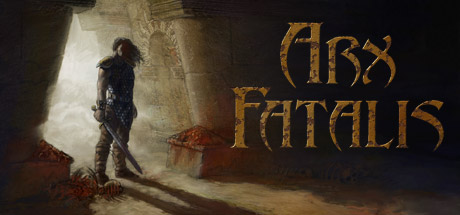
Arx Fatalis resonates with this same emotional DNA—not because it’s fantasy, but because its world breathes melancholy. Its description calls Arx “wrought with turmoil, brought to the brink of destruction” — and the player review confirms it feels “genuinely fresh” in its premise, its exploration truly evocative. Like Aladdin navigating crumbling royal courts and buried labyrinths, Arx forces you into a subterranean world where light is scarce, history is carved into walls you can barely read, and every torch flicker feels like a fragile defiance against entropy. There’s no triumphant score—just stone, shadow, and the low hum of something ancient unraveling. You don’t conquer the dungeon. You witness its sorrow.
Then there’s Assassin's Creed™: Director's Cut Edition, whose dimensions include Political Thriller and Melancholic Exploration. Its description positions it as redefining action—not through speed or spectacle, but through redefinition. And the player review, though noting dated textures, admits no issue with that—because the flaws don’t erode what matters: the weight of place, the hush before a decision changes everything. Like Aladdin standing before a king he must judge, Altair moves through Jerusalem not as a hero, but as a man learning that ideology calcifies faster than stone, and loyalty is measured in breaths held in crowded alleys. Both ask: What does it cost to believe in a path when every step reveals another layer of compromise?
And Tank Universal, with its Emotional Narrative and Melancholic Exploration, lands with startling intimacy. Its player review isn’t about mechanics—it’s about time: playing with dad at six, loving the sound effects and colors, then losing access, then losing dad. That raw, unguarded line—“Grew up dad passes away”—mirrors Magi’s deepest current: the way love persists through loss, how legacy isn’t inherited, but carried, often alone, across vast, indifferent spaces. The tank isn’t a weapon—it’s a vessel. Like Aladdin’s flute. Like Ugo’s voice in the dark. Like the desert wind remembering names no one speaks aloud anymore.
This pairing isn’t for fans of epic battles or dazzling magic systems. It’s for the person who watches Aladdin sit beside a dying friend in the ruins of Balbadd and doesn’t reach for tissues—they reach for their own quiet corner, because they know that kind of grief isn’t loud. It’s the reader who pauses mid-page in a political treatise, not to argue, but to trace the shape of a vanished ideal. It’s the player who walks past a hundred enemies in Assassin’s Creed just to watch the sunset over Acre’s walls, or who circles the same ruined tower in Arx three times—not for loot, but to feel the air change. It’s for those who understand that fate isn’t destiny. It’s the trembling hand that chooses—again and again—to light the next candle, even when the wind is rising, even when the map is gone, even when all you have is a flute, a memory, and the stubborn, beautiful refusal to let the silence win.
🎮51 Games That Match the Vibe































Match Dimensions Explained
❓Frequently Asked Questions
Why is Assassin's Creed listed as similar to Magi: The Labyrinth of Magic when it’s set in the Middle East and not a fantasy world?
Great question—it’s not about the setting, but the *tone* and *structure*: both lean into melancholic exploration (think Aladdin’s quiet moments in the ruins of Balbadd or Altaïr wandering Masyaf’s empty streets) and tactical warfare where positioning, timing, and environmental awareness matter more than raw power. The political thriller dimension also mirrors Magi’s layered betrayals—like how Sinbad’s alliances shift just like Altaïr’s investigations peel back conspiracies.
Is there a Magi: The Labyrinth of Magic anime or game adaptation?
No official Magi game adaptation exists—but fans who love Magi’s blend of mystical discovery and strategic combat often find Arx Fatalis hits that same vibe: you’re exploring a crumbling, magic-saturated underground world (like the Dungeon Captures), casting spells via real-time rune drawing (similar to Aladdin’s Djinn magic), and facing existential stakes in a genuinely fresh post-apocalyptic fantasy setting—exactly what the player review calls 'genuinely fresh' and 'truly engaging'.
How does Desperados 2 compare to Helldorado for Western tactical gameplay?
Helldorado *is* essentially Desperados 2’s standalone expansion—same engine, same squad-based stealth-tactics (e.g., Cooper’s precise timing with dynamite echoes Aladdin’s calculated trap setups), and even the same 1883 Santa Fe setting. As the player review says: 'you can think about it as Desperados 2 with extra missions and polish'—so if you loved Desperados 2’s frontier tension, Helldorado delivers more of that exact flavor, just deeper.
What’s the best game like Magi for when I want that quiet, wonder-filled dungeon-exploration feeling?
Arx Fatalis is your top pick—its first-person, immersive dungeon crawling (like navigating the Reim Palace catacombs or the ancient ruins of Alma Torran) leans hard into melancholic exploration: dim torchlight, crumbling lore tablets, and magic systems that feel tactile and mysterious. The player review nails it: 'Exploration is truly engaging', and that sense of awe while uncovering secrets? That’s pure Magi energy—just swapped for goblin tunnels instead of Djinn dungeons.