Sub Command
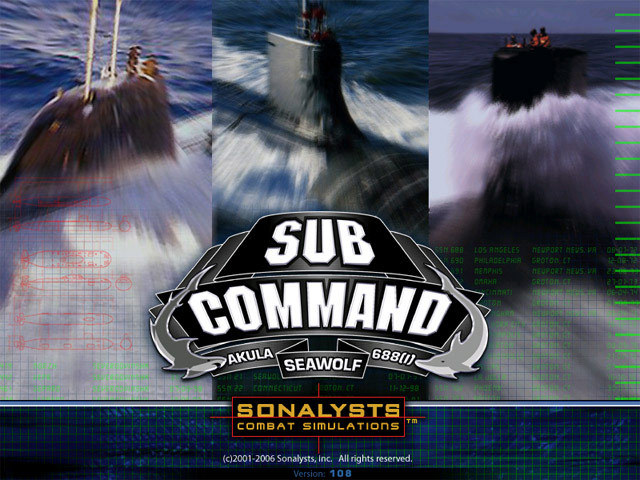
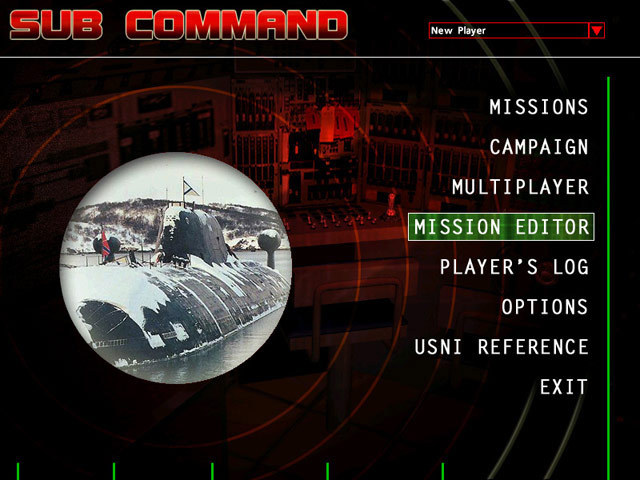
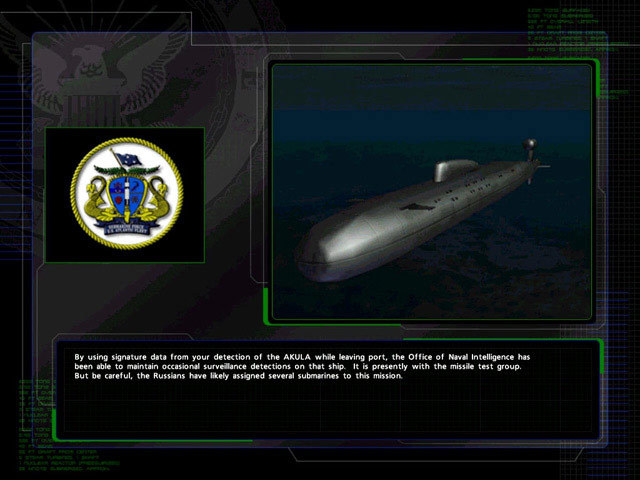
Take charge of the most deadly modern-day submarines in the world - three distinct submarines across two unique and challenging campaigns. Utilize cutting-edge sensor and weapon technology to locate, track and destroy the enemy - even deliver Tomahawk missiles to inland targets.
🎮Game Details
💬What Players Say
"Totally Awesome"
📝Editorial Analysis
The hum of the sonar ping—low, insistent, vibrating up through the periscope housing into your palms—is the first thing you feel, not hear. No explosions yet. No frantic alerts. Just that pulse, echoing in the steel silence of the pressure hull, while the display glows faintly: target bearing 217°, range 18,400 meters, speed unknown. You’re not commanding a warship—you’re holding your breath inside a metal lung suspended in absolute dark, trusting machines that whisper instead of shout. That’s Sub Command: not spectacle, but presence—the weight of decision measured in decibels and depth increments, where “Totally Awesome…” isn’t about victory, but about the quiet, trembling certainty that you heard the enemy before they heard you.
What makes this atmosphere singular isn’t realism for realism’s sake—it’s how the game forces you into melancholic exploration. Every sweep of the towed array, every careful adjustment of the fire control solution, every Tomahawk launch sequence unfolding with methodical, almost ritual slowness… it all leans into a kind of solemn attentiveness. You’re not racing toward catharsis. You’re mapping absence—listening for ghosts in the water, calculating trajectories across vast, indifferent distances. There’s no heroic music swelling as you dive; just the groan of hull compression, the soft chime of a sensor lock, the faint hiss of oxygen recyclers. It makes you think about scale—not just kilometers, but time, consequence, the sheer loneliness of precision. This isn’t warfare as drama. It’s warfare as contemplation: slow, deliberate, heavy with implication.
That same emotional gravity pulses through APPARE-RANMAN!, where the melancholic exploration lives in the quiet awe of discovery—the way the characters stare at ancient ruins not with triumph, but with hushed reverence for what was lost, what remains hidden beneath sand and silence. Its tactical warfare isn’t about firepower, but about reading terrain, anticipating collapse, choosing when not to move—a rhythm eerily like lining up a torpedo solution while tracking a carrier group’s wake over thirty minutes. Then there’s The Darwin Incident, where every tactical decision carries the weight of biological fragility and inherited trauma; its warfare is less about missiles and more about survival calculus under invisible pressure—just like adjusting ballast to evade detection while your own oxygen levels tick down. And Nausicaä of the Valley of the Wind—its tactical warfare unfolds in stillness: Nausicaä kneeling beside a wounded fox-squirrel, listening to its breath, calculating toxicity thresholds, choosing mercy over efficiency. Her submarine is the wind itself—unseen, pervasive, demanding the same hyper-attentive presence as scanning a thermal layer for a submerged contact.
This isn’t for players who crave adrenaline spikes or anime fans who want rapid-fire banter and power-ups. It’s for the ones who linger on the pause screen just to watch the sonar return fade into noise—and then rewatch the scene in SPY x FAMILY Cour 2 where Anya sits perfectly still in the backseat, eyes closed, listening to the unspoken tension between Loid and Yor, parsing microsecond silences like passive sonar returns. It’s for the reader who rereads Magi’s desert sequences not for magic battles, but for the way Alibaba studies dune formations before committing to a path—his tactical mind mirroring the player’s instinct to check salinity gradients before crossing a thermocline. These pairings resonate because they speak the same language: one of stillness, of depth, of consequence held in suspension. They reward patience—not as a virtue, but as a necessity. They ask you to feel the weight of the hull, the chill of deep water, the quiet gravity of a choice made in near-total silence. That’s where the hum lives. Not in the explosion—but in the breath before it.
→13 Anime That Match the Vibe

Strategy, precision, and the weight of every decision on the battlefield.

Strategy, precision, and the weight of every decision on the battlefield.

Strategy, precision, and the weight of every decision on the battlefield.

Strategy, precision, and the weight of every decision on the battlefield.

Strategy, precision, and the weight of every decision on the battlefield.

Strategy, precision, and the weight of every decision on the battlefield.

Strategy, precision, and the weight of every decision on the battlefield.

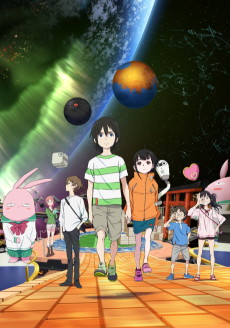
Apare’s rickety boat adrift on the Pacific mirrors a submarine’s solitary vigil beneath waves—both vessels embody 🌿 Melancholic Exploration amid vast, indifferent water. Where Sub Command demands silent calculation to avoid detection, APPARE-RANMAN! frames Kosame’s cowardice and Apare’s oblivious genius as tactical improvisations against overwhelming odds. That shared tension—between crushing isolation and razor-thin margins of survival—makes their resonance startlingly precise, not thematic coincidence.

Charlie’s first panic attack in homeroom—heart pounding, breath shallow—mirrors the claustrophobic sonar ping of a submerged *Seawolf* evading torpedo lock. 🌿 Melancholic Exploration binds them: both dwell in liminal spaces—submerged steel corridors and a teenage body that doesn’t belong—where every sensor reading or social cue feels like surveillance. Unlike most thrillers that glorify control, *Sub Command* and *The Darwin Incident* treat tactics as fragile rituals against inevitable exposure.
Strategy, precision, and the weight of every decision on the battlefield.



Match Dimensions Explained
❓Frequently Asked Questions
Why does APPARE-RANMAN! show up on 'Anime Like Sub Command' when it's a goofy steampunk comedy?
Great question—it’s all about the *Tactical Warfare* and *Melancholic Exploration* dimensions. Even though APPARE-RANMAN! is hilarious, its core arc revolves around meticulous submarine-style navigation (the 'Kaiten' steamship), precise timing in underwater salvage sequences, and that hauntingly quiet scene where Ranman stares at the ocean trench map—mirroring Sub Command’s sonar sweeps and strategic patience. The melancholy isn’t in tone alone, but in how both treat deep-space/depth as vast, silent, high-stakes arenas.
Is there an anime adaptation of Sub Command itself?
Nope—Sub Command is a standalone tactical sim with no anime adaptation (and no plans announced). But the match list gives you *anime that feel like playing it*: like watching Nausicaä’s glider descend into the toxic jungle—same slow-burn tension, sensor-like observation of shifting winds and spores, and that ‘hold your breath’ moment before she deploys the bioweapon countermeasure, just like lining up a Tomahawk strike in Sub Command’s targeting interface.
How does SPY x FAMILY Cour 2 compare to The Darwin Incident for Sub Command vibes?
Both nail the *Tactical Warfare + Melancholic Exploration* combo, but differently: SPY x FAMILY Cour 2’s ‘Operation: School Trip’ has Loid using real-time intel, layered comms, and environmental cover like Sub Command’s passive sonar—think him scanning the hallway while Anya ‘hears’ distant footsteps. The Darwin Incident goes deeper: its submarine-based flashbacks (with Captain Rigel’s silent, methodical torpedo recalibration scene) mirror Sub Command’s campaign pacing and emotional weight—less spy banter, more submerged isolation.
What’s the best anime like Sub Command if I want that ‘quiet intensity’ of tracking a target in total darkness?
Go straight to Magi: The Labyrinth of Magic—specifically the ‘Dungeon of the Abyss’ arc where Aladdin descends alone, using his Djinn’s ‘echo-sight’ to map unseen corridors and time pressure like sonar pings. It’s not about explosions; it’s that same held-breath focus, the way the screen dims to near-black while faint blue glyphs pulse like active sensors—and yes, even the ‘Tomahawk-level’ payoff when he triggers the ancient seal, echoing Sub Command’s precision inland strike sequence.