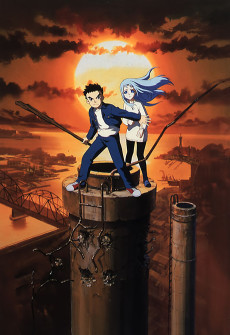
Now and Then, Here and There
Shu is a typical Japanese boy, but has an unbeatable, optimistic and determined attitude. However, when he sees a mysterious girl with strange eyes named Lala-Ru up on a smokestack, he is soon pulled into a strange desert world. Shu soon discovers the true terrors of war, which includes genocide, brutal torture, hunger, thirst, and child exploitation. Now Shu is trying to save Lala-Ru, as well as his hard earned, and often relunctant, new friends from the insane dictator, Hamdo. Whether Shu can possibly accomplish saving those he cares about while still holding up to his values remains to be seen.
(Source: Anime News Network)
📺Anime Details
📝Editorial Analysis
The wind doesn’t whistle in Now and Then, Here and There—it grinds. It’s the sound of sand scouring bone-dry rock, of cracked lips parting to breathe air that tastes like rust and burnt sugar, of a child’s bare feet dragging across scree while his throat is too raw to scream. That first desert step Shu takes—not with wonder, but with a lurching, gut-deep wrongness—is the show’s heartbeat: no fanfare, no heroic music, just heat pressing down like a hand on your chest and the sudden, sickening realization that this world does not care if you live.
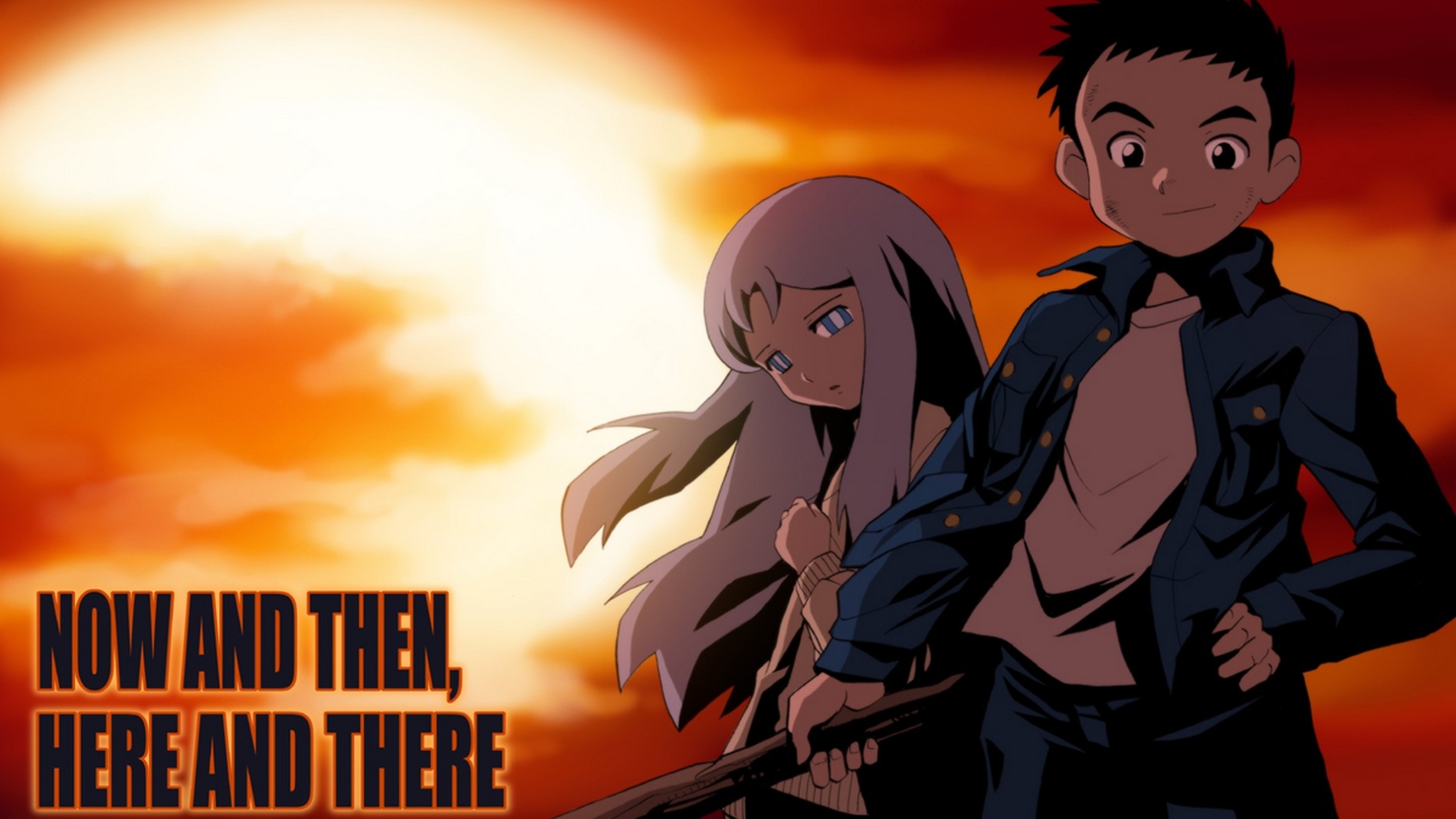
What makes Now and Then, Here and There unforgettable isn’t its dystopian setting or its war plot—it’s the weight of smallness. Not helplessness, exactly—but the crushing, intimate scale of survival when every decision bleeds into consequence: sharing a sip of water means someone else goes thirsty tonight; hiding a friend means your own sister might be taken tomorrow. There’s no grand strategy montage, no triumphant cavalry charge—just kids whispering plans in dust-choked ruins, their voices trembling not from fear alone, but from the exhaustion of holding onto kindness in a place engineered to erase it. It makes you feel fragile, yes—but also fiercely tender, like you’re guarding something irreplaceable inside your ribs.
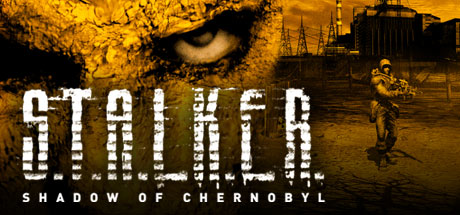
That same emotional gravity pulses through S.T.A.L.K.E.R.: Shadow of Chernobyl—not because of guns or mutants, but because of how the Zone breathes. Its description nails it: “a very dangerous place, where you fear not only the radiation, anomalies and deadly creatures, but other S.T.A.L.K.E.R.s.” That layered dread—environment, physics, and human unpredictability all converging—is pure Now and Then, Here and There. Like Shu navigating Hamdo’s patrols, you don’t storm bases—you crouch in abandoned barracks, listen for footsteps in static, weigh risk against the single can of beans in your pack. A player review says it best: “The map is big and beautiful…”—but beauty here is desolate, haunting, unforgiving. You don’t conquer the Zone. You endure it. Just like Shu endures the desert—not as a hero, but as a boy learning, second by agonizing second, what mercy costs.
Then there’s BioShock™, where the horror isn’t just in the splicers’ shrieks or the leaking pipes—it’s in the architecture of ideology. The description calls it a “Political Thriller” set in “Cyberpunk & Dystopia,” and that’s the hinge: Rapture isn’t ruined by war alone, but by the logical collapse of absolute belief. Hamdo’s regime operates the same way—not cartoonish evil, but a chillingly coherent system built on scarcity, control, and the erasure of childhood as anything but labor or leverage. A player calls it “one of the most revolutionary games ever!”—and what revolutionized it was how deeply it made players question their own complicity, just as Now and Then, Here and There forces Shu (and us) to stare at the chains he’s handed—not just Lala-Ru’s, but the ones woven into language, loyalty, even hope. Both refuse easy catharsis. Both leave you unsettled after the credits roll, staring at your hands.
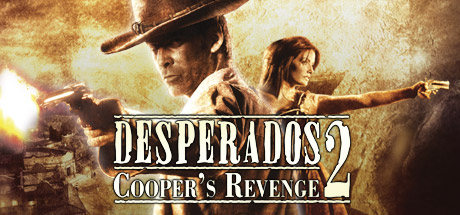
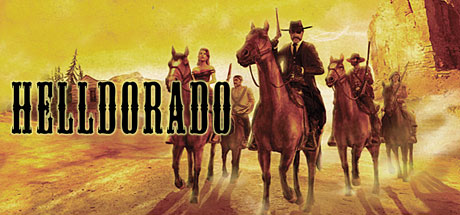
Even Helldorado, framed as a Western expansion, echoes this—its description drops us into “1883, SANTA FE. Peace… shattered by a shocking kidnapping.” That word—shocking—matters. Not “brutal,” not “bloody,” but shocking: the violation of assumed safety, the rupture of ordinary life into something predatory and personal. Like Shu climbing that smokestack one bored afternoon, then falling into hell. A player review confirms the tonal kinship: “Helldorado is a standalone expansion to the second game in the Desperados series…”—but what binds it isn’t genre. It’s the reluctant fellowship, the gathering of broken people who don’t trust each other yet move together anyway, because the alternative is silence—and silence, in both the desert and Santa Fe, is how the monsters win.
This pairing isn’t for fans of spectacle or power fantasies. It’s for the ones who remember how it felt to hold their breath during Lala-Ru’s quietest moments—the ones who replayed BioShock’s audio diaries not for lore, but to hear the tremor in a voice that once believed in something good. It’s for players who paused S.T.A.L.K.E.R. not to reload, but to watch dust motes swirl in a sunbeam piercing a collapsed roof—because that fragile light, that stubborn, unearned beauty, is the real rebellion. They’re the ones who don’t look away when kindness is hard-won, when survival has a price written in blisters and silence, when hope isn’t a banner—it’s a whisper, shared between two children under a sky that refuses to rain.
🎮38 Games That Match the Vibe










Match Dimensions Explained
❓Frequently Asked Questions
Why is S.T.A.L.K.E.R.: Shadow of Chernobyl listed as similar to Now and Then, Here and There?
Because both lean hard into bleak, morally ambiguous worldbuilding where survival feels fragile and oppressive — think the radiation-scarred Zone’s eerie silence echoing Bahamut’s wasteland, or the way both use environmental storytelling (like abandoned labs or crumbling towns) to hint at past catastrophes without exposition. It’s not about action pacing; it’s that shared vibe of isolation, decay, and quiet dread you get wandering alone through Pripyat or the desert ruins near Laila’s village.
Is there a TV show or anime adaptation of Desperados 2 or Helldorado?
No — neither Desperados 2: Cooper's Revenge nor Helldorado has been adapted into a show or anime. Helldorado is actually a standalone expansion to Desperados 2 (not a spin-off), so it shares the same gritty Western frontier setting and tactical squad-based missions — like coordinating Cooper, Doc, and Isabelle to flank outlaws in Santa Fe’s dusty alleys — but it’s strictly a game-only experience.
How does BioShock compare to S.T.A.L.K.E.R.: Shadow of Chernobyl for dystopian atmosphere?
BioShock leans into art deco decadence and ideological rot — think Andrew Ryan’s underwater city with its flickering neon and haunting Big Daddy lullabies — while S.T.A.L.K.E.R. goes full desolate realism: overgrown forests, radioactive fog rolling across the Zone, and the constant tension of anomalies snapping nearby. Both score high on ‘dystopia’, but BioShock’s a political thriller with scripted spectacle; S.T.A.L.K.E.R. is raw, systemic survival where your flashlight battery dying mid-stalk feels just as terrifying as a mutant attack.
What’s the best game like Now and Then, Here and There if I want that heavy, melancholic emotional weight?
Chains is unexpectedly strong here — don’t let the match-3 label fool you. Its minimalist bubble-linking mechanic creates a meditative, almost ritualistic pace, and the emotional narrative builds quietly through subtle visual shifts and sparse text, mirroring how Now and Then uses silence and small character moments (like Shu’s quiet grief or Laila’s resilience) to land big feelings. It’s not about combat or scale — it’s about resonance, like watching bubbles drift and pop in slow, thoughtful rhythm.