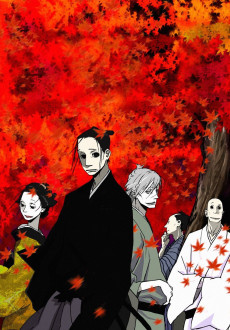
House of Five Leaves
Masterless samurai Akitsu Masanosuke is a skilled and loyal swordsman, but his naïve, diffident nature has more than once caused him to be let go by the lords who employ him. Hungry and desperate, he agrees to become a bodyguard for Yaichi, the charismatic leader of a group calling itself “Five Leaves.” Although disturbed by the gang’s sinister activities, Masa begins to suspect that Yaichi’s motivations are not what they seem. And despite his misgivings, the deeper he’s drawn into the world of the Five Leaves, the more he finds himself fascinated by these devious, mysterious outlaws.
(Source: VIZ Media)
📺Anime Details
📝Editorial Analysis
The rain in House of Five Leaves doesn’t fall—it settles. It clings to the thatch roofs of Edo-period alleys, beads on the edge of Yaichi’s sleeve as he stands motionless beneath a paper lantern’s amber glow, and pools in the hollows of Masa’s quiet stare when he realizes, again, that loyalty isn’t armor—it’s weight. Not spectacle, not storm: just damp silence, thick with unspoken debt and the slow, grinding friction of conscience against duty.
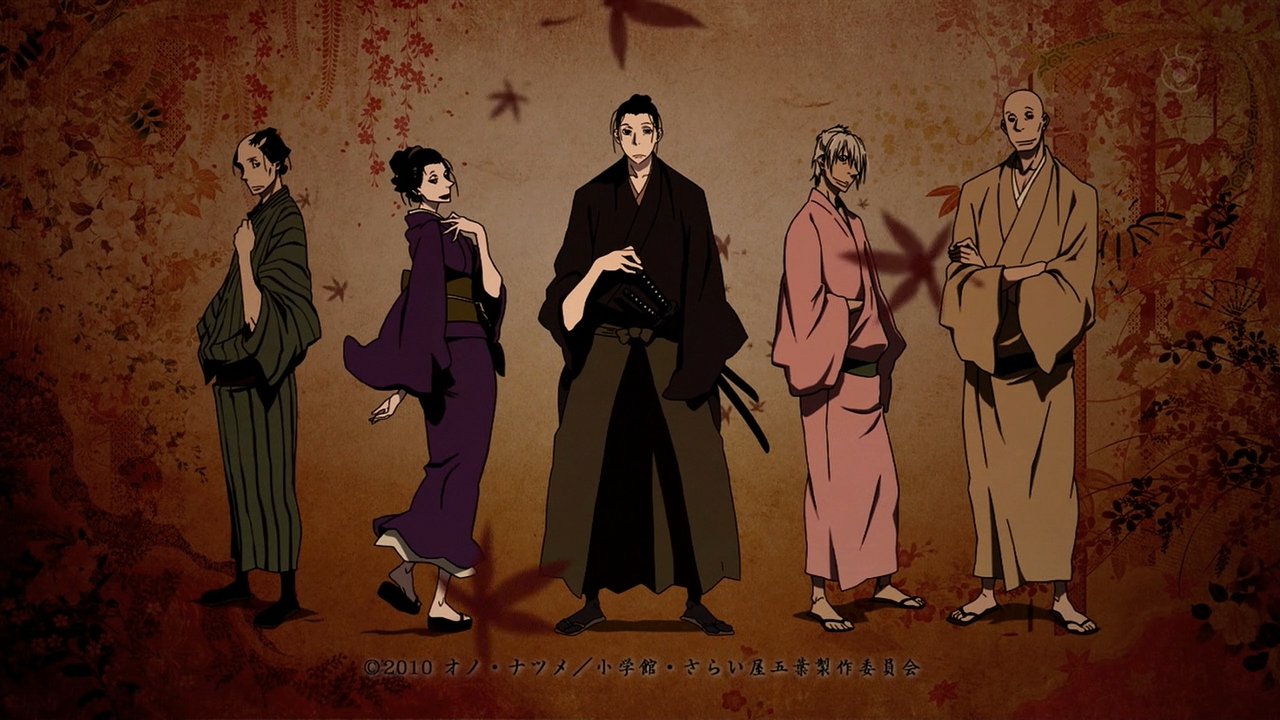
That’s the atmosphere—not samurai grandeur, but quiet erosion. You don’t feel heroic here; you feel unmoored. Masa’s sword is sharp, his reflexes honed, yet every decision lands like a stone dropped into still water—ripples spreading outward, never vanishing. There’s no triumphant score, no moral clarity—just the low hum of a world where honor wears threadbare sleeves, where oiran speak in riddles that cut deeper than blades, and where “crime” blurs into survival, kinship, even tenderness. It makes you sit still, not because it’s slow, but because every glance, every pause, every half-turned shoulder carries the gravity of something irreversible. You think about how easily trust becomes complicity. How kindness can be the most dangerous weapon. How masculinity, in this world, is measured not in strikes landed—but in what one chooses not to say.
That emotional DNA pulses in Red Dead Redemption 2, where Arthur Morgan rides through mud-choked plains under grey skies, his voice worn thin by exhaustion and doubt. The description nails it: “Arthur Morgan and the Van der Linde Gang are outlaws on the run… the gang must rob, steal, and fight their way across the rugged heartland.” But the player review—that raw, breathless awe—“The greatest game of all time bro its so peak my words can’t even describe the feeling inside me right now…”—that’s the resonance. Not the gunplay, but the weight: the way Arthur’s journal entries grow quieter, more fragmented, as ideals curdle into resignation. Like Masa, he’s bound not by law, but by the fragile, fraying bonds of a family built on lies—and he keeps choosing them anyway. Both ache with dignity in decline, not tragedy, but tenderness in surrender.
Then there’s Call of Juarez, where the player alternately assumes “a sneaking fugitive Billy and his hunter the reverend Ray.” That duality—two men locked in pursuit, each haunted, each morally compromised—is pure House of Five Leaves architecture. Yaichi isn’t a villain; he’s a mirror held up to Masa’s own contradictions—charismatic, wounded, calculating, strangely gentle. The game’s “Adult & Dark Seinen” dimension matches perfectly: no cartoonish evil, just men shaped by loss, making choices that stain but never fully corrupt. And the player review—“The game was more fun than I expected… smoke particles and physics was probably the best part…”—that tactile, grounded realism? That’s the same texture: the grit under fingernails, the sting of cold air in a narrow street, the physical presence of consequence.
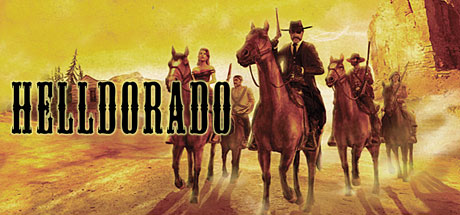
Even Helldorado, described as “a standalone expansion to the second game in the Desperados series… 1883, SANTA FE. Peace in this town has been shattered by a shocking kidnapping,” echoes the anime’s structure—not in plot, but in moral containment. Masa isn’t chasing glory; he’s trapped in a single, tightening circle of obligation. So is the player in Helldorado: gathering men, riding missions, navigating treachery within a fixed, suffocating geography. The review calls it “Desper...”—an ellipsis hanging like mist over a riverbank. That’s the feeling: things left unsaid, paths already chosen, endings written long before the final frame.
This pairing isn’t for fans of swordfights or shootouts. It’s for the person who watches Masa fold his hands in his lap and feels the tremor in his wrists—not from fear, but from the sheer effort of holding himself together. It’s for the player who lingers at Arthur’s campfire, listening to Dutch’s speeches while watching the firelight flicker across Micah’s unreadable face. It’s for those who understand that the most devastating moments aren’t loud—they’re still, humid, heavy with the scent of wet earth and unshed tears. They love stories where loyalty is a slow leak, where masculinity is a performance worn thin, and where the deepest wounds aren’t carved by steel—but by the quiet, relentless pressure of choosing, again and again, to stay.
🎮31 Games That Match the Vibe



















Match Dimensions Explained
❓Frequently Asked Questions
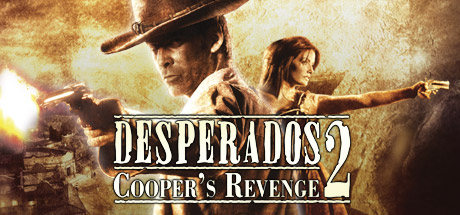
Why is Desperados 2: Cooper's Revenge recommended for House of Five Leaves fans?
Because both lean hard into morally gray, character-driven tension—like when Cooper’s quiet desperation mirrors Okura’s reluctant leadership in Five Leaves, and the tactical stealth (e.g., luring guards with thrown bottles or using environmental cover) echoes the show’s deliberate pacing and quiet stakes. Fans love how Desperados 2 makes you *think* like a strategist, not just a shooter—just like watching Okura weigh every word before speaking.
Is there an anime adaptation of Helldorado?
No—Helldorado isn’t adapted from *House of Five Leaves*, but it *is* a standalone expansion to *Desperados 2: Cooper's Revenge*, set in 1883 Santa Fe. Its neon-noir Western tone, morally ambiguous outlaws, and slow-burn storytelling (like the kidnapping arc that forces your crew to confront betrayal) hit the same melancholy, atmospheric notes as Five Leaves’ Edo-period quiet intensity.
How does Call of Juarez compare to Red Dead Redemption 2 for someone who loved House of Five Leaves’ tone?
Call of Juarez nails the *adult & dark seinen* vibe more tightly than RDR2—especially in its dual-protagonist structure: Billy’s fugitive anxiety and Reverend Ray’s fanatical conviction feel like spiritual cousins to Okura’s pacifism and Katsuzo’s simmering rage. RDR2 is grander and more cinematic, but *Call of Juarez*’s tighter, grittier moral claustrophobia—like the church shootout where choices fracture trust—is closer to Five Leaves’ intimate tension.
What’s the best game like House of Five Leaves if I want that quiet, melancholic, character-focused Western vibe?
Go straight to *GUN™*—it’s got that cult-classic, understated weight: Colton White’s stoic grief, the dusty realism of frontier towns, and moments like the silent train-yard standoff where dialogue drops out and only ambient wind and distant crows remain. It’s not flashy, but its adult & dark seinen soul—plus that Neversoft + Randall Jahnson pedigree—lands the same emotional resonance as Five Leaves’ stillness-before-storm pacing.