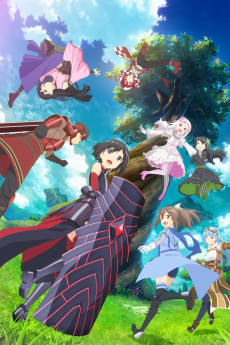
BOFURI: I Don't Want to Get Hurt, so I'll Max Out My Defense.
The story centers on Kaede Honjou, who is invited by her friend Risa Shiramine to play a virtual reality MMO game with her. While Kaede doesn't dislike games, what she really, truly dislikes is being in pain. She creates a character named Maple, and decides to put all her points in VIT to minimize pain. As a result, she moves slowly, can't use magic, and even a rabbit can get the best of her. However, as it turns out, she acquires a skill known as "Absolute Defense" as a result of her pumping points into VIT, as well as a "Counter Skill" that works against special moves. Now, with her ability to nullify all damage, she goes on adventures.
(Source: Anime News Network, edited)
📺Anime Details
📝Editorial Analysis
The first time Maple trips over her own feet while trying to pet a rabbit—her armor clanking like a dropped soup pot, her hair floofing upward as she lands flat on her back, the bunny hopping away unimpressed—that’s not just comedy. It’s sacred. Her face isn’t embarrassed. It’s relieved. No damage. Zero pain. She blinks up at the sky, breath steady, and smiles like she’s just won something quiet and profound.

That moment crystallizes BOFURI’s emotional core: it treats safety not as absence, but as presence—as texture, weight, warmth. This isn’t a story about grinding stats to dominate; it’s about building a life where flinching is optional. Where “defense” isn’t armor plating or shield spells—it’s permission to move slowly, to misjudge jumps, to be startled by squirrels, and still feel held. The virtual world doesn’t punish curiosity—it absorbs it. Every clumsy roll, every accidental parry of a falling apple, every time Maple’s sheer VIT turns a boss’s fireball into a puff of glittery smoke… it whispers the same thing: you don’t have to earn your peace. You get to wear it, like oversized gloves or a cloak lined with cloud-soft fleece.
Which is why Prince of Persia lands with such uncanny resonance. Its description names Healing & Slow Life and Action Spectacle—two poles that seem opposed, until you remember how the Prince recovers from near-fatal falls not with gritted teeth, but with fluid, almost balletic grace—time bending around him so he lands, breathless but unbroken. That player review calls it “an all-new epic journey,” but what sticks isn’t the scale—it’s how the game refuses to let momentum erase tenderness. Like Maple, the Prince moves with deliberate weight; his acrobatics feel less like conquest and more like negotiation with physics itself. Both honor slowness not as failure, but as intention—a choice to stay whole.
Then there’s The Sims™ 4, whose description invites you to “Play with life and discover the possibilities”—a phrase that could be Maple’s motto. The player review complains about DLC costs and bugs, but beneath that frustration is something tender: the longing for unhurried agency. Sims bake cookies, nap in sunbeams, stare out windows for minutes at a time—not because they’re idle, but because their lives are allowed to breathe. Just like Maple’s guild meetings dissolve into tea parties, her battles end with shared snacks and giggled retellings, and her “training” often involves napping under a pixelated cherry tree. Both worlds treat domesticity—not as downtime, but as primary action. A cup of tea in TS4 holds the same narrative gravity as Maple deflecting a dragon’s roar with her shield—and both feel earned, not escapist.
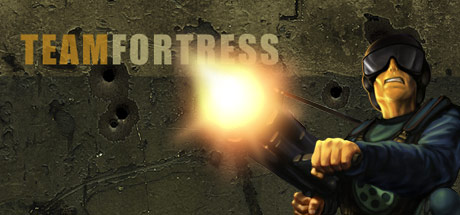
And then—Team Fortress Classic, with its nine wildly mismatched classes, each defined not by power fantasy but by personality-as-mechanic. The Medic’s frantic healing beams, the Spy’s theatrical vanishing, the Heavy’s booming laugh mid-gunfire—they’re absurd, yes, but also deeply communal. The description calls it “a unique style of online team combat,” but what players remember (like that review’s wistful “I have dreams about this game”) is the chaos of shared failure: respawning together, shouting nonsense, turning a lost round into a slapstick ritual. That’s Maple’s guild too—their fights aren’t about victory points, but inside jokes, group naps mid-dungeon, and Risa dragging Maple across the map like a very determined, very cheerful sled dog. Both find joy in collective softness, where competence isn’t binary—it’s elastic, forgiving, and always laced with laughter.
This pairing isn’t for the player who wants to optimize, or the viewer who craves escalation. It’s for the one who’s ever paused a cutscene just to watch rain fall on a character’s umbrella. For the person who saves their game not before a boss, but after a conversation—just to sit with it. For the quiet strategist who knows the bravest move isn’t always forward: sometimes it’s kneeling, shielding someone else, breathing deep, and smiling—relieved, safe, exactly where they meant to be.
🎮20 Games That Match the Vibe












Match Dimensions Explained
❓Frequently Asked Questions
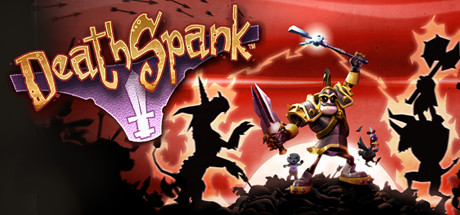
Why does BOFURI's 'max defense' gimmick feel so different from DeathSpank's armor obsession?
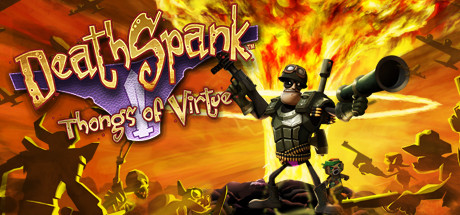
Because DeathSpank treats armor as just another goofy loot drop—like the 'Thongs of Virtue'—with slapstick stats and zero realism, while BOFURI leans into absurd *consequences*: Kirito’s tank build literally makes him bounce off bosses like a rubber ball. DeathSpank’s humor is pure parody (think 'Baconing'’s tone), but BOFURI’s defense-mania is baked into its combat rhythm and world logic—much like how Prince of Persia’s time-rewind mechanic fuels both spectacle *and* physical comedy.
Is there an anime or live-action adaptation of The Sims 4 like BOFURI has?
Nope—TS4 has zero official anime or live-action adaptations, unlike BOFURI (which got two full anime seasons). The Sims franchise sticks to games, packs, and YouTube simmers—but that’s part of why it vibes with BOFURI’s cozy, low-stakes energy: you’re not saving the world, you’re just building a cottagecore home for your Sim while they accidentally set their own garden on fire. It’s healing-by-design, not by script.
How accurate is the comparison between BOFURI and Team Fortress Classic for chaotic team-based comedy?
Pretty spot-on! Both thrive on role-driven chaos where personalities clash *hard*: imagine BOFURI’s Yuka getting flung across the map like TFC’s Heavy after a Spy backstab—or her ‘Defense Max’ aura accidentally shielding the entire party like Medic’s Ubercharge going hilariously off-script. Player reviews even call TFC 'nostalgic mayhem,' which matches BOFURI’s vibe: no deep lore, just nine classes (or four party members) leaning hard into their quirks for maximum laughs.
What’s the best game like BOFURI if I just want slow, cozy vibes and zero stress?
The Sims™ 4 is your go-to—even with its buggy DLC baggage, the base game nails BOFURI’s 'healing & slow life' dimension. You can spend hours customizing a cottage, baking virtual cookies, or watching your Sim nap in a sunbeam while ignoring all quests… exactly like Yuka zoning out mid-battle because her defense stat is *so* high she doesn’t need to dodge. No timers, no fail states—just gentle, self-directed silliness.