
Expelled From Paradise
Angela Balzac is an agent at the space station DEVA, whose inhabitants have no physical bodies, their minds digitized and processed into a virtual reality environment. After failing to track down the hacker known as "Frontier Setter", she is tasked to look for him down on Earth, now a barren planet where the rest of the humans live.
(Source: Wikipedia)
📺Anime Details
📝Editorial Analysis
The first time Angela Balzac steps onto Earth’s cracked, wind-scoured surface—her sleek, digitized form temporarily housed in a clanking, jury-rigged mecha suit—the silence hits like physical pressure. Not just absence of sound, but absence of consensus: no humming server farms, no seamless data streams, no shared virtual sky. Just grit under treads, static hiss in the comms, and the slow, grinding resistance of a body that wasn’t built for gravity—or grief. Her breath hitches—not because the suit’s oxygen is low, but because the air itself tastes real: metallic, thin, ancient. That moment isn’t about action. It’s about dislocation, raw and irreversible.

What makes Expelled From Paradise ache so deeply isn’t its sci-fi scaffolding—it’s the weight of irretrievable loss. DEVA isn’t just a space station; it’s a perfected afterlife where pain, decay, and even touch have been optimized out of existence. Earth isn’t just barren—it’s remembered. Every rusted hull, every dust-choked ruin, every flicker of analog static carries the ghost of tactile life: sweat, stubble, the sting of windburn. The anime doesn’t ask “What is human?”—it asks “What do you miss when you stop missing anything at all?” That quiet, persistent sorrow—loneliness, not isolation—is its emotional core. It’s the hollow behind the spectacle: the way Angela’s fingers tremble slightly as she adjusts her helmet visor, not from fear, but from the sheer, disorienting novelty of friction.
That same resonance hums in BioShock™, where Rapture’s drowned Art Deco halls aren’t just set dressing—they’re the corpse of an ideology that mistook control for salvation. The player review calls it “revolutionary,” and it is—not for its guns, but for how its world judges you silently. Like DEVA, Rapture promised transcendence through reason and design, only to collapse under the weight of its own denial of human frailty. You walk past frozen corpses mid-scream, hear fragmented audio diaries confessing hubris—and feel the same chilling recognition Angela does when she sees Earth’s ruins: this was once someone’s home. The dystopia isn’t external. It’s the architecture of a choice, made with perfect logic, that erased the very thing it tried to preserve.
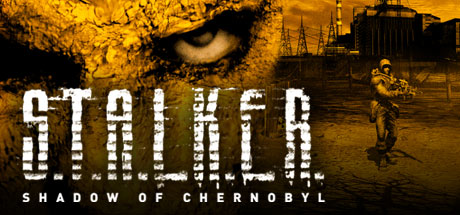
Then there’s S.T.A.L.K.E.R.: Shadow of Chernobyl, where the Zone isn’t just dangerous—it’s alive with memory. Radiation burns, anomalies warp light and time, and mutated creatures move with unsettling familiarity. The player review notes being “intrigued in the whole thing,” not just the story, but the map: “big and beautiful.” That beauty is key—it’s the same haunting, indifferent grandeur Angela confronts on Earth: a landscape scarred by catastrophe, yet stubbornly, eerily present. Survival here isn’t about winning—it’s about bearing witness. Every scavenged battery, every cautious step through a crumbling reactor hall, echoes Angela’s mission: not to conquer Earth, but to relearn it, molecule by molecule, in a body that keeps reminding her it’s temporary.
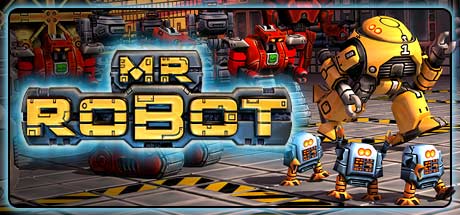
Even Mr. Robot, though its description frames Asimov as a “lowly service mechanoid” aboard the Eidolon, lands with uncanny kinship. Its player review mentions “light Mega Man Battle Network type exploration”—a nod to systems where logic and environment intertwine with quiet melancholy. Asimov’s malfunctioning ship, carrying frozen humans toward an uncertain future, mirrors DEVA’s fragile, suspended utopia. Both are vessels holding consciousness in stasis, hurtling through voids they don’t fully comprehend. The emotional DNA isn’t in the mechs or the space—it’s in the tremor of duty carried by something designed to serve, suddenly asked to feel the weight of what it carries.
This pairing isn’t for fans of slick futurism or bullet-sponge combat. It’s for the person who pauses mid-gameplay to watch rain hit a broken window in BioShock, who lingers in the Zone’s fog just to hear the wind rattle dead leaves, who feels Angela’s breath catch—not at a villain’s reveal, but at the sight of a single, stubborn weed cracking concrete. They love stories where the most devastating weapon isn’t a railgun, but recognition: the sudden, gut-level understanding that paradise, once built to erase suffering, can become the loneliest place in the universe—and that sometimes, the bravest thing isn’t ascending, but stepping down, into the dust, and learning how to hold your breath with the world, not above it.
🎮83 Games That Match the Vibe






































Match Dimensions Explained
❓Frequently Asked Questions
Why does BioShock keep coming up when people talk about games like Expelled From Paradise?
Because both dive deep into cyberpunk dystopias where ideology clashes with oppressive tech—BioShock’s Rapture mirrors Paradise’s rigid digital utopia, and its audio logs (like Atlas’s manipulative broadcasts) echo the film’s themes of control vs. freedom. Plus, that haunting underwater city aesthetic? It hits the same melancholic, high-concept sci-fi vibe as the orbital habitat scenes in Expelled.
Is there a Mr. Robot game adaptation of Expelled From Paradise?
No—Mr. Robot is its own thing: a retro-styled mech adventure where you play Asimov, a service mechanoid aboard the colony ship Eidolon after its AI brain malfunctions. It shares Expelled’s mecha/military sci-fi dimension and interstellar setting, but it’s not an adaptation—just a tonal cousin with light Mega Man Battle Network–style exploration and turn-based-ish battles.
How does S.T.A.L.K.E.R.: Shadow of Chernobyl compare to Tribes: Ascend for Expelled From Paradise fans?
Tribes: Ascend delivers fast-paced, gravity-defying jetpack combat across snowy military sci-fi battlefields—think Eden’s orbital defense skirmishes—but S.T.A.L.K.E.R. swaps action for slow-burn dread in the Zone, where radiation storms and psychic anomalies mirror the film’s existential unease. Both nail the ‘sci-fi space’ and ‘cyberpunk dystopia’ vibes, but one’s all adrenaline, the other’s all atmosphere and consequence.
What’s the best game like Expelled From Paradise if I want that lonely, philosophical sci-fi vibe?
S.T.A.L.K.E.R.: Shadow of Chernobyl—it’s got that same heavy, contemplative weight: wandering a vast, decaying map alone, piecing together lore from dead stalkers’ notes and radio chatter, while anomalies warp reality like the film’s glitches between digital and physical worlds. The player review nails it: ‘The story is also really good, I’m intrigued in the whole thing’—exactly the mood Expelled leaves you in.