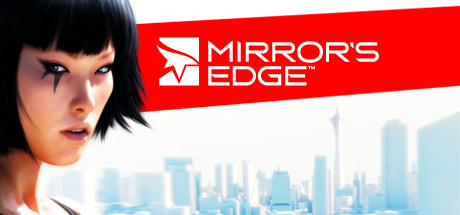
Mirror's Edge™
In a city where information is heavily monitored, couriers called Runners transport sensitive data. In this seemingly utopian paradise, a crime has been committed, & you are being hunted. You are a Runner called Faith and this innovative first-person action-adventure is your story.
🎮Game Details
💬What Players Say
"Running smooth w zero issue at all, this was a dream to play on PC. I really recommend getting it when it's on sale bc it's a short game. I always see this game and Catalyst on sale...."
"Mirror's Edge is a fun, challenging first-person platform game. Sadly, this game was released in a time period where bad ports were the norm. Luckily, the community made a mod called: Mirror's Edge Tweaks...."
"I played this game for the first time in 2009. I was absolutely impressed back then and my mind was blown away by the game 17 years later (As of May 2026) and this feeling has become even stronger and made me realize that there is a chance that there won't be another game like this. But I'm still holding some hope for the future in case someone picks up the idea...."
📝Editorial Analysis
The first time you vault over a rooftop ledge in Mirror's Edge™, wind snapping at your jacket, the city’s sterile white towers bleeding into pale blue sky — that breathless suspension, that razor-thin line between control and fall — is what sticks. Not the crime, not the conspiracy, but the motion: legs coiling, arms swinging, world tilting as you commit to the drop, trusting muscle memory over gravity. It’s exactly what Player Review 3 describes — that mind-blown feeling, seventeen years later, still intensifying. Not nostalgia. Recognition. The official description calls it a “seemingly utopian paradise” where information is “heavily monitored” — but the game never shows surveillance drones or flashing alerts. It shows silence. A city scrubbed of texture, where every surface gleams just a little too clean, and the only warmth comes from Faith’s own pulse, her ragged exhale echoing in your ears. That’s the paradox: a world built on control, yet experienced entirely through bodily autonomy. You don’t shoot your way out. You flow.
What makes this atmosphere singular isn’t its cyberpunk label — it’s the melancholic lightness. There’s no grimy rain-slicked alleyway catharsis here. No neon-drenched despair. Instead, there’s the hush of empty plazas, the echo in ventilation shafts, the way sunlight hits polished concrete like cold glass. It’s dystopia rendered not in decay, but in over-order — a place so sanitized it feels quietly suffocating. And yet, movement is pure, almost sacred release. Every wall-run, every slide under a gate, every perfectly timed roll isn’t just mechanics — it’s resistance made kinetic. Player Review 1 calls it “a dream to play,” and that’s key: it’s not about power fantasy, but elegance under pressure. You feel focused, vulnerable, alive — not because you’re winning, but because you’re present, body and intention fused. That’s the emotional DNA: clarity, isolation, and quiet urgency.
That same resonance hums in Yu-Gi-Oh! 5D's, where Satellite’s rusted sprawl and Neo Domino City’s sterile spires mirror Mirror’s Edge’s architectural duality — both worlds are cyberpunk & dystopia defined by vertical hierarchy and suppressed memory, and both pivot on melancholic exploration: Yusei riding his Duel Runner across broken highways, searching not for victory first, but for meaning in the ruins. Then there’s Redline, which shares cyberpunk & dystopia and sci-fi & space, but more crucially, its racing sequences vibrate with the same physical certainty — no HUD, no targeting reticle, just speed, instinct, and the sheer joy of trajectory. When Jean slips sideways around a cratered moonbase curve, tires screaming, it’s not spectacle — it’s embodied trust, identical to Faith’s leap across a chasm with nothing but wind and timing. And TRIGUN STAMPEDE — also scored on cyberpunk & dystopia, melancholic exploration, and sci-fi & space — lands even deeper: Vash’s world is bleached, vast, and eerily quiet, where violence is shocking because of the stillness surrounding it. His pacifism isn’t weakness — it’s a stance carved from witnessing how easily order becomes erasure. Like Faith, he moves through systems designed to erase dissent, choosing grace over force, lightness over weight.
This pairing isn’t for fans of explosive set pieces or lore-dense worldbuilding. It’s for the person who replays the rooftop chase in Mirror's Edge™ not to win, but to perfect the rhythm — who watches TRIGUN STAMPEDE’s desert horizons and feels the ache of open space, who rewinds Redline’s final lap just to savor the sound of engine and gravel syncing. It’s for those who find poetry in motion that’s precise, solitary, and charged with unspoken stakes — people who understand that the most radical act in a controlled world isn’t rebellion with a gun, but running freely, breathing deeply, and choosing, again and again, to move with the body, not against it.
→48 Anime That Match the Vibe

JP’s blistering, gravity-defying drift through Redline’s neon-drenched orbital racetrack mirrors Faith’s heart-pounding rooftop vaults across Mirror’s Edge’s sterile, surveillance-saturated cityscape—both hurtling through meticulously constructed cyberpunk & dystopia worlds where movement itself is rebellion. Unlike most sci-fi action, neither work pauses for exposition; instead, they weaponize velocity, turning bodies in motion into urgent political statements. That shared obsession with kinetic freedom—against systems that commodify or control the human form—makes their resonance startlingly physical, not just aesthetic.

Both dive into neon-soaked futures where technology blurs the line between human and machine.
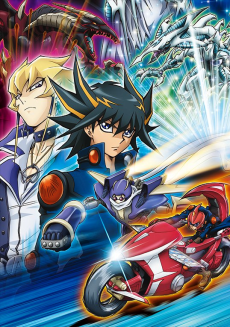
Neo Domino City’s rain-slicked, neon-drenched Sector Security checkpoints echo Mirror’s Edge’s sterile surveillance plazas—both enforce control through architectural choreography. Where Faith’s rooftop leaps trace fragile autonomy amid oppressive order, Yusei’s D-Wheel rides carve defiant arcs through the same melancholic exploration of a society that brands dissent as data corruption. This resonance isn’t stylistic coincidence: both treat cyberpunk dystopia as emotional infrastructure, not backdrop.

A rooftop chase through Neo-Paris’ rain-slicked spires—Faith’s momentum defying surveillance drones—echoes Kazane’s desperate flight across the fractured clockwork sky in *The Angeloid of Clockwork*, where time itself glitches under authoritarian control. Unlike most dystopias rooted in decay, both weaponize pristine surfaces: sterile chrome and pastel-laced sci-fi aesthetics mask systemic oppression beneath utopian veneers. This shared cyberpunk & dystopia tension—where freedom is kinetic, bodily, and constantly surveilled—makes their resonance startlingly visceral, not thematic.

Both dive into neon-soaked futures where technology blurs the line between human and machine.

Both dive into neon-soaked futures where technology blurs the line between human and machine.
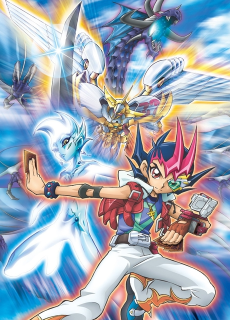
Both dive into neon-soaked futures where technology blurs the line between human and machine.
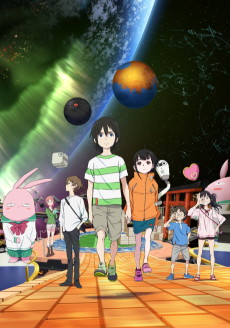
Both dive into neon-soaked futures where technology blurs the line between human and machine.
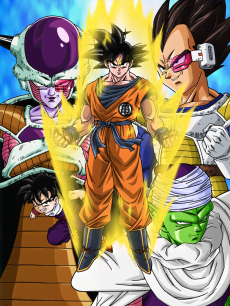
A rain-slicked rooftop chase in *Mirror’s Edge™*, where Faith leaps between neon-lit spires while surveillance drones whir overhead, pulses with the same melancholic exploration that colors *Dragon Ball Z Kai*’s quieter interludes—like Gohan studying under Piccolo on Mount Paozu, where silence and vast sky underscore isolation amid looming threat. Unlike most action narratives, both prune spectacle to serve atmosphere: *Kai*’s tighter pacing and muted color grading deepen its dystopian unease, while *Mirror’s Edge™*’s stark white-and-crimson palette renders its cyberpunk city not just oppressive, but eerily hollow. This shared restraint makes their emotional stakes feel startlingly intimate.

Vash’s sun-bleached, crumbling desert towns in *TRIGUN STAMPEDE* echo Mirror’s Edge’s sterile, vertiginous cityscapes—both use 🌆 Cyberpunk & Dystopia not for grit but as melancholic canvases where freedom feels fragile and luminous. Unlike most action narratives, neither glorifies violence: Faith’s fluid parkour evades surveillance; Vash’s pacifism bends physics and narrative expectation. That shared tension—joyful movement against oppressive systems—makes their resonance quietly radical.
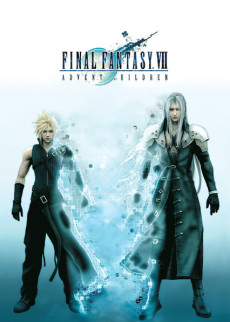














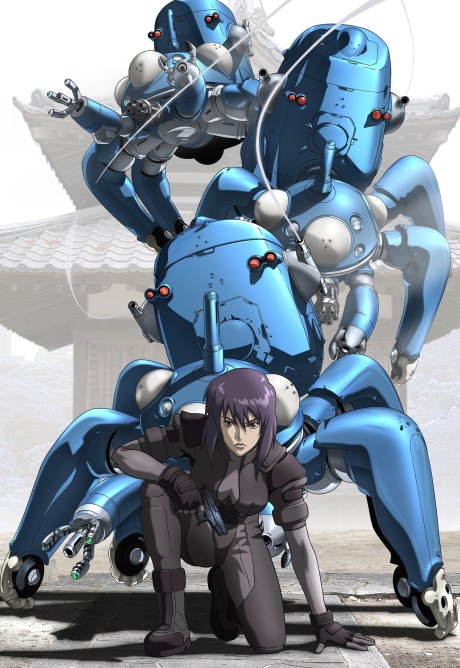






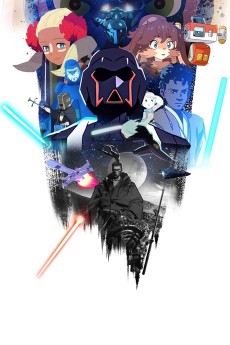





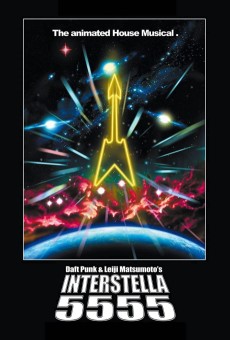



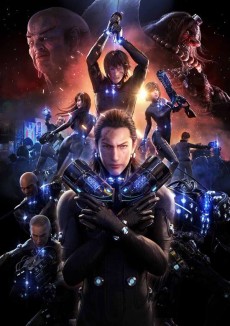


Match Dimensions Explained
❓Frequently Asked Questions
Why is Yu-Gi-Oh! 5D's recommended for Mirror's Edge fans?
Because both lean hard into that sleek, rain-slicked cyberpunk dystopia where rebellion happens on the move—like Yusei Fudo racing through Neo Domino City’s neon-lit Satellite slums on his Duel Runner, mirroring Faith’s rooftop sprints and tight alleyway escapes. The melancholic exploration hits too: Yusei’s quiet moments staring at the city skyline from a broken-down bridge? That’s pure Mirror’s Edge ‘breather’ energy—calm before the next gravity-defying vault.
Is there an anime adaptation of Mirror's Edge?
No official anime adaptation exists—but TRIGUN STAMPEDE nails the *vibe* so well it feels like one: Vash’s red coat flaring as he slides across desert rooftops, dodging drones while carrying forbidden data (hello, Runner ethos), plus that same stark color palette and moral weight. It’s not canon, but with its 76% match score and shared Cyberpunk & Dystopia + Melancholic Exploration dimensions, it’s the closest spiritual sibling out there.
How does Redline compare to Dragon Ball Z Kai for Mirror's Edge energy?
Redline wins on pure kinetic flow—think Jean’s insane, physics-bending race through Robot City’s vertical canyons and collapsing highways, where every drift and jump feels like Faith’s wall-runs and zip-line drops. DBZ Kai has the scale and stakes (Goku soaring over dystopian wastelands), but Redline’s relentless, first-person-adjacent pacing and visual minimalism—white lines on black, bold red accents—mirror Mirror’s Edge’s UI and movement language way more directly.
What’s the best anime like Mirror's Edge if I want that ‘hunted courier’ tension and quiet intensity?
Cells at Work! CODE BLACK—it’s shockingly perfect. Watch Macrophage sprinting through crumbling capillary tunnels under bio-surveillance, or Killer T-cell executing silent, precise takedowns while evading systemic threats—all while the world feels oppressively monitored and fragile. That 76% match isn’t hype: its Cyberpunk & Dystopia framing + Melancholic Exploration (like the haunting silence in a necrotic tissue zone) delivers the exact hunted-runner mood, just scaled down to cellular level.