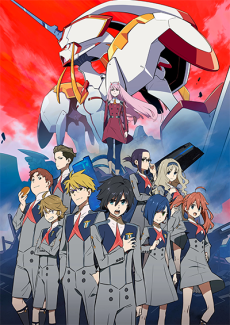
DARLING in the FRANXX
The distant future: Humanity established the mobile fort city, Plantation, upon the ruined wasteland. Within the city were pilot quarters, Mistilteinn, otherwise known as the “Birdcage.” That is where the children live... Their only mission in life was the fight. Their enemies are the mysterious giant organisms known as Kyoryu. The children operate robots known as FRANXX in order to face these still unseen enemies. Among them was a boy who was once called a child prodigy: Code number 016, Hiro. One day, a mysterious girl called Zero Two appears in front of Hiro. “I’ve found you, my Darling.”
(Source: Crunchyroll)
📺Anime Details
📝Editorial Analysis
The cockpit lights flicker—cold blue, then a sudden flare of crimson—as the FRANXX shudders mid-air, its twin pilots gasping in unison, fingers interlaced inside the neural grip. Sweat beads on their temples. The Kyoryu’s roar isn’t just sound—it’s pressure against the eardrums, a physical weight pressing down from the ruined sky. And beneath it all: that quiet, trembling breath shared between two teenagers who’ve never held hands outside the machine. Not romance as fantasy—but recognition, raw and urgent, as if touch is the only proof they’re still alive in a world that erased their names before giving them numbers.
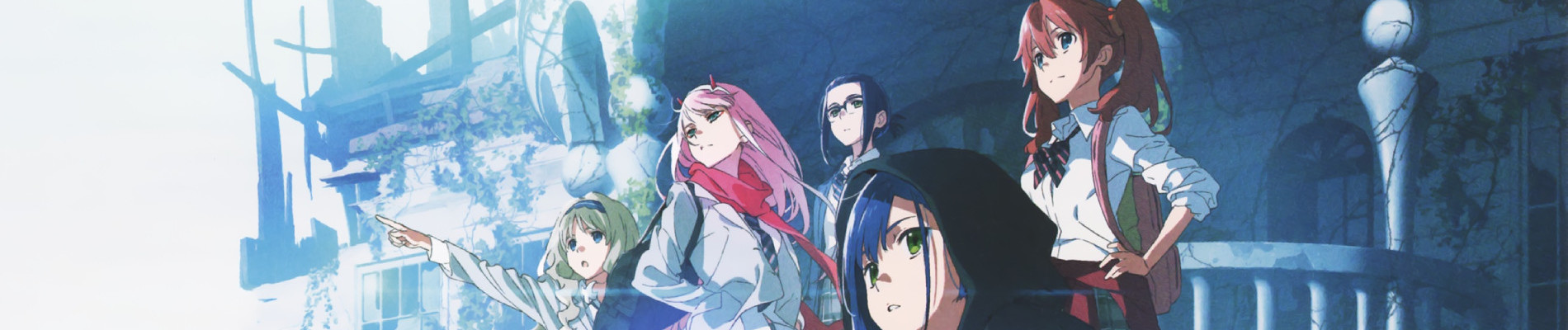
That feeling—the one that lingers long after the final frame—isn’t just dystopia or mecha spectacle. It’s the aching intimacy of confinement: walls closing in not just physically (Mistilteinn’s sterile corridors, the Birdcage’s locked doors), but emotionally—where love is both lifeline and liability, where every kiss risks disintegration because connection itself has been weaponized, pathologized, made conditional. You don’t just watch DARLING in the FRANXX—you breathe its oxygen-deprived air, feel the claustrophobia of adolescence under total surveillance, and ache for the sheer, terrifying vulnerability of choosing each other when the system demands you remain separate, efficient, expendable.
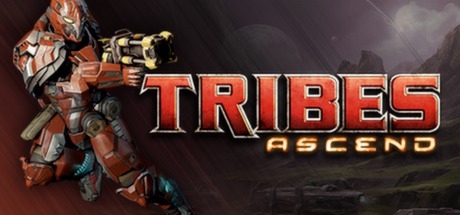
Which is why Tribes: Ascend, with its “Mecha & Military Sci-Fi” and “Cyberpunk & Dystopia” dimensions, resonates—not through story, but through structure. Its player review says: “Man, I used to love this game. Just mindless fun. All be it, it could have been expanded or had much added to it, sadly it had so much potential that…” That wistful, unresolved yearning mirrors the anime’s own narrative architecture: a world built on inherited systems (Plantation’s rigid hierarchy, the FRANXX program’s hidden logic), where players—and pilots—operate inside brilliant, brittle frameworks that almost make sense, until they don’t. The thrill of speed across barren terrain, the reliance on teammates you barely know, the way victory feels hollow when the base resets at dawn—it’s the same rhythm as piloting a FRANXX: exhilarating, communal, and fundamentally temporary.
Then there’s Tank Universal, tagged with “Melancholic Exploration” and “Emotional Narrative.” Its description calls it an “action FPS tank wargame inspired by Tron and Battlezone”—a digital wasteland lit in neon and static. But the real key is the player review: “Play cool tank game with dad when you were 6. Love the cool sound effects, and the colors. time goes on; loose access to game. Grew up dad passes away…” That quiet collapse of memory into loss—how a sensory detail (sound, color) becomes a vessel for grief—is pure DARLING in the FRANXX. The anime doesn’t shout its sorrow; it lets silence pool between lines, lets a child’s drawing on a wall say more than dialogue ever could. Like Tank Universal, it wraps emotional devastation in sleek, stylized mechanics—so the pain arrives not as exposition, but as resonance, vibrating in your ribs long after the screen fades.
And BioShock Infinite, with its “Time & Memory” dimension, lands with uncanny precision. Its description centers on Booker DeWitt rescuing Elizabeth—a mission framed as salvation, but layered with moral rot and ontological fracture. The player review admits: “I know that some people are still bitter about the Bioshock Infinite we could have gotten. Those criticisms are valid as a matter of opinion, but after…” That ellipsis—unfinished, suspended—is the emotional signature of DARLING in the FRANXX. Both works build worlds where ideology masquerades as care, where “saving” someone means unraveling their very origin, and where every revelation fractures certainty further. Neither offers catharsis—just clarity, sharp and exhausting, like waking from a dream you can’t quite name.
This pairing isn’t for fans of “cool robots” or “tragic love stories” as tropes. It’s for the person who replays a childhood game not for nostalgia, but to re-feel the exact weight of their father’s hand on the controller. For the reader who underlines sentences not for plot, but for how the syntax makes their throat tighten. For anyone who’s ever loved something so fiercely it felt like sabotage—because in DARLING in the FRANXX, and in these games, love isn’t the solution. It’s the first, fragile crack in the dam. And what spills out isn’t just water—it’s memory, grief, and the unbearable, beautiful risk of being known.
🎮116 Games That Match the Vibe



















Match Dimensions Explained
❓Frequently Asked Questions
Why does Tank Universal get compared to DARLING in the FRANXX despite having no mecha pilots or romance?
It’s all about that melancholic, lonely-space vibe—like when Hiro stares out the FRANXX cockpit at the empty sky, Tank Universal drops you into a vast, silent virtual cosmos with just your tank, glowing Tron-style grids, and AI allies who feel quietly loyal (think Zero’s quiet devotion to Hiro). The emotional narrative dimension hits hard in moments like exploring derelict sectors while remembering your dad’s voice from the player review—very much like FRANXX’s themes of inherited trauma and fragile hope.
Is there a DARLING in the FRANXX anime-to-game adaptation?
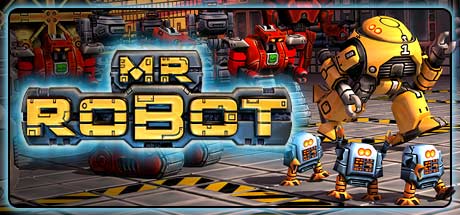
No official anime-to-game adaptation exists—but Mr. Robot comes closest in spirit: you play Asimov, a service mechanoid aboard the colony ship Eidolon (think Strelizia’s scale and isolation), and when the ship’s AI malfunctions, you’re thrust into tense, intimate combat and exploration—not with a partner, but with growing self-awareness, much like Hiro’s arc. It even has light Mega Man Battle Network–style platforming, echoing the tight, kinetic cockpit sequences in FRANXX.
How is BioShock Infinite similar to DARLING in the FRANXX if one’s about Columbia and the other’s about mecha teens?
Both hinge on time, memory, and doomed love against a crumbling sci-fi dystopia—Booker and Elizabeth’s bond mirrors Hiro and Zero’s tragic, codependent push-pull, especially during the lighthouse reveals or the final train-platform echoes. The Cyberpunk & Dystopia + Sci-Fi & Space dimensions overlap hard: imagine seeing the floating city of Columbia’s propaganda posters next to Franxx Base’s sterile corridors, both masking systemic collapse beneath glittering surfaces.
What’s the best game like DARLING in the FRANXX for that bittersweet, late-night ‘we’re all gonna die but let’s hold hands’ mood?
Tank Universal—hands down. Its Melancholic Exploration and Emotional Narrative dimensions are laser-targeted: drifting through neon-lit voids in your tank, hearing those haunting synth tones, fighting alongside AI allies who never speak but always follow… it captures that exact FRANXX feeling of fragile connection in cosmic loneliness. One player even tied it to childhood memories with their dad—just like how FRANXX ties intimacy to legacy and loss.