
ATRI -My Dear Moments-
In the near future, a sudden and unexplained sea rise has left much of human civilization underwater. Ikaruga Natsuki, a boy who lost his mother and one of his legs in an accident some years earlier, returns disillusioned from a harsh life in the big city to find his old countryside home half-swallowed by the sea. Left without a family, all he has to his name is the ship and submarine left to him by his oceanologist grandmother, and her debts. His only hope to restore the dreams for the future that he has lost is to take up an opportunity presented to him by the suspicious debt collector Catherine. They set sail to search the sunken ruins of his grandmother's laboratory in order to find a treasure rumor says she left there. But what they find is not riches or jewels; it is a strange girl lying asleep in a coffin at the bottom of the sea, Atri. Atri is a robot, but her appearance and her wealth of emotions would fool anyone into thinking she's a living, breathing human being. In gratitude for being salvaged, she makes a declaration to Natsuki.
(Source: Crunchyroll)
📺Anime Details
📝Editorial Analysis
The salt hangs in the air—not sharp, not clean, but thick and slow, like breath held too long. Natsuki stands barefoot on the warped deck of his grandmother’s ship, water lapping just below the rusted railing, the sea swallowing the old rice fields where he once ran. His prosthetic foot taps once—soft, hollow—against wet wood. No music swells. No voiceover explains. Just that sound, that silence between waves, and the weight of a horizon blurred by mist and memory.

This isn’t dystopia as spectacle. It’s dystopia as weather—a constant, humid pressure against the skin. ATRI -My Dear Moments- doesn’t shout about collapse; it lets you feel the damp seep into floorboards, hear the groan of metal half-drowned, watch sunlight fracture through cracked submarine glass. The tragedy isn’t in grand betrayals or world-ending wars—it’s in the quiet arithmetic of survival: debts unpaid, legs lost, mothers gone, futures deferred. What lingers is tenderness under duress: the way ATRI’s fingers hesitate before touching Natsuki’s shoulder, how her voice softens when she misreads human grief as system error. You don’t just witness loss—you inhale its humidity, taste its brine. It makes you think about care as labor, hope as maintenance, love as something you rebuild, bolt by careful bolt, in a world that keeps flooding back in.
That same hushed, waterlogged ache lives in Nikopol: Secrets of the Immortals, where Paris is choked not by waves but by dogma and dread—and yet, the player still moves through rain-slicked alleys with the same melancholic exploration described in its real tagline. Like Natsuki navigating submerged ruins, Nikopol walks beneath a pyramid ship’s impossible shadow, not with awe, but weary curiosity. A player review notes how “the whole cyberpunk atmosphere gives it a nice vibe”—but it’s not the neon or the tech that resonates. It’s the stillness between lines, the way the game lingers on a crumbling fresco or a flickering hologram of a dead saint, mirroring how ATRI holds on a shot of ATRI’s hand tracing the outline of a dried-up well—both asking, softly: What do you preserve when everything else dissolves?
Then there’s Dreamfall: The Longest Journey, whose player review calls it “less a long journey than a long drama… the drama is compelling enough that you keep watching scene after scene.” That’s the exact rhythm of ATRI: no cutscene is rushed, no confession unearned. April Ryan’s quiet exhaustion mirrors Natsuki’s—both carry inherited burdens (a fractured world, a dead mother, a legacy they didn’t ask for), and both find meaning not in saving everything, but in choosing one person, one boat, one promise to honor. The emotional narrative isn’t ornate—it’s patient, cumulative, built on glances and silences that land like stones in still water.
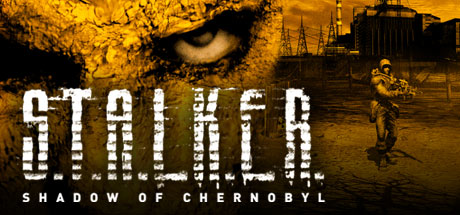
Even S.T.A.L.K.E.R.: Shadow of Chernobyl, at first glance all anomaly zones and bullet physics, shares this DNA—not in action, but in atmosphere as character. Its description names fear of “radiation, anomalies and deadly creatures,” yes—but what players actually remember, per that review, is “the map is big and beautiful…” Not hostile. Beautiful. Like the drowned countryside in ATRI, the Zone isn’t just dangerous—it’s hauntingly alive, humming with residual life, decay, and unintended grace. You don’t conquer it. You move through it, humbled, listening—for wind in dead trees, for distant static, for the faint, hopeful ping of sonar from a submarine you’re trying, desperately, to wake up.
This isn’t for people who want catharsis in explosions or epiphanies in monologues. It’s for the ones who cry at the sound of rain on a tin roof, who pause mid-game to watch a stray cat pad across a ruined plaza, who understand that grief and grace often wear the same quiet coat. It’s for readers who underline sentences about light through water, for players who save before every dialogue choice—not out of fear of failure, but reverence for consequence. They know love isn’t declared. It’s calibrated. Adjusted. Dived for, again and again, in the dark.
🎮44 Games That Match the Vibe


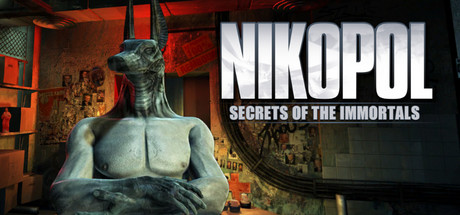

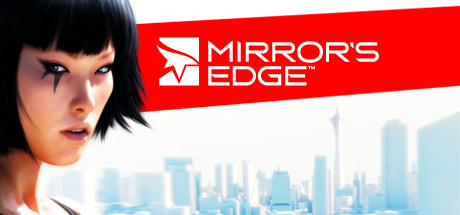
















Match Dimensions Explained
❓Frequently Asked Questions
Why is Nikopol: Secrets of the Immortals listed as similar to ATRI when it’s a dystopian sci-fi game and ATRI is so warm and tender?
Great question—it’s all about shared emotional texture, not surface tone. Nikopol nails that quiet, melancholic exploration ATRI fans love: think of how ATRI’s rainy dock scenes with Mika or the lighthouse moments linger with bittersweet stillness—Nikopol mirrors that in its slow, rain-slicked Paris streets and intimate cutscenes with the immortal Nikopol and the enigmatic pyramid ship. Both use atmospheric silence, restrained music, and character-driven pauses (not action) to build emotional weight.
Is there an anime or manga adaptation of Dreamfall: The Longest Journey like there is for ATRI?
Nope—Dreamfall has never been adapted into anime or manga, unlike ATRI which got both a well-received anime and manga. It’s stayed purely a game series (with its own rich lore and voice-acted drama), though fans often compare Zoe Castillo’s introspective journey across parallel worlds to ATRI’s emotional arcs—especially how both use quiet dialogue scenes (like Zoe’s conversations with Kian in the Nexus or April’s late-night talks in Arcadia) to land big emotional beats.
How does Mirror's Edge compare to ATRI in terms of story depth and emotional payoff?
Mirror’s Edge trades ATRI’s tender, character-first storytelling for visceral, environmental storytelling—but they surprisingly overlap in mood. While ATRI gives you tearful confessions on the pier with Mika, Mirror’s Edge delivers emotional resonance through solitude and movement: think Faith running alone across neon-lit rooftops at dawn, her internal monologue echoing ATRI’s themes of hope amid control. Player reviews even call it ‘a short game, but one that sticks with you’—just like ATRI’s final chapter lands hard despite its compact runtime.
What’s the best game like ATRI if I want that same gentle, reflective vibe—not action or combat?
Go straight to Nikopol: Secrets of the Immortals. It’s the only match with *both* Melancholic Exploration *and* Emotional Narrative as core dimensions—and zero combat mechanics. You’ll wander atmospheric, hand-painted Parisian alleys, trigger thoughtful cutscenes with characters like the weary scientist Dorian or the mysterious pyramid entity, and feel that same hushed, contemplative rhythm as ATRI’s library scenes or boat rides. No crafting, no shooting—just story, silence, and soul.