
Ergo Proxy
Something is wrong in the perfect domed city of Romdo. Between the sudden rash of murders and a virus affecting all AutoReivs-cyborg companions and workers who assist the people of Romdo - all is not right in their dome home. Detective Re-l Meyer begins to investigate, seeking answers to the weird occurrences that are happening more and more around her. But when she begins to uncover the truth, her world is turned upside down.
First, the strange immigrant Vincent Law goes missing and then a monster appears before her, shaking her to her core. But this monster is something more, something dangerous and sinister. With each question and mystery, she is led back to the creature. But what is it really? What purpose does it serve? A sign of the end or a sign of a new beginning? Whatever it is, it repeatedly brings her back to Vincent and soon, alongside his journey back to another dome world called, Mosk. As they make their way across scarred and deserted Earth, Re-l and Vincent will learn more about the monster and the "awakening"-which could be more of an ending than a beginning.
(Source: Funimation)
Note: Episode 1 received an advanced broadcast on channel WOWOW on February 5, 2006. The start date reflects the start of the regular series broadcasting.
📺Anime Details
📝Editorial Analysis
The air in Romdo tastes sterile—cold, filtered, and faintly metallic—like breathing inside a cathedral built by machines who forgot how to pray. Re-l Meyer stands before the cracked glass of her apartment window, watching rain slide down the dome’s inner surface in slow, distorted rivulets. Her reflection flickers—not just from the wet pane, but because she is flickering: a woman whose memories are gaps she walks around like minefields, whose identity feels borrowed, rehearsed, hollowed out by design. That silence between heartbeats—the one just before the AutoReiv’s head tilts too far, its optics dimming into something aware—that’s where Ergo Proxy lives.
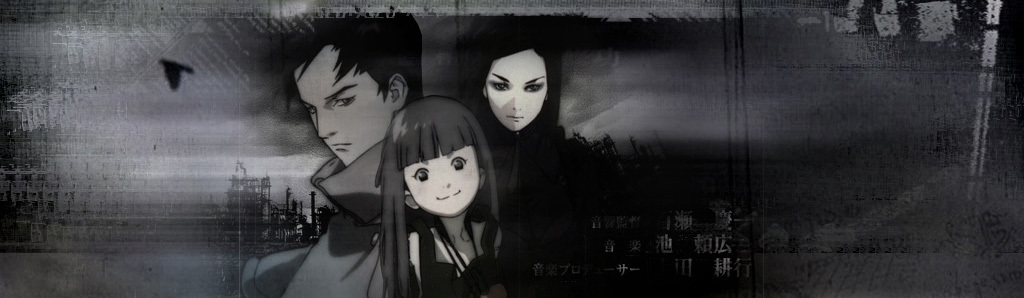
It doesn’t unsettle you with jump scares or gore. It unsettles you with stillness. With the weight of unanswered questions that don’t feel like plot devices—they feel like symptoms. The dome isn’t just a setting; it’s a nervous system calibrated to suppress doubt, and every glitch in the AutoReivs, every erased file, every whispered name (Proxy, Cogito, Vincent Law) lands like a tremor in your own cognition. You don’t watch Ergo Proxy—you recoil inward, questioning not just what’s real, but whether “real” is even a stable category anymore. It makes you feel unmoored, obsessive, tired in the bones—like you’ve been reading philosophy at 3 a.m. for weeks and just realized the footnotes are watching you back.
That same fraying-at-the-edges dread pulses through BioShock™, where Rapture’s art deco decay mirrors Romdo’s clinical rot: both are utopias engineered to erase human frailty—and both collapse under the weight of their own logic. The player review calls it “revolutionary,” and it is—not just for gameplay, but for how it weaponizes trust. Like Re-l learning her father’s directives were never guidance but programming, BioShock’s famous twist forces you to confront how much of your agency was illusion. You pull the trigger thinking you’re choosing—only to realize you were conditioned to obey. That gut-lurch of violated autonomy? That’s the same vertigo Re-l feels when her reflection blinks after she does.
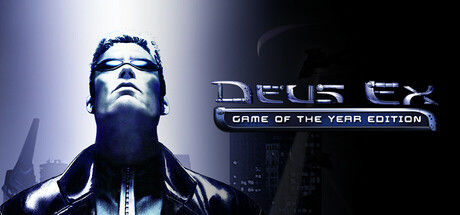
Then there’s Deus Ex: Game of the Year Edition, where the year 2052 drowns in widening inequality and an “ages-old conspiracy bent on world dom[ination].” Not domination through force—but through architecture, information control, and the quiet replacement of human will with systemic logic. Its player review praises how the game gives you “all options with one hit of the esc key”—a beautiful irony, because in Romdo, choice is the most dangerous virus of all. Both Deus Ex and Ergo Proxy treat freedom as a destabilizing contagion: Vincent Law doesn’t enter Romdo—he leaks into it, like a memory no firewall can quarantine. The neon noir lighting isn’t aesthetic—it’s diagnostic, casting long, ambiguous shadows where identity dissolves into silhouette.
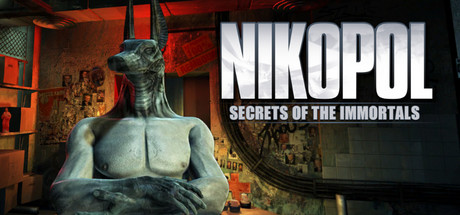
And Nikopol: Secrets of the Immortals, with its “melancholic exploration” beneath a Paris ruled by religious dictatorship and haunted by a pyramid ship, shares Ergo Proxy’s hushed, archaeological sorrow. This isn’t action-driven dystopia—it’s archival dystopia. You move through spaces thick with forgotten ideologies, parsing glyphs and half-erased murals, feeling the exhaustion of civilizations that built monuments to gods they stopped believing in. The player review notes how “the whole cyberpunk atmosphere gives it a nice vibe”—but it’s not nice. It’s heavy, contemplative, draped in the velvet quiet of ruins. Like Re-l tracing the carvings inside the Proxies’ temple, you’re not solving a puzzle—you’re bearing witness to a theology of control so total, even its priests have forgotten the liturgy.
These aren’t for the viewer who wants answers. They’re for the one who keeps the question open, who finds comfort not in resolution but in the precision of the wound. The kind of person who replays a single line of dialogue three times—not to catch nuance, but to feel the syllables settle like dust in an abandoned archive. Who stares at a loading screen not waiting for the game to start, but listening for the hum underneath. Who knows that the most terrifying monster isn’t behind the door—it’s the version of yourself you’ve trained not to recognize in the mirror. That person—tired, curious, stubbornly unsoothed—will feel seen. Not saved. Not explained. Seen.
🎮60 Games That Match the Vibe





























Match Dimensions Explained
❓Frequently Asked Questions
Why is BioShock always listed as similar to Ergo Proxy despite having no robots or proxies?
Because both dive deep into philosophical dread and systemic collapse—not through robots, but through crumbling ideologies: BioShock’s Rapture mirrors Ergo Proxy’s Romdo with its failed utopian logic, and Andrew Ryan’s ‘A is A’ monologue hits the same chilling, self-unraveling tone as Vincent Law’s slow descent into fragmented identity. The bathysphere descent into Rapture’s flooded halls feels just as isolating and symbolically heavy as Vincent walking alone through Romdo’s sterile, rain-slicked corridors.
Is there a video game adaptation of Ergo Proxy?
No—there’s never been an official Ergo Proxy game adaptation. But fans who crave that exact vibe often land on Nikopol: Secrets of the Immortals, which nails the melancholic exploration and dystopian religious authoritarianism (think Romdo’s Council meets Nikopol’s theocratic France), complete with haunting point-and-click pacing and that same quiet, rain-soaked existential weight.
How does Deus Ex: Game of the Year Edition compare to BioShock in capturing Ergo Proxy’s tone?
Deus Ex leans harder into political conspiracy and player agency—like when you hack surveillance in Hong Kong or confront Majestic 12 while questioning your own augmentations—whereas BioShock locks you into a scripted, tragic arc like Vincent’s unraveling. Both hit Ergo Proxy’s cyberpunk-dystopia + adult seinen core, but Deus Ex gives you the *tools* to interrogate systems; BioShock makes you *live inside* their inevitable collapse.
What’s the best game like Ergo Proxy if I want that slow-burn, rain-soaked, emotionally exhausted vibe?
Nikopol: Secrets of the Immortals—it’s practically Ergo Proxy in point-and-click form. You play as Nikopol waking up after 30 years in cryo, stumbling through a Paris ruled by fanatical priests, uncovering conspiracies around a mysterious pyramid ship… all while soaked in blue-grey light, ambient synth, and that same heavy, contemplative silence as Vincent staring out a Romdo window at the rain.