
Gunbuster 2: Diebuster
While Gunbuster's final mission destroyed the space monsters' star system, the intergalactic war still continues. Earth's only hope lies in the hands of "TOPLESS", an elite mecha group with children possessing supernatural powers and new Buster Machines. Among their ranks is a rookie named Nono and the ace pilot Lal'C - whom Nono looks at as a "big sister". Together with their teammates Nicholas and Chiko they must aim for the top and protect all of mankind from the wrath of the space monsters.
(Source: Anime News Network)
📺Anime Details
📝Editorial Analysis
The cockpit of Diebuster’s Buster Machine shudders—not from recoil, but from weight. Not the weight of metal or gravity, but the crushing, silent pressure of time itself: Nono’s fingers tremble on the controls as the starfield outside blurs into streaks of violet and gold, her breath shallow, her eyes locked on the impossible silhouette of a space monster—vast, ancient, hungry—looming beyond the edge of human comprehension. In that second, before the engine screams and the thrusters ignite, there’s no heroism, no fanfare—just a girl holding her breath, feeling the sheer scale of what she’s asked to face, and the quiet, terrifying knowledge that her power isn’t earned—it’s borrowed, fragile, and already slipping through her fingers.
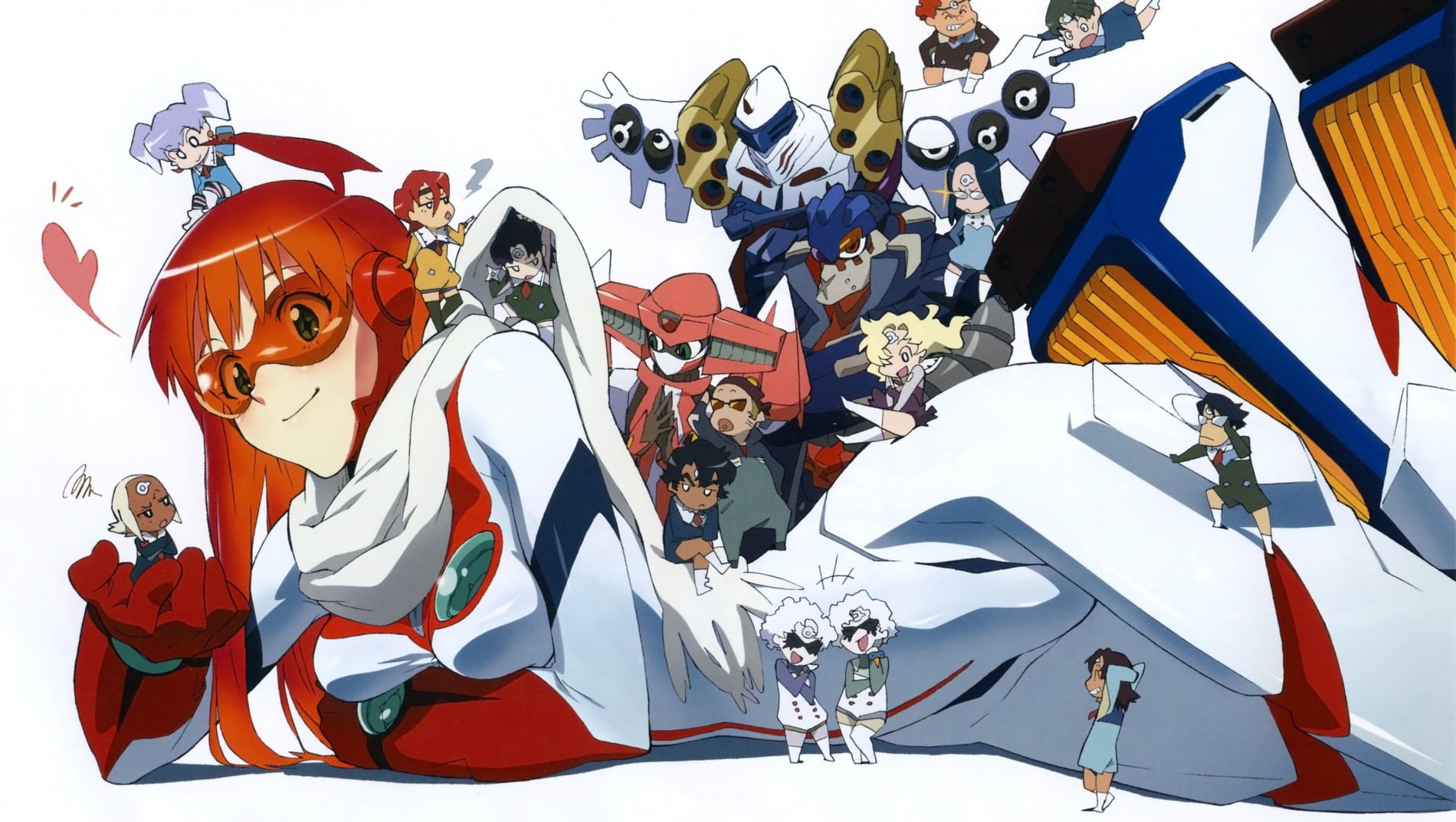
That’s the heart of Gunbuster 2: Diebuster: not spectacle for spectacle’s sake, but the emotional vertigo of standing at the edge of cosmic indifference while wearing a child’s body and a sister’s promise. It’s surreal comedy that doesn’t undercut tragedy—it frames it, like Chiko’s deadpan sarcasm mid-battle or Nicholas’s absurdly earnest pep talks right before a suicide run. It’s coming-of-age where growth isn’t linear but fractured: Nono’s awe curdles into grief; Lal’C’s strength hides exhaustion so deep it feels like erosion. The mecha aren’t tools—they’re extensions of nervous systems stretched too thin, their cockpits vibrating with the hum of artificial intelligence that watches, remembers, and judges. And the space monsters? They’re less kaiju than cosmic horror made manifest: indifferent, incomprehensible, beautiful in their ruin. You don’t defeat them—you endure them. You learn to love fiercely while the universe collapses around you. That duality—joy and dread, laughter and loss, power and fragility—is what makes Diebuster ache.
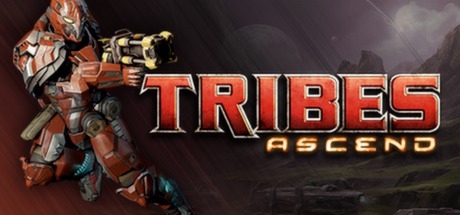
Tribes: Ascend resonates because its player review nails the same bittersweet pulse: “Man, I used to love this game. Just mindless fun. All be it, it could have been expanded or had much added to it, sadly it had so much potential that…” That wistful, almost nostalgic regret—the sense of something luminous almost grasped, then slipping away—is pure Diebuster. The game’s military sci-fi scale, its emphasis on velocity and precision in vast, open arenas, mirrors how the anime treats space: not as empty backdrop, but as a living stage where movement is meaning, where every dash across the void carries emotional velocity. The “mindless fun” isn’t trivial—it’s the fleeting, hard-won light before the next descent into gravity well or grief.
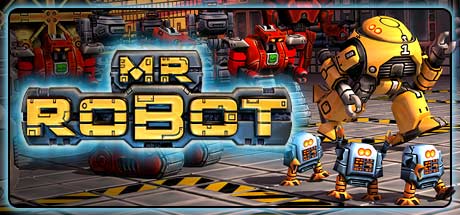
Mr. Robot, with its description of Asimov—a lowly service mechanoid aboard the colony ship Eidolon, carrying frozen humans toward an uncertain future—echoes Diebuster’s quiet, structural loneliness. The player review notes it’s “seems fairly retro… but still a good game that has some very light Mega Man Battle Network type exploration and battles.” That lightness—the gentle, almost tender rhythm of routine maintenance, small choices, quiet observation—is where Diebuster lives between battles: Nono polishing her helmet, Lal’C adjusting a strap, the hum of the TOPLESS base at midnight. Both works treat AI not as villain or tool, but as witness—a presence that observes human fragility with neither judgment nor salvation, only patient, sorrowful attention. The Eidolon’s malfunction isn’t just plot—it’s the quiet unraveling of safety, just as TOPLESS’s secrets slowly peel back like layers of scar tissue.
And Space Quest™ Collection, described as “a blast from the past with the complete, completely twisted Space Quest Collection,” lands with perfect tonal dissonance. Its player review celebrates freedom: “I really liked how you could pretty much do anything you, weather or not there were consequences…” That anarchic, rule-defying spirit—Chiko’s absurd non-sequiturs mid-crisis, Nono’s unfiltered, chaotic energy breaking tension like glass—is Diebuster’s surreal comedy as survival mechanism. The game’s parody DNA isn’t mockery—it’s resistance: refusing to let cosmic horror flatten humanity into solemnity. When Nono shouts nonsense at a star-eating entity, it’s not childish—it’s defiant, hilarious, and utterly necessary.
This pairing isn’t for fans of clean victories or tidy arcs. It’s for the ones who cry laughing at a joke delivered seconds before annihilation. For players who replay a level not to win, but to feel the wind in their hair during that one perfect glide across a frozen tundra—or the silence before the alarm sounds on a drifting colony ship. It’s for viewers who remember how it felt to be sixteen and certain they could save the world—and also how it felt, three years later, to realize saving it meant learning how to grieve while flying. People who understand that hope isn’t bright—it’s flickering, stubborn, and always, always shared.
🎮82 Games That Match the Vibe


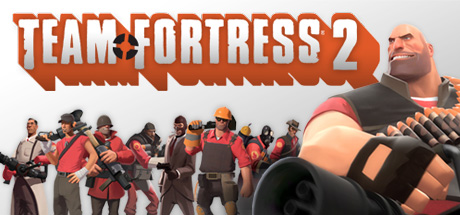















Match Dimensions Explained
❓Frequently Asked Questions
Why does Tribes: Ascend keep coming up in Gunbuster 2: Diebuster game recommendations?
Because both lean hard into high-speed, gravity-defying mecha combat in vast sci-fi battlefields—think Diebuster’s Buster Machines zipping across orbital rings and Tribes’ jetpack-equipped soldiers sliding across icy tundras at 300+ km/h. The shared 'Mecha & Military Sci-Fi' + 'Sci-Fi & Space' dimensions (plus its 84 Metacritic score) make it a top match for fans craving that same kinetic, large-scale spectacle.
Is there a Gunbuster 2: Diebuster anime adaptation or official game tie-in?
Nope—Diebuster is *only* an anime (the 2004 OVA sequel to Gunbuster), and there’s never been an official game adaptation. That’s why recommendations like Mr. Robot (84 score) and Lost Planet: Extreme Condition (81 score) show up instead—they capture Diebuster’s core vibe: lone pilots in massive armored suits fighting alien threats in frozen or orbital sci-fi hellscapes, with Mr. Robot’s Asimov even echoing Noriko’s arc as a mechanoid discovering agency amid cosmic chaos.
How does Lost Planet: Extreme Condition compare to Supreme Commander for Diebuster fans?
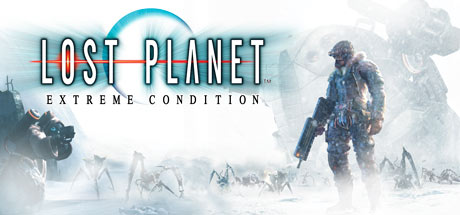
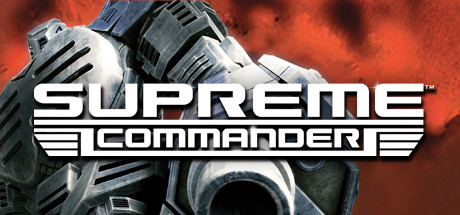
Lost Planet nails the *personal*, gritty mecha survival vibe—like piloting a Buster Machine against Akrid swarms on E.D.N. III’s ice wastelands, complete with thermal management and visceral close-quarters combat. Supreme Commander, meanwhile, delivers Diebuster’s epic scale but from a god’s-eye view: commanding fleets of experimental mechs across continents, where battles feel like the Infinite War’s slow-burn, strategic grandeur rather than Noriko’s white-knuckle solo runs.
What’s the best game like Gunbuster 2: Diebuster if I want that mix of absurd humor and space opera chaos?
Go straight to the Space Quest™ Collection (83 score)—it’s the only match with 'Comedy & Parody' in its dimensions, and its twisted, fourth-wall-breaking sci-fi satire (think Roger Wilco accidentally disabling alien doomsday devices via rubber chicken) mirrors Diebuster’s tonal whiplash: one minute it’s Noriko screaming into the void during a Buster Machine meltdown, the next it’s Nono giggling while misreading cosmic prophecy like it’s a cereal box prize. Pure, unhinged space opera joy.