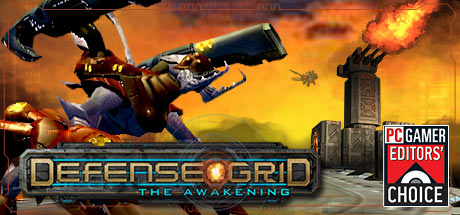
Defense Grid: The Awakening
Defense Grid: The Awakening is a unique spin on tower defense gameplay that will appeal to players of all skill levels. A horde of enemies is invading, and it's up to the player to stop them by strategically building fortification towers around their base.
🎮Game Details
💬What Players Say
"Great tower defense game. I completed main game in 7hours but that's just doing the story quest. There are many challenges."
"Game used to be fun for a bit. Controls are time controls pretty outdated now. Also developed a problem when you close the game it will keep fullscreen and stay on top of all other applications and the desktop...."
"Defence Grid is a great tower defence -type game. I have it, bought add-ons and it sequal, Defence Grid 2 too. Basic idea it to force attacker to follow the route you want to maximize time you can take action against attacking units...."
📝Editorial Analysis
The hum of the core—low, steady, vibrating up through your chair—is the first thing you notice. Not the explosions, not the frantic clicking, but that pulse, deep in the architecture of the map, as if the base itself is breathing while waves of invaders surge toward it. You’re not just placing towers; you’re channeling time—slowing, accelerating, rerouting—like a conductor holding back a tide with nothing but geometry and gravity. That’s the feeling in Defense Grid: The Awakening: a quiet, taut urgency, where every second stretches thin and every decision echoes across the grid long after the wave passes. It’s not chaos—it’s control under pressure, exactly as Review 3 says: “force attacker to follow the route you want to maximize time you can tak…” That ellipsis isn’t a typo—it’s the breath you hold between waves.
What makes this atmosphere singular isn’t its tower defense mechanics—it’s how it weaponizes stillness. The enemy paths aren’t random; they’re sculpted by your towers, turning corridors into labyrinths, forcing enemies to loop, stall, overheat, burn. You don’t chase them—you wait, and the game rewards patience with escalating consequence. There’s no hero on screen, no voiceover, no cutscenes—just the clean, almost clinical interface, the glowing gridlines, the distant thrum of plasma fire, and the slow, inevitable approach of the next wave. It evokes not battle, but custodianship: you’re not saving the world—you’re protecting a single, vulnerable point in a vast, indifferent system. That’s why it feels weighty, why Review 1 calls out “Cannon Power” like it’s a sacred phrase—not because of flash, but because of leverage, precision, consequence. Even the bugs—like the fullscreen ghost that lingers after closing the game (Review 2)—feel tonally consistent: a stubborn, persistent system refusing to let go.
That same weighty stillness, fused with high-stakes spatial logic and crumbling infrastructure, lives in Redline. Its racetrack isn’t just asphalt—it’s a grid: neon-lit, gravity-bent, layered with verticality and chokepoints, where every drift and boost is a calculated reroute against impossible odds. Like Defense Grid, it turns motion into geometry—speed isn’t freedom, it’s navigation, constrained by physics and consequence. Both live in that Sci-Fi & Space / Cyberpunk & Dystopia overlap: not just chrome and stars, but systems under strain, where elegance emerges from limitation.
Then there’s Heaven’s Lost Property the Movie: The Angeloid of Clockwork, where celestial gears grind inside ruined clocktowers, and time itself is a resource to be managed, rewound, or shattered. The movie’s aesthetic—delicate machinery fused with orbital decay, silent skies above fractured cities—mirrors the game’s quiet dread: no shouting, no panic, just the soft whirr of something ancient powering down while threats advance at a fixed, unhurried pace. It shares that same dignified tension, where stakes are cosmic but execution is precise, almost surgical.
And Final Fantasy VII: Advent Children—its Midgar isn’t just a city; it’s a defensive perimeter. Crumbling spires, suspended highways, collapsing sectors—all arranged like towers and chokepoints waiting to be reactivated. Cloud doesn’t charge at Sephiroth—he positions, he waits, he lets the environment do half the work. The film’s visual grammar—rain-slicked steel, slow pans across dormant reactors, the eerie calm before the geostigma flares—breathes the same air as the grid’s ambient dread: beauty in structural integrity, horror in its erosion.
This pairing isn’t for fans of spectacle alone. It’s for the player who replays a level three times to shave off 0.8 seconds off their best time. For the viewer who watches TRIGUN STAMPEDE’s desert towns not for gunfights, but for how buildings funnel wind—and bullets—and how silence hangs thicker than dust. It’s for people who feel relief when a system holds, grief when it fractures, and awe when geometry becomes grace under pressure. They don’t want to win—they want to sustain. To guard the core. To keep the hum going—just a little longer.
→25 Anime That Match the Vibe

JP’s blistering, near-suicidal drift through Redline’s neon-drenched asteroid racetrack mirrors Defense Grid’s frantic, last-second tower repositioning during a wave crest—both pivot on split-second spatial calculus amid overwhelming chaos. Unlike most sci-fi action, neither indulges in exposition; instead, they weaponize cyberpunk & dystopia as visceral rhythm: flickering holograms over crumbling orbital stations, the hum of overheating turrets syncing with engine howls. That shared tension—between precision and entropy—is what makes their resonance so electric, not nostalgic.

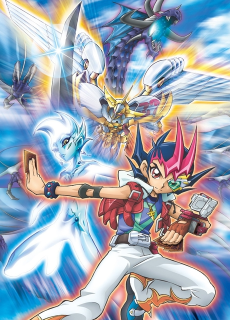
A crumbling orbital defense grid flickers against a starfield—just as Kazane Hiyori’s clockwork angeloid activates amid Tokyo’s rain-slicked neon ruins. Unlike most sci-fi pairings, this resonance isn’t about shared tropes but shared *tension*: cyberpunk dread undergirding fragile human care, where tactical precision (Defense Grid’s laser grids) mirrors Kazane’s meticulous, heartbreaking calibration of love and machinery. The movie’s climax—her self-sacrifice within a collapsing time-looped sky fortress—echoes the game’s late-game urgency: both weaponize space itself as both battlefield and emotional architecture.

Connected through 2 aesthetic dimensions.
Connected through 2 aesthetic dimensions.
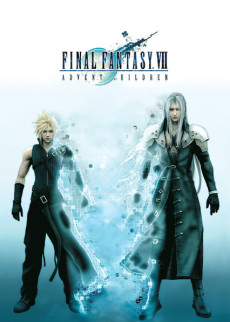
Geo-stigma’s creeping, crystalline decay in *Advent Children* mirrors the eerie, slow-motion corrosion of Defense Grid’s orbital defense platforms as they overload under alien assault. Where Midgar’s ruined skyline glows with neon-drenched despair, Defense Grid’s orbital stations pulse with cold, clinical light—both worlds weaponize cyberpunk & dystopia to frame resilience against systemic collapse. That shared tension—between fragile hope and irreversible entropy—makes their resonance startlingly intimate, not just aesthetic.
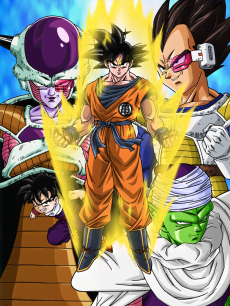
The cold hum of Defense Grid’s orbital defense platforms echoes the silent void where Cell’s bio-mechanical form first coalesces in *Dragon Ball Z Kai*’s Android Saga—both weaponizing sci-fi & space as arenas of desperate, geometric precision. Unlike most tower defense games, Defense Grid makes you command from a godlike vantage over crumbling cyberpunk & dystopia landscapes, just as *Kai*’s tighter pacing and remastered sound design heighten the claustrophobic dread of Earth’s last stands against cosmic threats. It’s startling how both refine their genres by stripping away excess—not for minimalism, but to sharpen tension at the exact moment strategy and spectacle collide.
Connected through 2 aesthetic dimensions.

Vash’s sun-scorched, rust-colored wasteland in *TRIGUN STAMPEDE* echoes the scorched-earth industrial decay of Defense Grid’s orbital defense platforms—both worlds wear their cyberpunk & dystopia like weathered armor. Where Vash deflects bullets to protect a fragile colony, the player redirects alien hordes away from the Core using layered, reactive systems—neither story glorifies violence, but treats defense as sacred geometry. That shared tension between serene pacifism and brutal, systemic threat makes their resonance startlingly precise.

Connected through 2 aesthetic dimensions.

Connected through 2 aesthetic dimensions.










Match Dimensions Explained
❓Frequently Asked Questions
Why is Redline recommended for Defense Grid: The Awakening fans?
Redline nails that same high-stakes, route-manipulation energy—like when you force enemies down a winding canyon in Defense Grid to maximize tower uptime, Redline’s insane track layouts (think the Giga Drill Canyon chase) force racers into tight, predictable paths so you can time boosts and weapons just right. Plus, both lean hard into sleek, neon-drenched sci-fi dystopias where every decision has spatial consequences.
Is there an anime adaptation of Defense Grid: The Awakening?
Nope—Defense Grid: The Awakening has never been adapted into an anime. It’s purely a game (with sequels like Defense Grid 2), but anime like Heaven’s Lost Property the Movie: The Angeloid of Clockwork scratch that same itch: think orbital defense grids, clockwork drones swarming a central core, and tactical countermeasures deployed across layered cityscapes—not unlike how you’d position Laser and Cannon towers around your core in DGTA’s ‘Orbital Assault’ challenge.
How does TRIGUN STAMPEDE compare to Final Fantasy VII: Advent Children for Defense Grid vibes?
TRIGUN STAMPEDE leans harder into the ‘horde management’ tension—you’ll feel that same rush as in DGTA’s later waves when Vash redirects stampeding biomechs through narrow alleys in July City, forcing them into kill zones like you’d funnel aliens through chokepoints with Tesla and Slow towers. Advent Children goes bigger and more cinematic (like the Midgar ruins battle), but lacks DGTA’s precise path-control focus—it’s spectacle over strategy, whereas STAMPEDE mirrors DGTA’s balance of chaos and calculated routing.
What’s the best anime like Defense Grid: The Awakening if I want that focused, calm-but-intense tower-defense mood?
Final Fantasy VII: Advent Children is your best bet—it’s got that quiet, methodical tension before the storm, like the moment before the Safer Sephiroth fight where Cloud sets up barriers and summons while the camera pans over layered defenses, mirroring how you’d calmly place Reflectors and Cannons before wave 15 hits your core. The cyberpunk cityscapes, orbital threats, and emphasis on defending a central point (the Northern Crater / your core) hit the exact same strategic sweet spot.