Gargantia on the Verdurous Planet
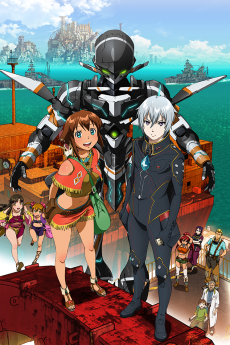
The story begins in the distant future in the far reaches of the galaxy. The Human Galactic Alliance has been constantly fighting for its survival against a grotesque race of beings called "Hidiaazu." During an intense battle, the young lieutenant Ledo and his humanoid mobile weapon Chamber are swallowed up into a distortion of time and space. Waking from his artificially induced hibernation, Ledo realizes that he has arrived on Earth, the planet on the lost frontier. On this planet that was completely flooded by the seas, people live in fleets of giant ships, salvaging relics from the seas' depths in order to survive. Ledo arrives on one of the fleets called Gargantia. With no knowledge of the planet's history or culture, he is forced to live alongside Amy, a 15-year-old girl who serves as a messenger aboard the Gargantia fleet. To Ledo, who has lived a life where he knows nothing but fighting, these days of peace continue to surprise him.
(Source: Anime News Network)
📺Anime Details
📝Editorial Analysis
The salt is the first thing Ledo tastes—not blood, not metal, but salt, thick and ancient, crusted on his lips as he claws his way out of Chamber’s cracked cockpit onto a beach that shouldn’t exist. The sky isn’t black with starfield static or the bruised violet of Alliance warzones—it’s blue, impossibly blue, stretched wide over water that moves like breathing. His boots sink into wet sand, not alloy grating. A gull screams overhead. He looks down at his hands—still gloved, still trained to fire rail cannons—and realizes, with a physical lurch in his gut, that every order he ever received was written for a war that ended millennia ago. That moment isn’t about survival. It’s about disorientation so deep it rewires memory: the shock of softness after years of rigid command, of silence after constant comms chatter, of green where only steel and vacuum should live.
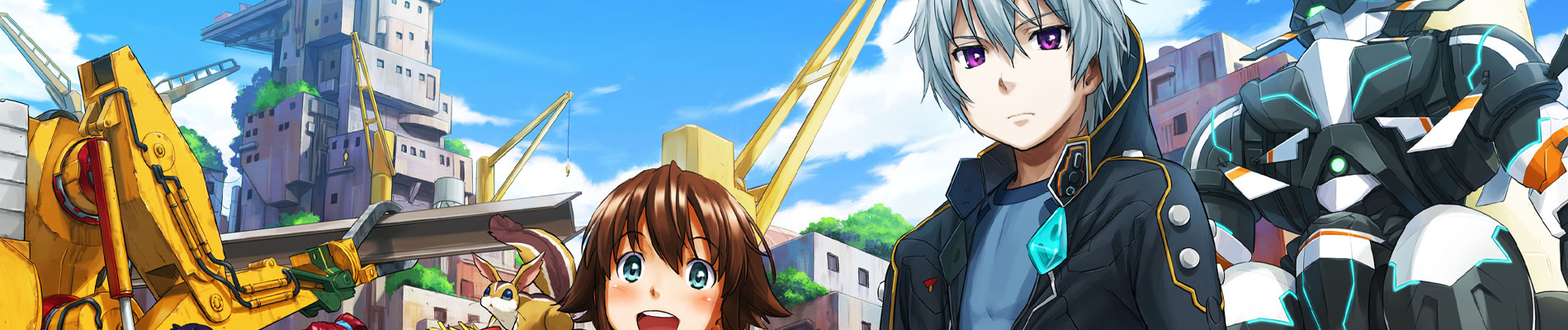
What makes Gargantia on the Verdurous Planet ache like no other mecha story isn’t its real-robot choreography or its military precision—it’s the weight of unlearning. This isn’t just isekai displacement; it’s ontological erosion. Ledo doesn’t just land on Earth—he lands inside a civilization that treats ships like villages, language like poetry, and history like sedimentary layers you wade through barefoot. There’s no grand villain to defeat, no galactic council to report to—just tides, rust, translation errors, and the slow, humbling work of listening. You feel the exhaustion of retraining your nervous system: how to hold a cup without scanning for threats, how to trust a hand extended not as surrender but as invitation, how to grieve a future you were never allowed to imagine. It’s quietly devastating, this insistence that the most dangerous frontier isn’t outer space—it’s the space between one mind and another.
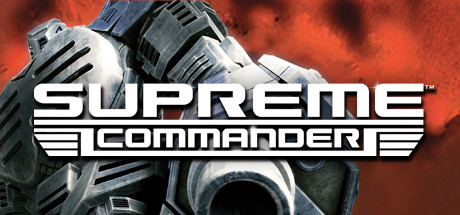
That emotional resonance flickers strongest in Supreme Commander, where scale isn’t spectacle but solitude. Its description calls it “The Infinite War”—a conflict so old its origins are myth, fought across continents by machines that outlive generations. Player reviews praise its battles not for speed or flash, but for their immense, contemplative weight: “The scale of the battles is different even today.” Like Ledo staring at Gargantia’s hull—patched, barnacled, alive with human life—Supreme Commander’s units move with the gravity of inherited purpose, not programmed urgency. You don’t rush to win. You endure, rebuild, adapt—just as the Gargantia crew does, welding salvaged hull plates while humming off-key sea shanties.
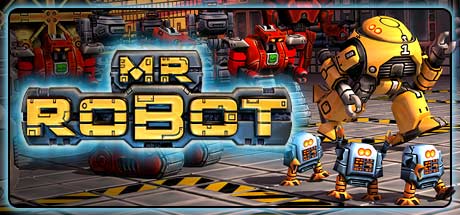
Then there’s Mr. Robot, whose Asimov—a lowly service mechanoid aboard the colony ship Eidolon—mirrors Ledo’s own dislocation: both are tools built for function, suddenly adrift in systems they weren’t designed to interpret. The description reveals the Eidolon’s computer brain malfunctioning, forcing Asimov into roles far beyond his protocols. Player reviews note its “light Mega Man Battle Network type exploration and battles”—not frantic combat, but methodical, almost tender navigation through broken infrastructure, where every repaired circuit feels like a whispered apology to the machine’s own forgotten self. That’s Ledo learning to braid rope, to read tide charts, to let his helmet visor fog up in humid air—not because he must, but because something inside him wants to stop being sharp.
And S.T.A.L.K.E.R.: Shadow of Chernobyl, though set in a radioactive wasteland, shares Gargantia’s reverence for ruin as teacher. Its Zone isn’t just dangerous—it’s eloquent, speaking in anomalies, half-buried tech, and the quiet dread of things that remember humanity better than humans do. Player reviews call the map “big and beautiful,” not despite the decay, but because of it—the beauty lies in how nature and wreckage coexist, how meaning persists in fragments. When Ledo walks through the drowned ruins beneath the ocean surface, tracing glyphs on submerged walls, he’s doing the same thing: reading a language written in coral and corrosion, where every collapsed tower is a sentence in a grammar he’s only beginning to parse.
This pairing is for the person who cries when a character finally learns to tie a knot properly. For the player who pauses mid-mission not to strategize, but to watch rain pool in a dented tank tread. For anyone who’s ever felt the relief of putting down a weapon—not because the fight is over, but because they’ve finally remembered their hands were made for holding, not gripping. Not for fans of escalation—but for lovers of erosion, of patience, of the profound, hushed thrill of coming home to a world that refuses to be conquered, and instead asks, gently, insistently: What if you stayed?
🎮96 Games That Match the Vibe















Match Dimensions Explained
❓Frequently Asked Questions
Why does Mr. Robot keep coming up in Gargantia on the Verdurous Planet game recommendations?
Because both center on a lone, idealistic mechanoid (Asimov in Mr. Robot, Chamber in Gargantia) waking up aboard a massive, malfunctioning interstellar vessel — the Eidolon and the Gargantia respectively — forced to reinterpret humanity, duty, and survival in isolation. The quiet, melancholic tone of Asimov’s exploration and his evolving relationship with the ship’s AI echoes Chamber’s early disorientation and gradual bonding with Ledo and the fleet’s crew.
Is there a Gargantia on the Verdurous Planet anime adaptation of Supreme Commander?
No — but the *vibe* overlaps strongly: Supreme Commander’s ‘Infinite War’ between three colossal factions mirrors Gargantia’s ideological clash between the militarized Galactic Alliance and the adaptive, communal ocean-fleet society. You’ll feel that same awe watching a Seraphim Titan stride across a battlefield as you do when the Gargantia’s massive hull breaches the sea surface — both are about scale, legacy, and war reshaping civilization.
How does Tribes: Ascend compare to S.T.A.L.K.E.R.: Shadow of Chernobyl for Gargantia fans?
Tribes: Ascend gives you Gargantia’s kinetic mecha energy — think high-speed jetpack combat across vast, open sci-fi terrain — while S.T.A.L.K.E.R. delivers its quieter, atmospheric dread: radiation zones, eerie anomalies, and tense scavenging like the early episodes where Ledo navigates the ruined, overgrown Earth. One’s all adrenaline and team-based mecha warfare; the other’s lonely, immersive survival in a broken world — both honor Gargantia’s dual focus on wonder and unease.
What’s the best Gargantia-like game if I want that slow-burn, thoughtful vibe of Ledo learning Earth’s culture and language?
Mr. Robot is your best bet — Asimov spends much of the game observing, translating fragmented logs, and slowly piecing together human ethics and emotion aboard the Eidolon, just like Ledo decoding slang, cooking, and social nuance on the Gargantia. It’s not flashy; it’s quiet, introspective, and deeply grounded in a single mechanoid’s evolving perspective — exactly the mood of those tender, world-building scenes with Ridget and Amy.