
Evangelion: 1.0 You Are (Not) Alone
After the second impact, all that remains of Japan is Tokyo-3, a city that's being attacked by giant creatures that seek to eradicate the human kind, called Angels. After not seeing his father for more than eight years, Shinji Ikari receives a phone call in which he is told to urgently come to the NERV Headquarters, an organization that deals with the destruction of the Angels through the use of giant mechs called Evas. Shinji's objective is to pilot the Eva Unit 01 while teaming up with the Eva Unit 00 pilot, Ayanami Rei.
Note: Exists in several versions, as denoted by the version number:
• 1.0: Sep 1, 2007 - Original theatrical release
• 1.01: Apr 25, 2008 - DVD release containing minor adjustments and fine tunings in picture, editing, and sound quality.
• Explanation of Evangelion 1.01 - Included with the special edition DVD release of 1.01, overlays large captions to provide the "official designations" of people, locations, weapons, technology, and so forth.
• 1.11: May 27, 2009 - Blu-ray/DVD re-release with 3 minutes of new animation added to the first 15 minutes and fixing video issues present in the previous release.
📺Anime Details
📝Editorial Analysis
The fluorescent hum of the NERV briefing room. Shinji’s fingers trembling as he grips the edge of his chair—not from fear of the Angel outside, but from the suffocating weight of being seen while feeling utterly invisible. His father stands three meters away, back turned, voice flat as static: “You will pilot Unit 01.” No hello. No apology. No warmth—just a directive dropped like shrapnel into silence. That silence isn’t empty. It’s charged, thick with unspoken grief, institutional coldness, and the vertigo of being handed godlike power while still wearing school shoes two sizes too big.

What makes Evangelion: 1.0 You Are (Not) Alone ache so deeply isn’t its kaiju or mechs—it’s how it weaponizes isolation within proximity. Tokyo-3 isn’t just post-apocalyptic; it’s hermetically sealed, a bunker-city where every corridor echoes with muffled footsteps and unanswered intercom calls. The Evas aren’t heroic machines—they’re biomechanical prisons bolted to nervous systems, their cockpits drenched in LCL like amniotic fluid gone sour. This isn’t dystopia as spectacle. It’s dystopia as interior weather: claustrophobic, emotionally pressurized, where military protocol and adolescent panic occupy the same cramped airspace. You don’t watch this anime—you breathe its air, stale and metallic, tasting the salt of tears you didn’t know you’d hold.
That same pressure-cooker tension lives in Tribes: Ascend, not in its weapon DLC or flashy expansions—but in the player review’s raw admission: “Man, I used to love this game. Just mindless fun. All be it, it could have been expanded or had much added to it, sadly it had so much potential that…” That trailing ellipsis? That’s Shinji’s hesitation before stepping into the entry plug. The game’s high-speed, team-based combat mirrors NERV’s rigid hierarchy and desperate coordination—but what resonates is the unfulfilled promise, the sense that something vital was built with precision and then left echoing in the void, just like Shinji’s relationship with Gendo, or the Eva itself: awe-inspiring, terrifying, and fundamentally abandoned mid-sentence.
Then there’s Mr. Robot, where Asimov—the lowly service mechanoid aboard the Eidolon—must act when the ship’s brain malfunctions. The description frames him as “a lowly service mechanoid”, instantly evoking Shinji’s status: technically essential, emotionally disposable, defined by function over personhood. And the player review nails the emotional texture: “Seems fairly retro by today’s standards but still a good game that has some very light Mega Man Battle Network type exploration and battles.” That “light” exploration—tentative, constrained, almost apologetic—mirrors Shinji’s first steps through NERV’s labyrinthine halls: no grand hero’s journey, just a kid navigating corridors wider than his courage, fighting battles he doesn’t understand, in a system that treats him like firmware, not flesh.
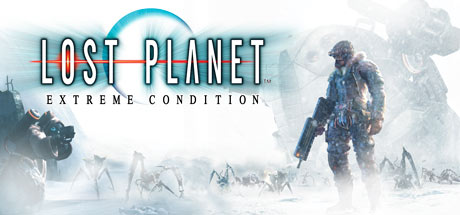
Even Lost Planet™: Extreme Condition shares that visceral, bodily dread. Its description drops us onto “ice-covered wastelands” where humanity fights “gargantuan alien Akrid”—not sleek Angels, but hulking, organic threats that feel alive in their hostility, like the Third Angel’s grotesque, pulsing form. The player review’s quiet frustration—“Bought this version just to say I'm super disappointed that Capcom still hasn't fixed Colonies Edition or Lost Planet 2”—carries the same exhausted resignation as Shinji’s whispered “I mustn’t run away”: a mantra repeated not from strength, but from the sheer, grinding weight of having nowhere else to go. Both are stories where survival isn’t triumphant—it’s gritted, frozen, and laced with the constant threat of being consumed by something vast, alien, and indifferent.
This pairing speaks to the person who keeps rewatching the elevator descent before Shinji’s first sortie—not for the action, but for the way the lights flicker overhead, casting long, lonely shadows on his face. The one who pauses mid-gameplay in Supreme Commander, staring at the scale of war on screen, and feels not awe, but dread at the sheer, impersonal machinery of command. They don’t crave catharsis. They recognize the beauty in unresolved tension, the poetry in malfunctioning systems, the intimacy of shared exhaustion. They love stories where the real enemy isn’t the Angel or the Akrid—it’s the silence after the alarm stops ringing, and the unbearable weight of being asked, not chosen.
🎮71 Games That Match the Vibe




















Match Dimensions Explained
❓Frequently Asked Questions
Why does Evangelion: 1.0 You Are (Not) Alone match with Lost Planet™: Extreme Condition?
Because both hit that raw, desperate mecha-vs-alien survival vibe—think Shinji stumbling through NERV’s claustrophobic corridors right before a brutal Eva Unit-01 berserk sequence, then jumping into Lost Planet’s frozen wastelands where you’re piloting a Thermal Suit against towering Akrid while your heat gauge plummets. The shared ‘Tactical Warfare’ and ‘Sci-Fi & Space’ dimensions lock in that tense, high-stakes physicality—no flashy heroics, just grit, gear failure, and last-second dodges.
Is there a game adaptation of Neon Genesis Evangelion that’s actually playable on modern systems?
Not officially—but Mr. Robot nails the *spirit* of an Evangelion adaptation: you play as Asimov, a service mechanoid aboard the colony ship Eidolon, dealing with system-wide AI collapse and existential dread while navigating retro-futuristic corridors and turn-based combat that echoes early Mega Man Battle Network’s deliberate pacing. It’s not Evangelion-branded, but the isolation, malfunctioning godlike AI, and quiet horror of being a cog in a broken machine? Spot-on.
How does Supreme Commander compare to Evangelion: 1.0 in terms of scale and tone?
Evangelion 1.0 is all tight, psychological close-ups—Shinji’s trembling hands, Misato’s cigarette smoke curling in dim command lights—while Supreme Commander zooms out to *planetary warfare*: you’re orchestrating armies across continents, deploying experimental nukes and quantum lasers during The Infinite War. But they sync up on ‘Mecha & Military Sci-Fi’ and that heavy, no-compromise ideology—just swap SEELE’s shadowy council for Supreme Commander’s three warring factions, each convinced their doctrine is the only truth.
What’s the best game like Evangelion: 1.0 if I want that eerie, off-kilter sci-fi comedy vibe—like the elevator scene or Ritsuko’s deadpan sarcasm?
Go straight to Space Quest™ Collection. It’s got that same tonal whiplash: one minute you’re fumbling with absurd inventory puzzles in a derelict starship, the next you’re accidentally launching yourself into orbit via faulty toilet propulsion—all while delivering dry, self-aware sci-fi satire. The ‘Cyberpunk & Dystopia’ + ‘Survival & Crafting’ overlap means it shares Evangelion’s love of bureaucratic sci-fi absurdity, just dialed up to eleven with zero irony.