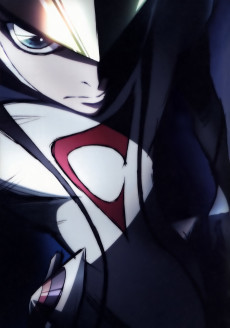
Casshern Sins
In the distant future, where cyborgs and humans struggle to survive after the war which destroyed the world, a being in white suit awakens. His name is Casshern and he remembers nothing of his own past.
In barren and dark dystopian world, where every being alive seems to hate his existence and the evil from his past wants him dead, Casshern, haunted by the flashes of his past memories has to survive and figure out who or what exactly he is and how he got to where he is now. But he does not know that he might not like the horrible truth of the past, hidden deep inside his mind...
Created as an intended reboot of Casshern franchise.
📺Anime Details
📝Editorial Analysis
Rain falls in slow, grey sheets across the cracked asphalt. Casshern stands motionless beneath it, water sluicing off his white suit like time itself refusing to cling — not cleansing, not erasing, just passing. His hand trembles as he touches the rusted hull of a dead tank half-buried in dust. A flash: laughter. A child’s voice. Then silence — not absence, but weight. That silence is the first thing you feel before anything else. Not despair, not rage — just the unbearable thickness of memory that won’t settle, of guilt that has no face, of a world that breathes like a dying lung.

What makes Casshern Sins ache so deeply isn’t its ruined cities or its cyborgs — it’s how quietly it mourns. This isn’t spectacle-as-catharsis. It’s the hush between gunshots. The way Casshern walks past a crumbling cathedral not to fight, but to watch moths flutter against stained glass that no longer holds light. The world isn’t evil — it’s exhausted, and every character carries that exhaustion like a second skeleton. You don’t fear the apocalypse here; you feel its aftertaste — metallic, lingering, intimate. It asks not “What happened?” but “What does it mean to keep moving when every step confirms your complicity?” That’s the feeling: unmoored sorrow, where even hope feels like trespassing.
Nikopol: Secrets of the Immortals shares that same melancholic exploration — not as mood music, but as structural grammar. Its first-person traversal through a 2023 Paris choked by religious authoritarianism and crowned by a silent pyramid ship mirrors Casshern’s wordless wanderings: both are about presence in decay, not solving puzzles but absorbing atmospheres thick with unanswered theology. A player notes the “cyberpunk atmosphere” and “animations and cutscenes [that] enhance” — exactly like Casshern Sins’s deliberate pacing and painterly stillness, where a five-second shot of rain on corroded steel says more than ten minutes of exposition. Both refuse to explain the world — they make you inhabit its weight.
Disco Elysium - The Final Cut lands with surgical precision in the same emotional dimension: emotional narrative built from fragmentation. Like Casshern, you play a detective whose mind is a warzone of voices — not amnesia, but cognitive splintering, where ideology, trauma, and identity bleed into one another. The player review quotes capital subsuming critique — that’s Casshern’s entire arc: every act of violence he commits, every memory he recovers, loops back to reinforce the system he’s trying to outrun. There’s no clean revelation, only layered contradictions — the kind that leave you staring at your own hands, wondering if compassion is just another symptom of the disease.
S.T.A.L.K.E.R.: Shadow of Chernobyl resonates not through story, but through survival as ritual. Its Zone isn’t a setting — it’s a sentient wound, humming with invisible anomalies, radiating dread not from monsters, but from space itself remembering violence. Just like Casshern walking through fields where grass grows through ribcages, the player doesn’t conquer the Zone — they negotiate with its silence. A reviewer calls the map “big and beautiful,” but beauty here is eerie, sacred in its indifference. You don’t “win.” You survive long enough to hear the wind carry something almost like a name — then forget it again.
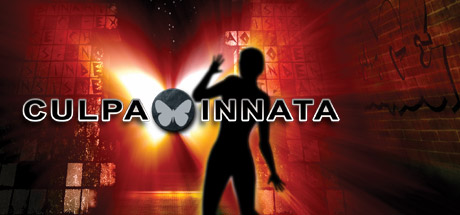
Who loves this? Not the person who wants lore dumps or power fantasies. It’s the one who pauses mid-gameplay to watch rain ripple across a puddle in Disco Elysium, then rewinds a scene in Casshern Sins just to see how light catches the tear-track on a robot’s cheek. It’s the reader who underlines sentences like “the future has never looked brighter” in Culpa Innata’s description — not for irony, but because they recognize that brightness as the most terrifying kind of void. It’s someone who doesn’t seek answers, but resonance: the shared shiver when a white-suited figure walks alone through ruins, and a detective lights a cigarette in a crumbling precinct, and a stalker crouches behind a rusted bus, listening — not for enemies, but for the world’s next, ragged breath. That’s the thread: loneliness as compass, grief as gravity, and the unbearable, exquisite dignity of continuing anyway.
🎮131 Games That Match the Vibe

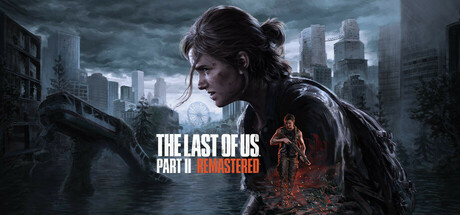
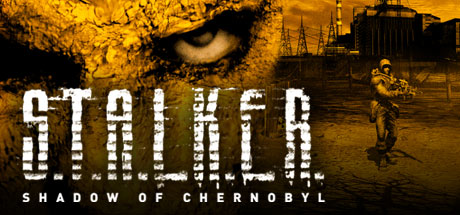
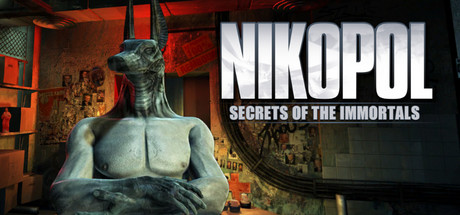

























































Match Dimensions Explained
❓Frequently Asked Questions
Why is Nikopol: Secrets of the Immortals often compared to Casshern Sins?
Because both hit that same brooding, rain-slicked dystopia vibe — think Casshern’s ruined Paris with its oppressive religious regime and Nikopol’s 2023 France under a theocratic dictatorship, complete with eerie pyramid ships hovering overhead. The melancholic exploration and first-person point-and-click pacing let you sit with the weight of decay, just like Casshern’s slow-burn existential dread.
Is there a Casshern Sins video game adaptation?
No — there’s never been an official Casshern Sins game. But fans seeking that exact tone (cyberpunk despair, morally gray characters, atmospheric decay) often land on Nikopol or Culpa Innata, since both mirror its adult seinen sensibility and dystopian worldbuilding — even if they’re original stories.
How does Disco Elysium compare to S.T.A.L.K.E.R.: Shadow of Chernobyl for Casshern Sins fans?
Disco Elysium nails the introspective, emotionally raw detective work — like Casshern’s fragmented identity crises and voiceover-heavy soliloquies — while S.T.A.L.K.E.R. delivers the visceral, radiation-choked survival tension of wandering a broken world full of anomalies and silent threats. One’s all internal collapse; the other’s external entropy — both deeply Casshern-adjacent.
What’s the best game like Casshern Sins if I want that lonely, drifting-in-the-ruins feeling?
Space Trader: Merchant Marine — seriously. It’s got that same melancholic exploration across vast, empty star systems, where you’re just one small ship bartering in backwater colonies, hearing static-laced radio chatter and watching neon signs flicker in derelict spaceports. It’s not flashy, but that quiet, weary drift through a worn-out future? Pure Casshern Sins energy.