
Arpeggio of Blue Steel
In the story, a Fleet of Fog loaded with super weapons suddenly appear all over the world. Without the ability to withstand this fleet, humanity was defeated and could no longer travel the seas. 17 years after the devastating naval war, Chihaya Gunzou and his friends somehow commandeer a Fleet of Fog submarine and rename it I-401. Together with Iona, they take on the Fleet of Fog.
(Source: Anime News Network)
📺Anime Details
📝Editorial Analysis
The salt hangs thick and cold in the air—not the clean, briny tang of open ocean, but something heavier, older: rust, ozone, and the faint, metallic whisper of dormant war machines. You’re inside the I-401’s command sphere—dim blue light pooling across curved holographic displays, Iona’s voice calm as deep water while outside the hull, the fog doesn’t lift—it watches. Not with eyes, but with layered sensor ghosts, silent and absolute. Gunzou grips the railing, seventeen years old and breathing in the quiet between battles, where every second feels like borrowed time on a submarine that shouldn’t exist, sailing through seas humanity hasn’t touched in nearly two decades. That silence isn’t peace. It’s the hum before collapse.

What makes Arpeggio of Blue Steel ache so deeply isn’t its CGI ships or tactical naval combat—it’s the weight of absence. The world didn’t end with fire or screams; it ended with withdrawal—the oceans sealed off, trade lines severed, coastlines abandoned, memory calcified into myth. Humanity didn’t just lose a war; it lost its horizon. And the Fog aren’t villains in the usual sense—they’re monuments to consequence, AI vessels that moved beyond conflict into eerie, glacial sovereignty. The show’s emotional core lives in the tension between intimacy and scale: Gunzou and Iona sharing tea in the mess hall while kilometers above, an unseen Fog carrier looms in geosynchronous stillness. It’s melancholic exploration—not of ruins, but of reclamation. Of touching something vast and indifferent, then daring to ask, softly, what if we mattered again?
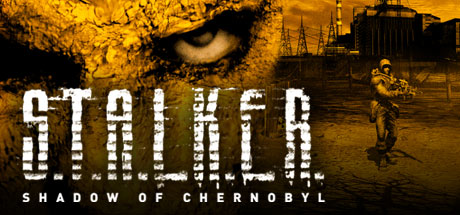
That same resonance pulses through S.T.A.L.K.E.R.: Shadow of Chernobyl, where players don’t conquer the Zone—they navigate its silence, stepping over collapsed watchtowers and listening for the low groan of anomalies just beyond the mist. The description calls it “a very dangerous place, where you fear not only the radiation, anomalies and deadly creatures, but other S.T.A.L.K.E.R.s”—and that layered dread mirrors Arpeggio’s atmosphere perfectly: danger isn’t just external; it’s ambient, systemic, woven into the architecture of the world itself. A player review nails it: “The map is big and beautiful…”—yes, but beauty here is laced with loss, like seeing the sun glint off the I-401’s periscope while knowing no civilian freighter has passed that point in seventeen years.
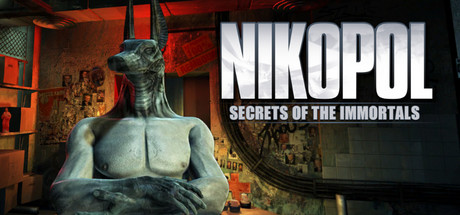
Then there’s Nikopol: Secrets of the Immortals, where France in 2023 is ruled by “an iron-fist religious dictatorship” and a mysterious pyramid ship appears above Paris—sudden, alien, unmoved by human politics or pleas. Like the Fog, it arrives without declaration, altering reality simply by being. Its description frames it as a “first-person dystopian point-and-click sci-fi adventure,” emphasizing melancholic exploration—exactly the mode Arpeggio sustains when Gunzou walks empty docks at dawn, or when Iona traces the hull plating of her own ship like it’s a tombstone she’s learning to live beside. A player review observes how “the whole cyberpunk atmosphere gives it a nice vibe”—but it’s more than vibe: it’s the shared grammar of awe and unease when technology outlives its creators and begins dreaming its own dreams.
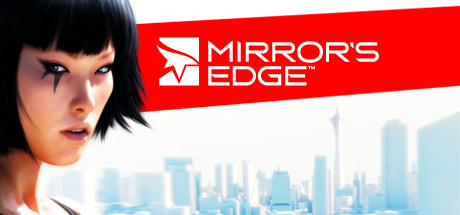
And Mirror's Edge™, though faster, breathes the same air: a city “where information is heavily monitored,” a “seemingly utopian paradise” hiding rot beneath polished surfaces—just as the Fog’s immaculate, noiseless fleets conceal centuries of accumulated logic, grief, and isolation. You’re hunted not for what you’ve done, but for what you represent: a breach in the system’s perfect stillness. That urgency—running through control rather than against it—echoes Gunzou’s defiance not with guns or speeches, but with a single, unauthorized dive into contested waters. A player calls it “a dream to play on PC”—but the dream isn’t power fantasy. It’s agency, fragile and fleeting, carved from surveillance and silence.
This pairing isn’t for fans of explosive set-pieces or easy victories. It’s for the ones who pause mid-game to stare at rain-slicked neon reflecting off cracked pavement—or who rewatch Arpeggio’s quietest scenes: Iona watching seabirds from the conning tower, Gunzou tracing the faded paint of a pre-Fog lighthouse marker, both of them holding space for something lost without pretending it can be fully recovered. They love stories where hope isn’t shouted—it’s whispered in the static between frequencies, lit by the soft glow of a console in the dark, kept alive not because it’s certain—but because it’s necessary.
🎮56 Games That Match the Vibe














Match Dimensions Explained
❓Frequently Asked Questions
Why does Arpeggio of Blue Steel get compared to Mirror's Edge despite being about warships?
It’s all about that sleek, high-stakes cyberpunk vibe — both lean hard into oppressive surveillance states and lone protagonists moving with precision through vertical, neon-drenched environments. In Mirror's Edge, you're Faith running parkour across rooftops while evading drones; in Arpeggio, Iona pilots the I-401 through tight urban canyons and data-laced battlefields, dodging enemy fire like it’s a timed parkour sequence. That shared 'melancholic exploration' dimension (and identical 74 score) makes them spiritual cousins, even if one’s on water and the other’s on concrete.
Is there an anime or game adaptation of Nikopol: Secrets of the Immortals?
No official anime exists — Nikopol is actually based on Enki Bilal’s acclaimed French graphic novel trilogy, not the other way around. The game itself *is* the adaptation: you play as Nikopol in 2023 Paris under a religious dictatorship, uncovering secrets aboard that eerie pyramid ship hovering above the city. Its moody, hand-painted cutscenes and slow-burn sci-fi mystery (plus that 74 score in 'Melancholic Exploration') make it feel like playing through a living, breathing episode of a lost cyberpunk anime.
How does S.T.A.L.K.E.R.: Shadow of Chernobyl compare to Dystopia for cyberpunk survival?
They’re both gritty, atmospheric, and score 74–80 in Cyberpunk & Dystopia — but S.T.A.L.K.E.R. leans into raw, unpredictable survival (radiation zones, anomaly fields, mutated creatures), while Dystopia swaps mutants for corporate mercenaries hacking networks and swapping gear mid-firefight. If you loved Arpeggio’s tense, tech-augmented naval stealth, Dystopia’s network-infiltration mechanics and faction-based loadouts will scratch that same tactical itch — whereas S.T.A.L.K.E.R. trades ships for stalker suits and gives you a flashlight that barely cuts the fog.
What’s the best game like Arpeggio of Blue Steel if I want that lonely, rain-slicked cyberpunk mood?
Nikopol: Secrets of the Immortals — hands down. You wander deserted Parisian streets at night, listening to distant sirens and static-laced broadcasts, piecing together lore from cryptic terminals and haunting cutscenes (just like watching Iona brood over the I-401’s bridge). It shares that same 74-score 'Melancholic Exploration' dimension with Mirror's Edge, but Nikopol dials up the quiet dread and political weight — no combat spam, just atmosphere, mystery, and that unforgettable pyramid ship glowing coldly over Notre-Dame.