
A Certain Magical Index II
Index is still a fugitive, and many powerful magical organizations and individuals want to take her to use the books in her memory, eliminating her in the process. War between those organizations is also starting to emerge. Index can only rely on her friend Touma, who has always protected her, along with Misaka and other friends from the Academy.
(Source: Anime News Network)
📺Anime Details
📝Editorial Analysis
Rain slicks the pavement of Academy City’s 7th District, neon bleeding into oily puddles as Touma staggers—again—under the weight of a collapsing magical barrier. His right hand burns, not from pain but from the sheer wrongness of erasure: a spell dissolving mid-incantation, a summoning circle cracking like dropped glass, a nun’s desperate whisper swallowed by static. Index clutches her head, eyes wide—not with fear, but with the quiet, suffocating pressure of too much knowledge, 103,000 grimoires humming behind her temples like a trapped choir. Misaka’s railgun crackles overhead, not as firepower, but as punctuation—a sharp, bright snap in the thick air where magic and science aren’t opposites, but colliding tectonic plates. This isn’t battle. It’s negotiation—with physics, with dogma, with memory itself.

What makes A Certain Magical Index II vibrate at this particular frequency isn’t its urban fantasy setting or its harem scaffolding—it’s the persistent, low-grade vertigo of existing between systems that refuse to coexist. Magic isn’t mystical; it’s bureaucratic, codified, weaponized by institutions that treat belief like infrastructure. Science isn’t cold logic; it’s experimental, messy, laced with slapstick stumbles and AI glitches that feel eerily human. The amnesia isn’t just plot device—it’s structural. Touma doesn’t remember his past because the world keeps overwriting it: new threats, new alliances, new rules whispered by nuns and neural interfaces alike. You don’t feel heroic watching him run—you feel vertiginous, clinging to continuity while everything around you recalibrates. There’s warmth, yes—Index’s quiet trust, Misaka’s exasperated loyalty—but it’s warmth in a drafty, half-collapsed cathedral of clashing paradigms. It’s fragile. It’s urgent. It’s unstable.
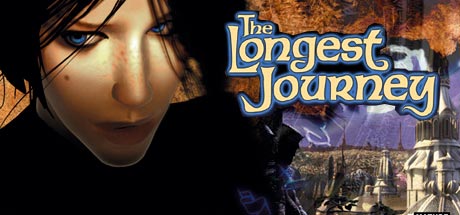
That instability resonates fiercely with The Longest Journey, where April Ryan steps between Stark (a hyper-rational, rain-slicked cyberpunk reality) and Arcadia (a myth-soaked, crumbling magical world)—not as conqueror, but as translator. The player review nails it: “It’s less a long journey than a long conversation.” Just like Index’s fugitive status forces Touma into endless, high-stakes dialogue—with magicians, scientists, AIs, even his own forgotten self—the game thrives on negotiated meaning. Neither world is “true”; both are real, both demand translation, and neither offers stable ground. The emotional DNA isn’t in the stakes, but in the tone of the exchange: weary, precise, laced with dry wit and sudden gravity.
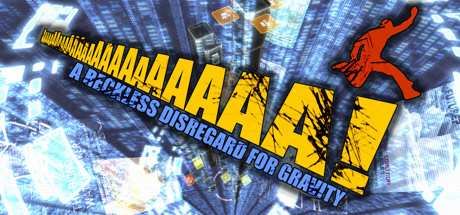
Then there’s AaAaAA!!! – A Reckless Disregard for Gravity, where you BASE jump through a floating city built on absurd engineering—girders tangled like nervous systems, protesters flipped off mid-air, physics treated as suggestion rather than law. The review admits it’s “good in small portions”—and that’s the key. A Certain Magical Index II operates the same way: explosive, breathless bursts of impossible motion (railguns! levitating nuns! collapsing dimensional wards!) punctuated by quiet, almost awkward pauses—Touma rubbing his sore knuckles, Index adjusting her habit, Misaka muttering about “idiotic espers”—where the weight of consequence settles. Both reject sustained grandeur in favor of staccato exhilaration, where control is temporary, gravity is optional, and dignity is perpetually under construction.
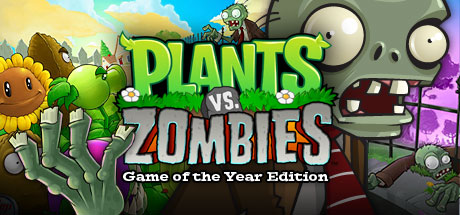
Even Plants vs. Zombies GOTY Edition shares that DNA—not in tone, but in structural irreverence. Zombies shamble toward your lawn not as existential dread, but as absurd, rule-bound invaders met with peashooters and cherry bombs. The review’s frustration (“EA and brapcap don’t even know how to remaster…”) mirrors the anime’s own meta-awareness: Academy City’s science is designed to be patched, hacked, and undermined—just like PvZ’s garden is a battlefield of improvised, wildly unbalanced systems. Both treat apocalypse as logistics, not tragedy. The horror isn’t death—it’s incompatibility, the hilarious, terrifying moment when two perfectly functional worlds try to occupy the same space and pop.
This pairing sings for the viewer who watches Touma get punched through a wall and immediately starts worrying about the structural integrity of the building—not the bruise. For the player who reloads after a failed jump in AaAaAA!!!, not to win, but to see the physics glitch again, to laugh at the sheer audacity of the collapse. For the person who loves April Ryan’s exhausted sigh before stepping across the veil—not because she’s brave, but because the alternative is letting the grammar of reality unravel. They’re drawn to stories where meaning is negotiated, not declared; where stability is the joke, and the real warmth comes from the people holding the flashlight while the floorboards creak. Not heroes. Not saviors. Just friends, standing together in the beautiful, terrifying, slapstick middle of everything falling apart.
🎮11 Games That Match the Vibe



Match Dimensions Explained
❓Frequently Asked Questions
Why does The Longest Journey keep popping up in 'Games Like A Certain Magical Index II' lists?
Because both lean hard into parallel-world worldbuilding with grounded-yet-uncanny stakes—April Ryan bouncing between Stark (our gritty, tech-heavy reality) and Arcadia (a magic-infused realm) mirrors Index’s constant friction between science (esp. Academy City’s tech) and magic (the Church’s doctrines). Plus, that dry, character-driven wit in April’s narration feels like a tonal cousin to Index II’s sharp, self-aware banter during high-stakes standoffs.
Is there an actual A Certain Magical Index II game adaptation?
No official standalone game exists—just mobile titles like *A Certain Magical Index: Imaginary Fest* (2021), which got mixed reviews for shallow combat and heavy gacha mechanics. That’s why fans turn to games like *Borderlands GOTY*, where the over-the-top, fourth-wall-bending humor and chaotic multi-character squad dynamics (think Misaka’s snark + Touma’s ‘right hand’ luck) scratch the same itch without needing canon fidelity.
How does AaAaAA!!! compare to Plants vs. Zombies GOTY Edition for chaotic fun?
Both are gloriously unhinged—but *AaAaAA!!!* is pure physics-based adrenaline: flipping off protesters mid-BASE jump through a crumbling floating city gives you that same breathless, rule-breaking rush as Index II’s Railgun vs. Accelerator rooftop chase. *Plants vs. Zombies*, meanwhile, delivers absurdity via strategy—like deploying a cherry bomb to vaporize a zombie dressed as a nun—mirroring Index’s blend of tactical smarts and surreal comedy.
What’s the best game like A Certain Magical Index II if I want that mix of witty dialogue and world-hopping tension?
Go straight to *The Longest Journey*: April Ryan’s deadpan voiceover while solving puzzles across universes—like negotiating with a sentient train in Arcadia or hacking a biometric lock in Stark—hits the same sweet spot as Index II’s balance of exposition, emotional weight, and genre-blending stakes. And that 81 Metacritic score? It’s not just nostalgia—it’s proof the writing holds up like Index’s best classroom debates.