
LOVE FLOPS
Asahi Kashiwagi lives the typical life of an average high school student — until the day a TV fortune teller’s predictions come true one after another, culminating in a series of risqué encounters! Destiny seemingly draws five beautiful girls into Asahi’s path, and soon he finds himself fielding not one, not two, but five love confessions. Asahi will need to follow his heart to find the perfect love for him, or else his love fortunes may end in one epic flail and flop.
(Source: HIDIVE)
📺Anime Details
📝Editorial Analysis
The TV fortune teller’s voice crackles through Asahi Kashiwagi’s living room—low, smug, absurdly precise—and then it happens: the sliding door bursts open, a girl tumbles in mid-stumble, her skirt flares, her hair catches the afternoon light like spun gold, and Asahi freezes, not from shock, but from the sheer weight of inevitability. Not danger. Not prophecy as doom—but prophecy as punctuation, as a laugh that catches in your throat because it’s too perfect, too ridiculous, too tender all at once.
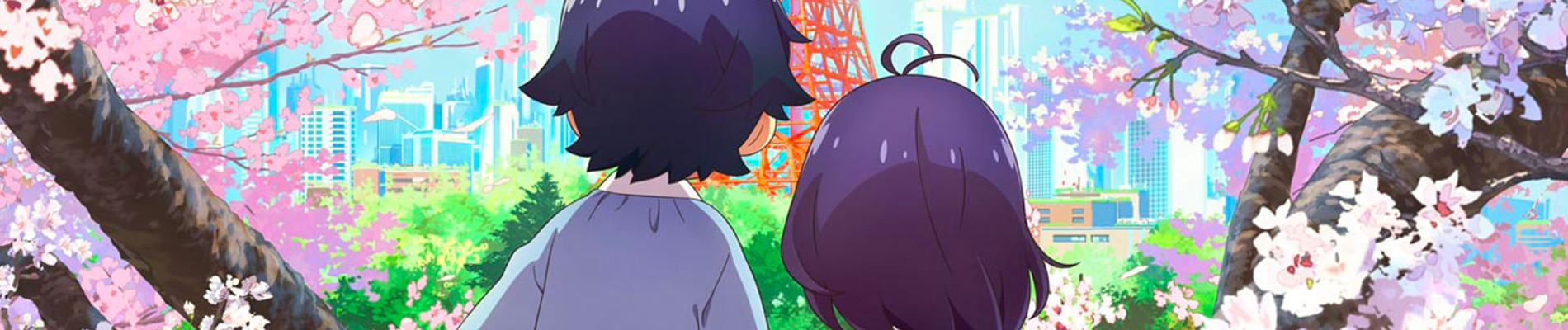
That’s the feeling LOVE FLOPS lives inside: a surreal buoyancy where tragedy and farce orbit each other like binary stars. It’s not just harem chaos or ecchi slapstick—it’s the quiet ache beneath the absurdity, the way five girls with impossible origins (AI, virtual world, fractured timelines) gather around one ordinary boy not to compete, but to anchor. You don’t feel like you’re watching romance unfold—you feel like you’re breathing the same oxygen as characters who’ve been unmoored by something vast and incomprehensible, and are now building a home out of shared breakfasts, mismatched socks, and the fragile, stubborn warmth of found family. It’s soft, even when it’s chaotic; intimate, even when it’s surreal; aching, even when it’s laughing.
Which is why BioShock Infinite resonates—not because of its dystopian skyline or sky-city violence, but because of how deeply it wrestles with Time & Memory as emotional architecture. Booker DeWitt doesn’t just chase Elizabeth across floating cities—he chases versions of himself, echoes of loss, the unbearable weight of choices that ripple across realities. Just like Asahi, he’s surrounded by women who are more than love interests: they’re vessels of consequence, memory, and moral gravity. The player review admits bitterness about “the Bioshock Infinite we could have gotten”—a line that mirrors how LOVE FLOPS leans into its own tonal contradictions: the tragedy isn’t hidden behind comedy; it breathes alongside it, making every hug, every shared meal, every accidental glance feel earned, not indulgent.
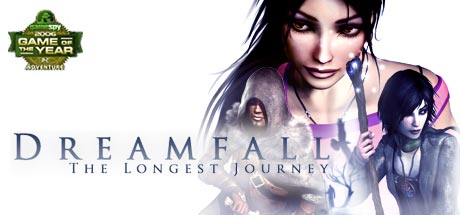
Then there’s The Longest Journey, where April Ryan steps between parallel universes—not as a warrior or savior, but as a listener, a translator of logic and longing across fractured worlds. Its description calls it “an amazing graphical adventure,” but the player review cuts deeper: “It’s less a long journey than a long conversation. And somehow, the conversation is good enough that you keep reading to the end.” That’s LOVE FLOPS in a sentence. The anime isn’t driven by escalating stakes or battle sequences—it’s held aloft by dialogue that lingers, silences that settle, confessions that land not with fireworks but with the quiet thud of recognition. Both works trust their audiences to sit inside ambiguity—to care about how people speak, why they stay, what gets left unsaid when reality itself is unstable.
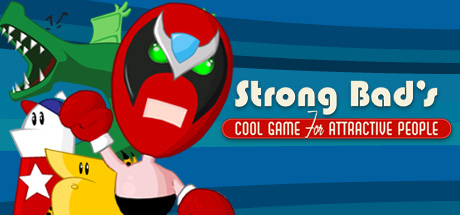
And yes—even Strong Bad's Cool Game for Attractive People: Season 1, with its cartoonish fourth-wall shattering and self-aware absurdity, shares this DNA. Its description promises “Strong Bad’s wacky comedic adventures,” but the player review reveals the core: “With the recent remake of Poker Night, I hope Skunkape considers bringing this game back next…” — a note of genuine, nostalgic yearning buried under layers of parody. That’s the heart of LOVE FLOPS’ surreal comedy: the jokes aren’t just gags—they’re shields, rituals, ways of holding space for grief, identity, and connection when the ground keeps shifting. The ecchi moments aren’t objectifying; they’re humanizing—awkward, vulnerable, tethered to real emotional stakes.
This pairing isn’t for fans of tidy resolutions or power fantasies. It’s for the person who rewatched that one scene in LOVE FLOPS where Asahi watches the girls bicker over miso soup—not for the laughs, but for the way their voices overlap, warm and slightly off-key, like a family tuning up before a song no one’s written yet. It’s for the player who paused BioShock Infinite not at the big twist, but when Elizabeth hums while repairing a broken music box. For the one who still remembers April Ryan’s sigh when she finally lets her guard down—not in victory, but in exhaustion. These are stories for people who believe softness is the bravest kind of resilience—and who know that the most profound love stories often begin with a TV fortune teller, a floating city, or a guy named Strong Bad handing you a poorly drawn map.
🎮19 Games That Match the Vibe





Match Dimensions Explained
❓Frequently Asked Questions
Why is BioShock Infinite on the 'Games Like LOVE FLOPS' list when it’s so serious and plot-heavy?
Great question—it’s not about tone alone, but how both games twist time, memory, and identity to unravel emotional truths. Like LOVE FLOPS’ fragmented recollections of Aki and Ruri, BioShock Infinite uses Booker’s repressed memories and Elizabeth’s multiverse awareness to expose painful self-deception—especially in that gut-punch baptism scene where past and present collapse. The shared 'Time & Memory' dimension (and 77 Metacritic score) reflects how deeply both use temporal mechanics to drive character revelation, not just spectacle.
Is there an anime or manga adaptation of LOVE FLOPS, like there is for The Longest Journey?
Nope—unlike The Longest Journey, which got a well-regarded animated web series spin-off and multiple novelizations, LOVE FLOPS hasn’t been adapted beyond its original visual novel format. The Longest Journey *is* the outlier here: its April Ryan even shares LOVE FLOPS’ genre-blending spirit—jumping between worlds (Stark and Arcadia) while juggling deadpan humor and existential stakes—but it stands alone as the only match with official non-game adaptations.
How does AaAaAA!!! compare to LOVE FLOPS in terms of chaotic energy and absurd humor?
They’re kindred spirits in controlled chaos—both weaponize over-the-top physical comedy to undercut emotional weight. In LOVE FLOPS, Ruri’s sudden gravity-defying pratfalls during tense rehearsals mirror AaAaAA!!!’s BASE-jumping stunts where you flip off protesters mid-air while spinning through girders. And just like LOVE FLOPS’ tonal whiplash between heartfelt confession and slapstick, AaAaAA!!! delivers its 73-scored ‘Comedy & Parody’ vibe in short, adrenaline-fueled bursts—perfect if you love LOVE FLOPS’ balance of sincerity and silliness.
What’s the best LOVE FLOPS-like game if I want something emotionally grounded but still playful with reality?
Go straight to Strong Bad’s Cool Game for Attractive People: Season 1—it nails that rare mix of genuine emotional beats (like Homestar’s quiet vulnerability in Episode 4) wrapped in cartoonish absurdity, much like LOVE FLOPS’ tender moments between Aki and Ruri amid fourth-wall-breaking gags. With its 68-scored ‘Emotional Narrative’ + ‘Comedy & Parody’ dimensions, it’s the only match that mirrors LOVE FLOPS’ heart-first, joke-second rhythm without leaning into dystopia or time travel.