
Space Dandy
The story of the anime revolves around Dandy, an alien-hunter. His job is to seek out new aliens never seen before, and receives a reward whenever he finds a new species. His mission is to find those new species faster than anyone else as he travels the galaxy. Together with the bucket-of-bolts robot QT and the dimwit alien Meow he picked up along the way, he comes into contact with new planets and their inhabitants..
(Source: Anime News Network)
📺Anime Details
📝Editorial Analysis
The neon smear of a dying star reflected in Dandy’s sunglasses as he floated, untethered, past a derelict space station shaped like a half-eaten taco—QT’s voice crackling over comms about “structural integrity” while Meow tried to lick the vacuum seal off a snack pouch. That’s Space Dandy: not just space, but spilled space—physics folded, then tossed aside like crumpled star charts.

What makes it vibrate isn’t its sci-fi setting or parody mechanics—it’s the lightness of its existential weight. You’re laughing at a sentient toaster cult one minute, then watching Dandy stare into a black hole that hums a lullaby in C-sharp minor—and feeling, unmistakably, the quiet ache of being gloriously, absurdly small. It doesn’t ask you to solve the universe; it hands you a broken translator and says, “Try saying ‘hello’ in seven languages. One of them might be true.” That’s the feeling: wonder without reverence, curiosity without consequence, philosophy delivered with a wink and a grease stain on the lapel. It’s not nihilism—it’s playful awe, where every planet is a punchline and also a prayer.
Exodus from the Earth shares that same defiant, janky joy—the kind where the engine stutters, the dialogue glitches mid-sentence, and yet somehow, “it’s surprisingly ‘goo…’” That ellipsis in the player review? That’s Dandy’s grin when his ship’s autopilot reroutes them through a nebula made of expired yogurt commercials. Both refuse polish as virtue. They treat narrative coherence like a suggestion scribbled on a napkin—important only until the next absurdity arrives. The game’s mission—“retrieve information about a secret mineral upon which the very exis…”—cuts off mid-thought, just like Dandy’s plans always do. Neither asks you to believe in the stakes. They ask you to believe in the vibe.
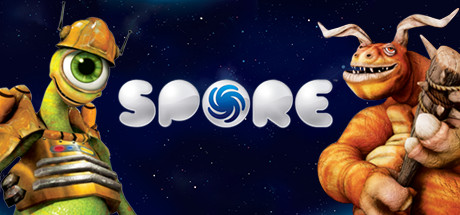
SPORE™ lives in the same emotional orbit—not because of its creature editor, but because of how it makes evolution feel melancholic and playful at once. Its description promises you’ll go “From Single Cell to Galactic God,” but what lingers is the silence between stages: the way your first amoeba drifts alone in primordial soup, or how your god-tier civilization pauses, just once, to watch a supernova bloom in real time. Player reviews call it “unique even today”—not for tech, but for sustaining that rare tone where creation feels tender, fleeting, and faintly ridiculous. Like Dandy naming a newly discovered alien “Steve” before realizing it’s actually a sentient cloud of regret. Both let you build universes while whispering, “None of this matters—and that’s why it matters so much.”
Portal and Portal 2, with their “Perpetual Testing Initiative” and Aperture Science labs, share Dandy’s love of meta-logic-as-comedy. The games don’t just break the fourth wall—they sand it down, varnish it, and serve it to you on a tray labeled “DO NOT EAT (BUT FEEL FREE TO QUESTION ITS ONTOLOGY).” The player review calls Portal “a short, brilliant, and absolutely flawless puzzle game that completely redefined first-person m…”—again, that cut-off. Not incompetence, but intentional suspension. Like when Dandy’s ship transforms into a disco ball mid-chase, or QT delivers a soliloquy on entropy while vacuuming stardust off the floor. Both use systems—test chambers, warp drives, bureaucratic alien registries—not as rules, but as props in an ongoing improv scene about meaning itself.
This pairing isn’t for fans of tidy lore or power fantasies. It’s for the person who rewinds the scene where Meow tries to pay for oxygen with bottle caps—not because it’s funny (though it is), but because it lands with the soft, resonant thud of something deeply human disguised as nonsense. It’s for the player who saves SPORE’s first sentient species to their desktop as “My First Friends.jpg”, then spends ten minutes naming each one after breakfast cereals. For the one who hears GLaDOS say “The Enrichment Center is committed to the well-being of all participants” and feels both dread and affection—because the lie is so lovingly constructed. These are works that trust you to hold joy and futility in the same hand, fingers relaxed, palm open—like Dandy holding a glowing alien egg, grinning, already forgetting its name.
🎮33 Games That Match the Vibe
























Match Dimensions Explained
❓Frequently Asked Questions
Why does Exodus from the Earth keep popping up in Space Dandy game lists?
Because Francis Rixon’s absurd, janky mission inside the Corporation—complete with over-the-top sci-fi parody and deadpan bureaucratic satire—hits that exact same tonal sweet spot as Space Dandy’s genre-bending, fourth-wall-winking chaos. Players even call it 'surprisingly goo…' in reviews, echoing Dandy’s lovably messy, off-kilter charm—right down to its low-fi aesthetic and commitment to comedic whiplash.
Is there a Space Dandy video game adaptation?
No official Space Dandy game exists—but fans who crave that vibe consistently land on Exodus from the Earth (72) and Portal 2 (63), both scoring high in Comedy & Parody *and* Sci-Fi & Space. Exodus mirrors Dandy’s satirical corporate sci-fi, while Portal 2’s GLaDOS-led absurdism and rapid-fire wit feel like if Dandy and Rick Sanchez co-hosted a test chamber.
How is SPORE™ different from Portal when it comes to Space Dandy energy?
SPORE™ leans into melancholic exploration and player-driven cosmic absurdity—evolving your creature from single cell to galactic god feels like riding Dandy’s existential rollercoaster through a kaleidoscope. Portal, meanwhile, trades that sprawling whimsy for tight, snarky, physics-defying puzzles with GLaDOS’s dry delivery—more like Dandy’s 'Honey, I Shrunk the Universe' episode than the whole series’ freeform anarchy.
What’s the best Space Dandy-like game if I just want to laugh *and* feel weirdly thoughtful?
Go straight to SPORE™ (69)—its blend of Sci-Fi & Space, Comedy & Parody, *and* Melancholic Exploration means you’ll spend hours designing a blob-creature that evolves into a jazz-singing space diplomat, then pause mid-galactic conquest to wonder why civilizations rise and crumble. That tonal whiplash—silly one second, quietly profound the next—is pure Dandy, no translation needed.