
The 100 Girlfriends Who Really, Really, Really, Really, REALLY Love You
Rentarou Aijou was rejected 100 times in middle school. He visits a shrine and prays for better luck in high school. The God of Love appears and promises that he’ll soon meet 100 people he’s destined to date. But there’s a catch—once destiny introduces someone to him, the two must happily love each other. If they don’t, they’ll die. What will befall Rentarou and his 100 girlfriends in high school?
(Source: Crunchyroll)
📺Anime Details
📝Editorial Analysis
The shrine gate creaks open—not with reverence, but with the audible groan of cosmic bureaucracy. Rentarou Aijou bows, palms pressed together, whispering a prayer so desperate it vibrates in his molars. Then—pop—a god in a too-tight blazer materializes mid-air, holding a clipboard, sighing like he’s just been handed 100 overdue library fines. “Congratulations,” he says, not looking up. “You’re now contractually obligated to love exactly one hundred people. No refunds. No opt-outs. And if even one relationship fails? Poof.” That moment isn’t romance—it’s absurd dread, wrapped in pastel school uniforms and glittering sakura petals.

What makes The 100 Girlfriends Who Really, Really, Really, Really, REALLY Love You unlike anything else isn’t its harem premise or ecchi gags—it’s how relentlessly it weaponizes meta-logic as emotional gravity. Every confession, every shared bento, every accidental skirt flip carries the quiet, suffocating weight of a divine death clause. It doesn’t ask “Will they fall in love?”—it asks “How do you build intimacy when affection is legally mandated?” The comedy isn’t despite the stakes; it feeds on them. The surrealism isn’t decorative—it’s structural. You laugh because the world insists love must be both infinitely abundant and lethally finite. You feel giddy and claustrophobic at once—like breathing helium while strapped to a rollercoaster that runs on romantic contracts.
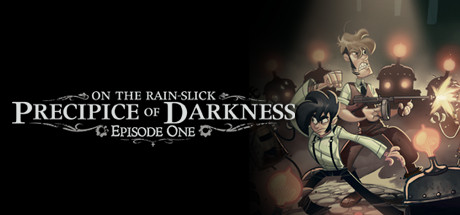
That exact tonal paradox—the collision of bureaucratic absurdity and genuine emotional consequence—echoes in Precipice of Darkness, Episode One, where players “create your character in the classic comic style” and plunge into an RPG-adventure built on Penny Arcade’s signature brand of deadpan nihilism dressed as slapstick. A player review nails it: “Fun as hell, especially if you enjoy the Penny Arcade style of humor…”—and that’s the link. Like Rentarou navigating shrine-god fine print, the game treats lore, romance subplots, and world-ending threats with the same flat, paperwork-saturated irony. Both treat fate like a PDF form you have to e-sign before the apocalypse starts.
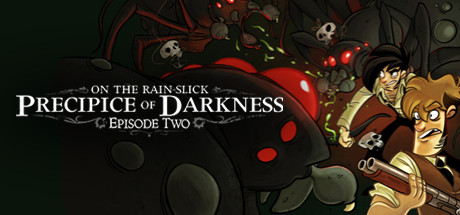
Then there’s Precipice of Darkness, Episode Two, whose description confirms it’s “the second installment… whether you're a fan of the first installment or ne[ver played]”—a detail that mirrors The 100 Girlfriends’ own narrative architecture: each girlfriend isn’t a chapter in a linear arc, but a self-contained episode in an escalating, recursive sitcom of devotion. The player review complains about “input delay” during a special attack minigame—that frustration, that sense of fighting against the very interface of the system you’re embedded in? That’s Rentarou trying to hold hands with Girlfriend #47 while mentally calculating her compatibility percentile and remembering to water the shrine’s cursed bonsai. Both are games—and stories—where the mechanics themselves become characters in the farce.
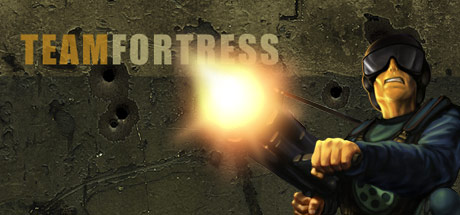
Even Team Fortress Classic, described as “one of the most popular online action games of all time” with “over nine character classes… enlisted in a unique style of online team combat,” shares DNA—not in plot, but in emotional choreography. Its player review glows: “simply the best nostalgic game, i have dreams about this game.” That’s the same visceral, embodied nostalgia The 100 Girlfriends mines—not for a simpler time, but for the physical grammar of teenage yearning: the way a glance lingers too long in a hallway, how a shared soda can becomes sacred text. TFC’s classes don’t just fight—they perform: the Heavy’s grunts, the Spy’s sighs, the Medic’s frantic healing animations. They communicate through exaggerated physicality, just as The 100 Girlfriends communicates love through hyper-stylized reactions—a blush that blooms like ink in water, a nosebleed that arcs like a cartoon comet.
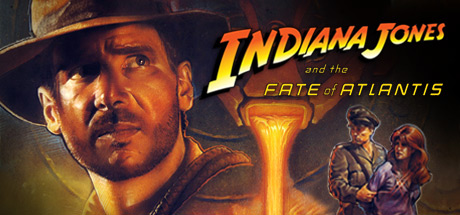
This isn’t for fans of tidy romances or clean power fantasies. It’s for the viewer who grins when the shrine god checks his watch, who feels their chest tighten when Girlfriend #12 adjusts her glasses and says, “I’ve calculated our optimal date frequency down to the millisecond”—not because it’s sweet, but because it’s terrifyingly sincere. It’s for the player who still remembers the exact jolt of realizing, mid-battle in Indiana Jones® and the Fate of Atlantis™, that LucasArts didn’t give you a save point before the sphinx’s riddle—and you had to trust your own logic, your own memory, your own trembling finger over the keyboard. These pairings live in the liminal space where love feels like a puzzle box with no bottom, where laughter is the only oxygen valve—and where every heartbeat counts, not because it’s precious, but because it’s contractually non-negotiable.
🎮33 Games That Match the Vibe










Match Dimensions Explained
❓Frequently Asked Questions
Why is Prince of Persia listed as similar to The 100 Girlfriends?
It’s the tonal whiplash that does it—Prince of Persia (2024) leans hard into absurd, over-the-top romantic comedy *and* parody, especially in its banter between the Prince and Elika (who flirts relentlessly while wielding divine power), plus those self-aware cutscenes where he trips over his own cape mid-confession. It shares the same 'romance-as-chaotic-force' energy and Adult & Dark Seinen dimension with The 100 Girlfriends—even if the stakes are mythic instead of harem-sitcom.
Is there an anime or game adaptation of The 100 Girlfriends?
No official game adaptation exists yet—but Precipice of Darkness, Episode One and Episode Two are the closest *spiritual* matches: both are narrative-driven, choice-influenced JRPGs built on relentless parody and fourth-wall-breaking humor, just like the manga’s rapid-fire gags and meta-romantic escalation. Fans love how Episode One’s comic-book protagonist gets swarmed by absurdly devoted, genre-savvy allies—very much like Yuu’s girlfriend parade.
How does Indiana Jones and the Fate of Atlantis compare to The 100 Girlfriends in tone?
Surprisingly close! Both lean into 'earnest absurdity'—Fate of Atlantis has Indy delivering deadpan one-liners while dodging Nazi seduction attempts and debating Plato’s Republic with Atlantean goddesses, mirroring how The 100 Girlfriends treats grand romance like a slapstick heist. They share Comedy & Parody + Adult & Dark Seinen dimensions, and that same 'whimsical gravitas' where emotional confessions happen mid-puzzle or atop collapsing ruins.
What’s the best game like The 100 Girlfriends if I want maximum chaotic romance + zero chill?
Go straight to Precipice of Darkness, Episode Two—it doubles down on the first episode’s rom-com RPG chaos with even more over-the-top devotion mechanics: your custom hero gets serenaded by rival factions, interrupted mid-battle by love declarations, and forced into 'romantic negotiation' minigames (yes, really). Its 58 score reflects how perfectly it nails that '100% commitment, 0% subtlety' vibe—no slow burns, just full-throttle, joke-sprinkled affection.