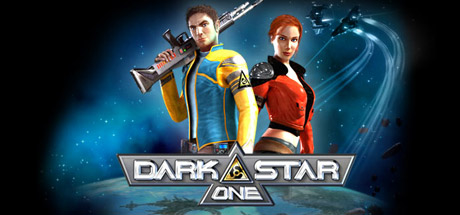
Darkstar One
Darkstar One offers a fantastic amount of freedom of choice. The story-based missions gradually lead you deeper into the galaxy to new races, new technologies and ever stronger opponents. Explore a vast array of solar systems in search of hidden artifacts of ancient races, essential objects for upgrading your ship--the Darkstar One.
🎮Game Details
💬What Players Say
"A true classic of the action adventure RPG space game as they were back in their early days. Great story, great gameplay loop."
"old and outdated , but if u like space games w/ weird looking aliens, then give it a go. I still play freelancer-crossfire mod tho."
"old memories with this one, good ones! still a good game, in my - you know, humble and all ;-) 'bit buggy though, I am not sure, maybe it's me. as I said: old memories..."
📝Editorial Analysis
The hum of the Darkstar One’s engines as you drift alone between solar systems—no mission marker blinking, no voice crackling over comms—just the slow rotation of a gas giant filling your viewport while your ship’s HUD flickers faintly with uncharted coordinates. That silence isn’t empty. It’s charged: the weight of ancient races whose artifacts lie buried in asteroid belts you haven’t even scanned yet, the quiet thrill of knowing every jump could reveal something alien, untranslatable, older than language. The official description calls it “freedom of choice”—but what sticks is how that freedom feels melancholic, not liberating: you’re not just exploring space—you’re tracing the fading outlines of civilizations that left no answers, only echoes in derelict hulls and half-decrypted data fragments.
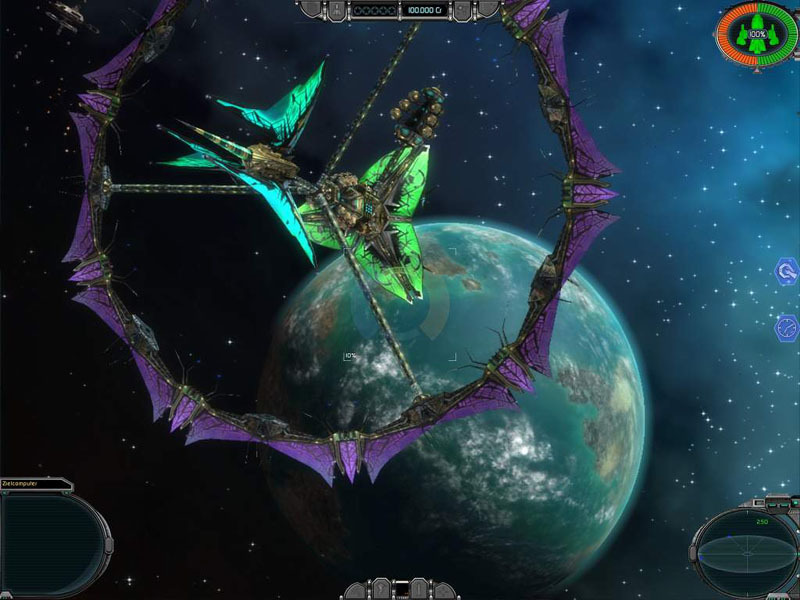
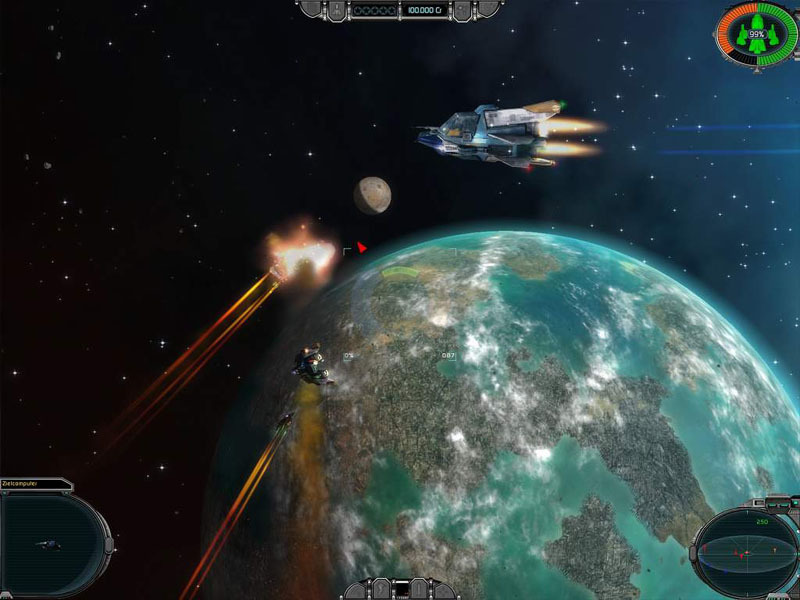

This isn’t the slick, militarized awe of Mass Effect or the neon-drenched urgency of Dead Space. Darkstar One’s atmosphere lives in the grain—in the player review calling it “old memories… good ones”, in the admission that it’s “a bit buggy though, I am not sure, maybe it’s me.” That imperfection matters. It makes the galaxy feel lived-in, not designed. You don’t master this universe—you negotiate with it. Every upgrade feels earned through patience, not grinding; every new race encountered arrives not with exposition dumps but with visual strangeness (“weird looking aliens”, per Review 2) and technological mystery (“new technologies and ever stronger opponents”). You think less about winning and more about wondering: What collapsed their star-forges? Why did they hide artifacts here, in this silent, violet-tinged nebula? The game doesn’t answer. It holds space for the question—and that restraint is where its emotional DNA pulses strongest: quiet, vast, unhurried, aching.
That same resonance flickers across several anime—not because they share plot beats or ship designs, but because they orbit the same emotional dimensions: Sci-Fi & Space, yes, but crucially, Melancholic Exploration. Take Children of the Sea: its ocean isn’t a setting—it’s a sentient, breathing archive of lost time, where marine biology blurs into myth and every dive feels like trespassing on sacred, sorrowful memory. Like Darkstar One, it refuses to explain. It lets wonder sit beside grief, lets scale dwarf the individual—not with terror, but with tenderness. Then there’s Blood Blockade Battlefront & Beyond: its New York isn’t just rebuilt after dimensional collapse—it’s layered, haunted by remnants of other physics, other logics. Aliens aren’t invaders; they’re neighbors with incomprehensible customs, their tech humming with quiet, residual sorrow. The show’s action is kinetic, but its soul lingers in still frames—on rain-slicked streets reflecting fractured constellations, on faces watching something ancient pass overhead. Just like drifting past a derelict Dyson fragment in Darkstar One, you feel the weight of what came before, not as threat, but as quiet inheritance. And Space Dandy 2—yes, the absurd, jazz-fueled romp—carries this too, buried under slapstick: its most haunting episodes unfold in dead zones of the galaxy where time frays, where abandoned ships broadcast lullabies in dead languages, where exploration yields not conquest, but recognition—of loneliness, of beauty, of endings that look like beginnings if you tilt your head just right.
Who loves this pairing? Not just “space fans”. It’s the person who rewatched Children of the Sea three times not for the plot, but to sit again in that final underwater silence—the one where the camera pulls back, infinitely, past coral cities and fossilized stars, and you feel small in the best possible way. It’s the player who still boots up Darkstar One despite the bugs, not to “win”, but to hear that low engine drone again, to let the galaxy’s scale settle in their bones—to remember how it felt to be adrift, and how adrift could also mean awake. They don’t crave closure. They crave continuity—the soft, persistent hum of something older than us, still turning, still waiting—not to be solved, but witnessed.
→16 Anime That Match the Vibe
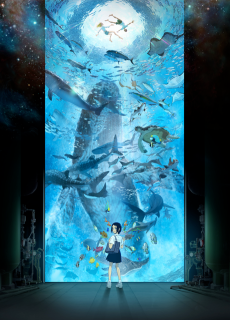
Ruka floating weightless in the ocean’s blue void mirrors Kayron’s silent drift through nebulae—both suspended in vast, beautiful uncertainty. Where *Darkstar One*’s melancholic exploration unfolds across star systems, *Children of the Sea*’s single-film intimacy compresses that same awe into tidal rhythms and submerged silence. This resonance isn’t about scale but shared breath: 🌿 Melancholic Exploration as quiet communion with the infinite, whether in deep space or deeper water.

Connected through 2 aesthetic dimensions.

A drifting nebula in *Darkstar One*’s K’tan Nebula mission—silent, violet-hued, thick with uncharted ruins—mirrors the OVA’s melancholic exploration of Rito’s fractured intimacy amid cosmic-scale misunderstandings. Unlike most ecchi rom-coms, *To LOVE-Ru Darkness* OVA leans into quiet, starlit pauses: Mikan staring at Earth from orbit, Lala’s laughter fading into static—moments where sci-fi scale deepens emotional isolation. This shared 🌿 Melancholic Exploration transforms space not as backdrop, but as a resonant chamber for loneliness and longing.
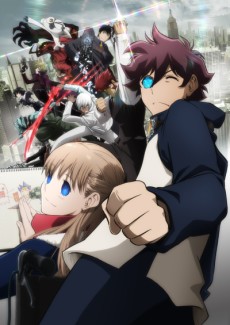
That drifting, star-dusted silence after Darkstar One’s FTL jump—where the cockpit hums and nebulae bleed across the viewport—mirrors the hushed awe of Leonardo Watch gazing up at the fractured sky over post-Bubble New York in *Blood Blockade Battlefront & Beyond*. Both channel 🌿 Melancholic Exploration not through loss alone, but through the quiet weight of stewardship: Kai as lone pilot navigating alien ethics amid cosmic decay, Leo as reluctant seer bearing witness to fragile coexistence beneath a broken sky. It’s startling how deeply space opera solitude and urban supernatural liminality harmonize.
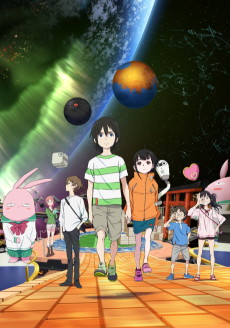
Connected through 2 aesthetic dimensions.
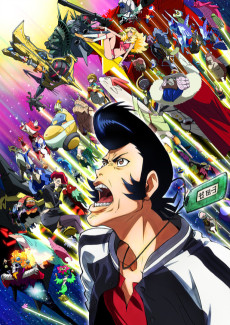
That drifting, rain-slicked neon glow of the *Astral*’s cockpit at midnight—windows streaked with starlight and static—mirrors Season 2’s “The Ballad of the Space Dandy” episode, where Dandy floats silent in vacuum, adrift not from failure but from cosmic indifference. 🌿 Melancholic Exploration binds them: both treat vastness not as conquest but as quiet companion to identity’s slow unraveling. Unlike most space adventures fixated on stakes, *Darkstar One*’s open void and *Space Dandy 2*’s surreal non-sequiturs share a wistful, unspoken pact—freedom tastes like loneliness, and that’s where wonder begins.

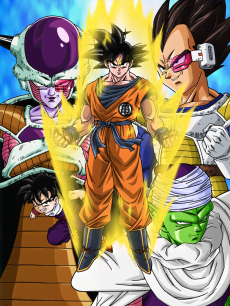
Goku’s first flight—wobbling skyward on the Flying Nimbus—mirrors Darkstar One’s earliest hyperspace jumps: fragile, wondrous, charged with melancholic exploration as vast emptiness swallows the ship or boy alike. 🌿 Unlike most space operas fixated on conquest, both anchor awe in solitude—the quiet hum of a cockpit console, the wind rustling through Goku’s hair as he gazes at distant stars. That shared sci-fi loneliness makes their kinship startlingly tender.

Connected through 2 aesthetic dimensions.

Connected through 2 aesthetic dimensions.
Connected through 2 aesthetic dimensions.


Match Dimensions Explained
❓Frequently Asked Questions
Why is Children of the Sea recommended for Darkstar One fans?
Because both lean hard into melancholic exploration—like drifting through the silent, ancient ruins of the K’thar system in Darkstar One while listening to that haunting ambient soundtrack, Children of the Sea mirrors that same awe-and-unease vibe when Ruka floats amid bioluminescent deep-sea ruins and cosmic whale-song echoes. It’s not about combat or upgrades—it’s about quiet wonder, alien scale, and feeling small in a vast, beautiful, indifferent cosmos.
Is there an anime adaptation of Darkstar One?
Nope—Darkstar One never got an anime adaptation (or even a manga). It’s stayed firmly in its 2005–2007 PC space-sim lane, beloved by folks who still boot up the Freelancer-Crossfire mod for that janky-but-charming dogfighting feel. If you’re craving that same blend of weird aliens and solar-system-hopping mystery, Blood Blockade Battlefront & Beyond delivers with its surreal interdimensional city and the eerie, slow-burn ‘Labyrinth of the Moon’ arc.
How does Space Dandy 2 compare to Darkstar One in terms of tone and structure?
Space Dandy 2 shares Darkstar One’s loose, episodic galaxy-hopping rhythm—think jumping from the neon bazaars of the Zergon Belt (in-game) to Dandy’s absurd ‘Planet of Sentient Sushi’ episode—but swaps melancholy for deadpan absurdism. Both feature bizarre alien designs (remember the gelatinous Vrak’ti in Darkstar One? Dandy’s got the sentient toaster race), and neither forces a rigid plot—just vibes, discovery, and the occasional artifact hunt gone sideways.
What’s the best anime like Darkstar One if I want that lonely, reflective space-exploration vibe?
Go straight to Children of the Sea—it nails that quiet, weightless introspection better than any on the list. When Keiko stares into the abyssal trench as glowing jellyfish pulse like distant stars, it hits the same emotional frequency as piloting the Darkstar One through the silent, debris-strewn Graveyard of the Ancients—no HUD, no mission timer, just you, the void, and the sense that something immense and ancient watched you pass.