X Rebirth
In the distant future, the X universe faces a period of profound and irrevocable change. While the universe stumbles towards an uncertain future, countless adventures await as new enemies rise in search of power.
🎮Game Details
💬What Players Say
"no"
📝Editorial Analysis
The silence between stars isn’t empty—it’s heavy. You’re adrift in a freighter’s cockpit, the HUD flickering faintly, your ship’s AI humming a low, untranslatable tone. No mission marker blinks. No urgent ping fractures the stillness. Just the slow, unblinking rotation of a gas giant on the viewscreen, its bands swirling with indifferent grandeur. The official description says it plainly: “the X universe faces a period of profound and irrevocable change.” Not war. Not conquest. Change. And then—there’s that review, raw and final: “no…” Not anger. Not mockery. A quiet, breathless collapse of expectation. That single word lands like a hull breach—sudden, irreversible, strangely relieved.
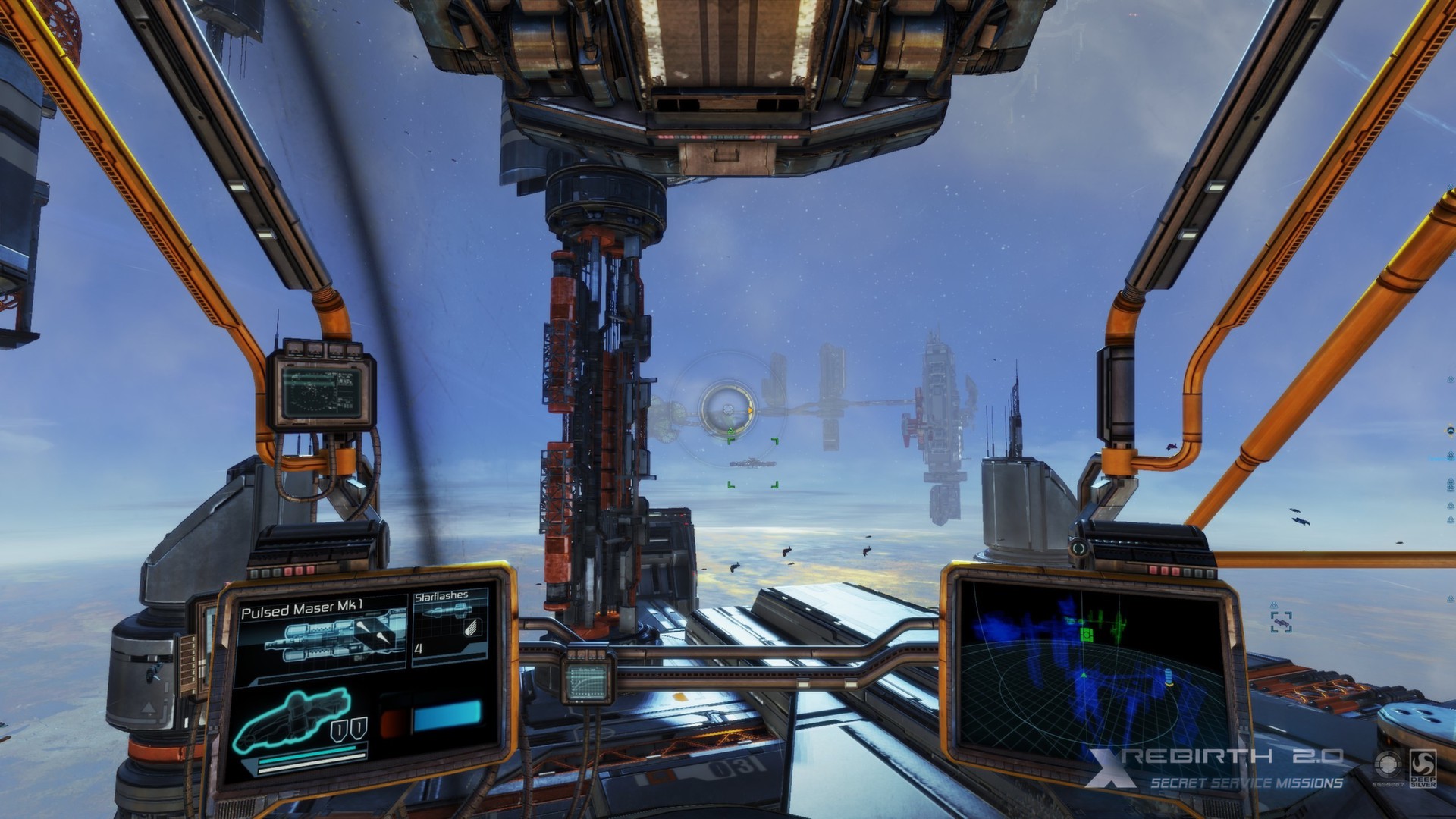
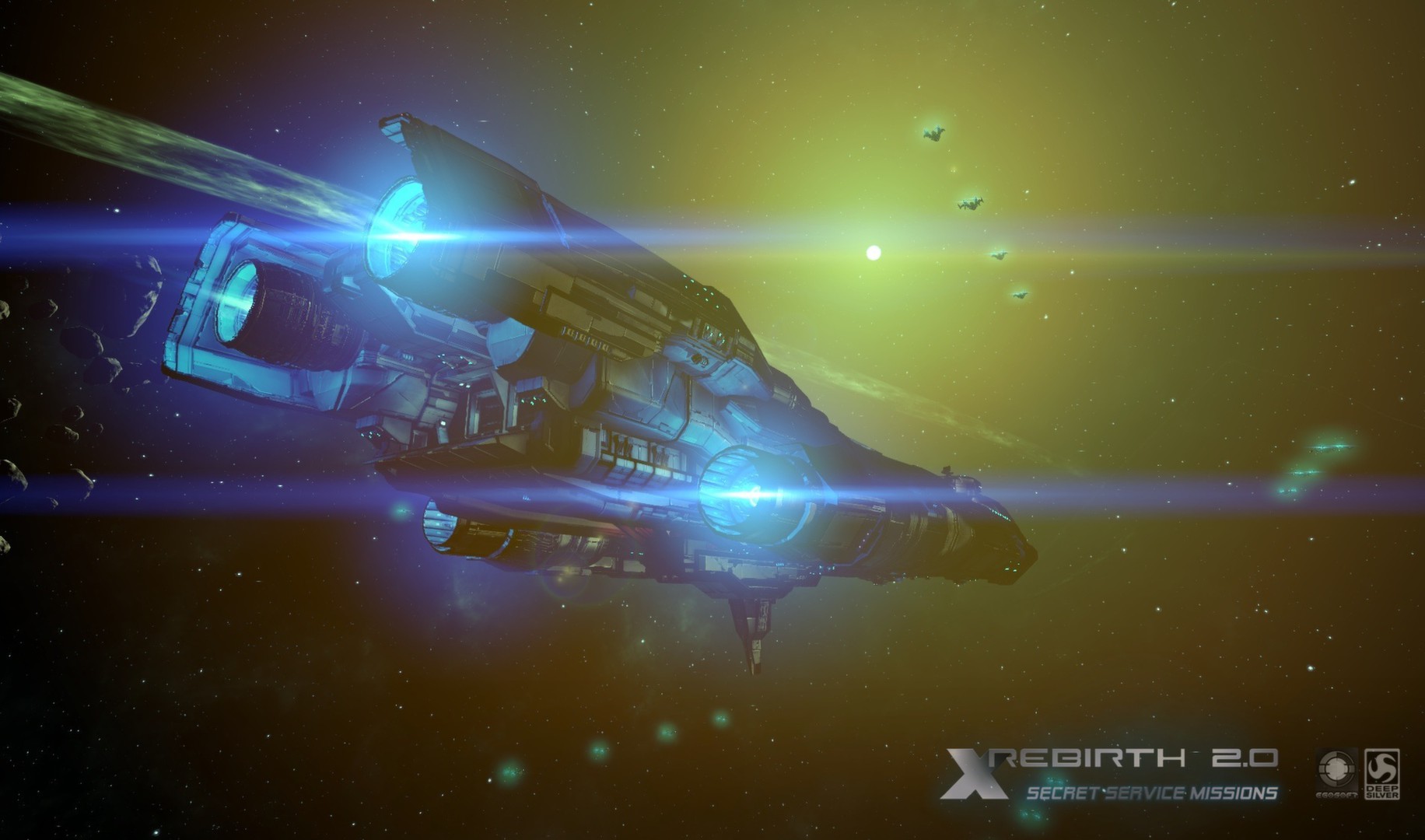
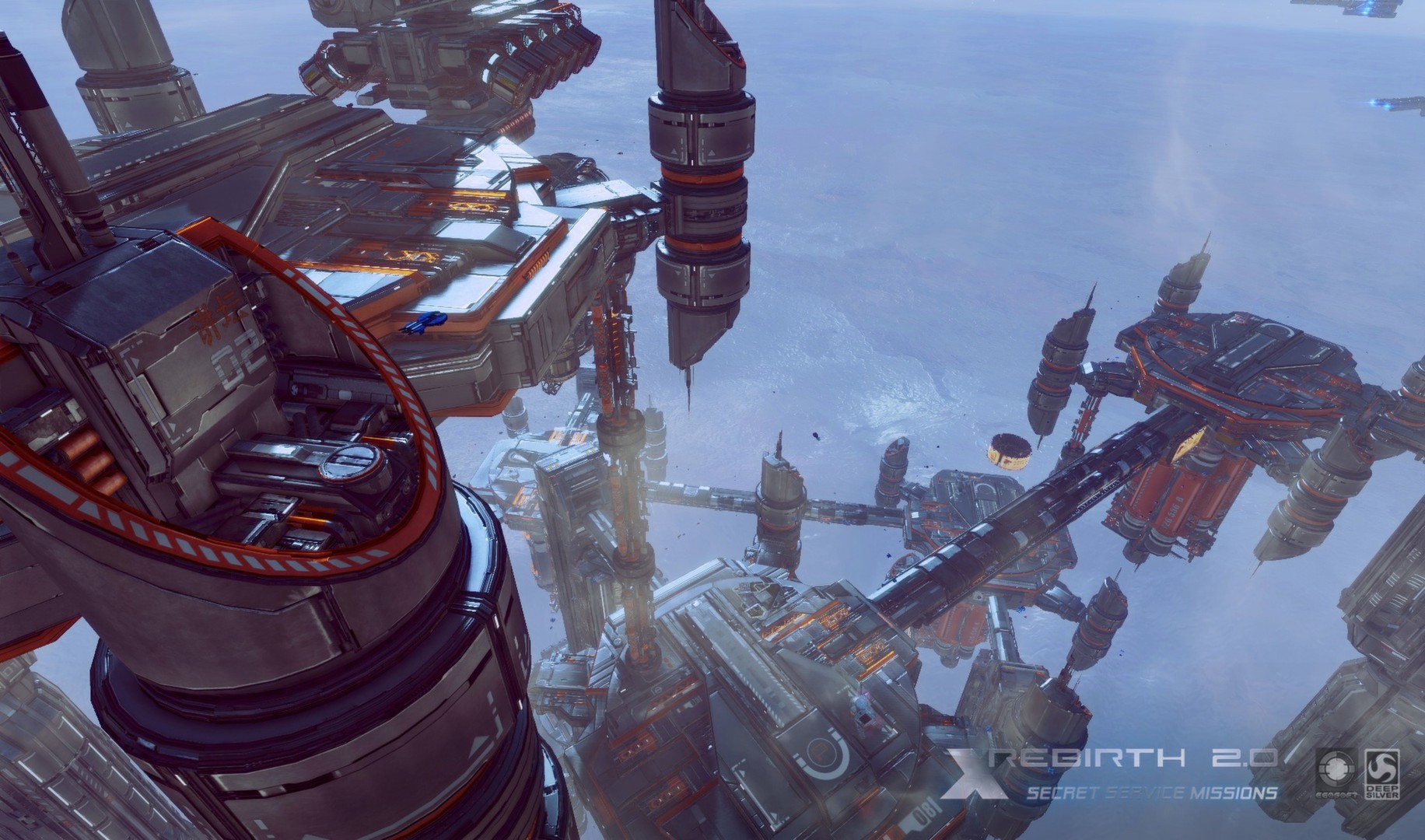
That’s the atmosphere—not loneliness, but melancholic exploration. It’s not about finding answers; it’s about feeling the weight of scale, of time, of systems too vast to master. You don’t pilot a ship—you inhabit drift. The universe isn’t hostile or benevolent; it’s unfolding, and you’re watching it pass, sometimes steering, mostly observing. There’s no tutorial voice guiding your awe. No cutscene justifies why a nebula pulses violet at dawn-cycle. You absorb meaning through repetition: docking sequences that become ritual, trade routes that feel like pilgrimages, the way station lights blur into streaks as you accelerate—not for speed, but for the texture of motion itself. It makes you think about entropy not as decay, but as continuity: how civilizations rise, shift, fade—not with fanfare, but with the soft sigh of recalibrated orbital paths. It’s quietly monumental. Not epic. Not tragic. Just… present, in a way that humbles intention.
Children of the Sea shares this DNA because it treats the ocean—not as setting, but as conscious, breathing deep time. Like X Rebirth, it refuses narrative urgency. Scenes linger on plankton glowing in sunlit water, on the slow tilt of a whale’s eye, on the way light fractures through kelp forests. Both reject cause-and-effect storytelling in favor of atmospheric causality: the gas giant rotates → the freighter’s gyro stabilizes → the player exhales. The sci-fi isn’t about tech specs; it’s about scale as emotion. When Ruka floats weightless in the abyssal trench, her hair drifting like algae, it mirrors the moment in X Rebirth when your ship slips into silent orbit around a derelict Dyson fragment—no music, no text, just the slow, inevitable pull of gravity and the melancholic beauty of something too old to explain itself.
Blood Blockade Battlefront & Beyond resonates not through action—but through urban drift. Its New York is a living, breathing organism of overlapping realities, where interdimensional rifts yawn open beside subway tunnels and alien cartographers sip espresso on rain-slicked sidewalks. Like X Rebirth, it privileges texture over plot: the hiss of steam from a vent, the flicker of holographic ads reflecting in wet pavement, the way a character’s coat flaps in wind that carries ozone and fried dough. Both treat space as layered memory—not just physical, but cultural, temporal. When Leonardo sketches constellations in the sky above Liberton, he’s not mapping stars—he’s tracing the ghost-lines of forgotten migrations, much like how X Rebirth’s stations bear names like “Argon Prime” and “Teladi Dominion,” echoing histories you’ll never fully learn, only feel in the architecture’s worn edges and the AI’s fragmented syntax.
Even Dragon Ball, at first glance pure kinetic chaos, shares this undercurrent—specifically in its cosmic silences. Think of Goku staring into the void after Cell’s defeat, or the long, wordless shots of Namek’s shattered surface floating in vacuum. Those moments aren’t pauses—they’re emotional gravity wells. Like X Rebirth, the series understands that power isn’t just in punches, but in the stillness before impact, the weight of a universe holding its breath. The “Sci-Fi & Space” dimension here isn’t about rockets—it’s about perspective shift: seeing Earth as a blue speck, realizing your rage, your love, your victory—all exist within a frame so vast it renders them tender, not trivial.
This pairing speaks to the person who watches clouds for twenty minutes and feels full, not bored. Who replays the opening sequence of Space Dandy 2 not for jokes, but for the way the camera lingers on the curvature of a comet’s tail—melancholic, yes, but also reverent. It’s for the player who docks at a station not to sell cargo, but to watch the docking clamps seal with a sound like a sigh, and thinks: this is enough. Not escape. Not mastery. Just presence, shared across light-years and frames-per-second—quiet, vast, and deeply, unmistakably human.
→16 Anime That Match the Vibe
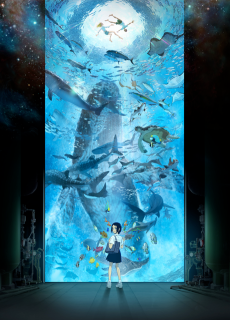
Ruka’s breathless dive into the ocean’s indigo void mirrors a player’s first warp-jump into X Rebirth’s star-dusted nebulae—both moments suspend time in awe before the vast, unknowable. Unlike most sci-fi, neither work treats space or sea as mere backdrop; instead, 🌿 Melancholic Exploration infuses every frame and flight path with quiet grief for lost coherence. That shared hush—between Umi’s silent tears and the derelict stations drifting in X’s decaying sectors—makes their resonance startlingly tender, not epic.

Connected through 2 aesthetic dimensions.

A drifting freighter in X Rebirth’s silent Kuiper Belt—its hull scarred by forgotten wars—mirrors the OVA’s lingering shots of Rito’s empty bedroom at dawn, where sci-fi tech hums softly beneath unspoken longing. Unlike most ecchi rom-coms, *To LOVE-Ru Darkness* OVA leans into melancholic exploration: those six unaired episodes sit between manga volumes like quiet interludes, where even harem chaos pauses for breathless stargazing. The resonance isn’t in spectacle, but in how both carve intimacy from vast, indifferent space—rocket trails and comet tails dissolving into the same wistful blue.

New York’s fractured skyline—sealed under the Hollow Sphere—mirrors the X Universe’s destabilized jumpgate network, where reality frays at the edges. 🌿 Melancholic Exploration binds them: Leo’s quiet awe before the Beyond’s impossible geometries echoes a player’s lone freighter drifting through the silent, decaying sectors of Argon Prime. Unlike most space operas, neither offers easy answers—just haunting beauty in collapse, and wonder in the rubble.
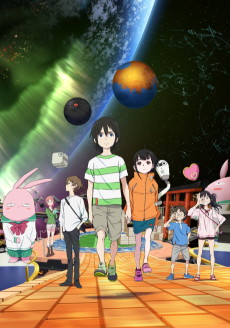
Connected through 2 aesthetic dimensions.
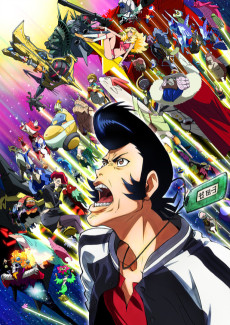
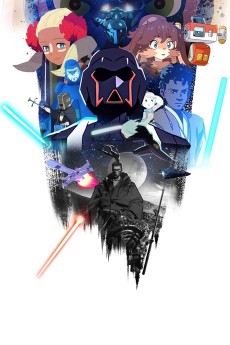
That drifting shot of Dandy’s rusty *Aloha Oe* adrift near a dying nebula in Season 2’s “The Last Dandy on Earth” mirrors X Rebirth’s haunting quiet between trade lanes—both dwell in 🌿 Melancholic Exploration, not as backdrop but as emotional gravity. Unlike most spacefaring stories that rush toward resolution, Dandy’s absurd detours and the X universe’s slow collapse share a weary, tender awe for impermanence. It’s startling how deeply both commit to loneliness as worldbuilding: one through slapstick silence, the other through empty stations humming with obsolete code.

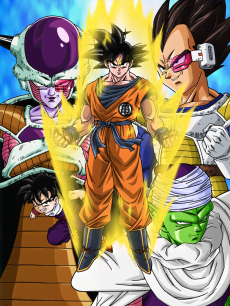
A drifting freighter in X Rebirth’s silent Kuiper Belt—hull scarred, comms dead—echoes Goku’s first lonely trek through the woods: not isolation as emptiness, but as threshold. 🌿 Melancholic Exploration binds them—not just space-as-backdrop, but space-as-quiet witness to transformation, where Bulma’s laugh cuts through wilderness static just as a sudden jump-drive flare fractures X’s cosmic stillness. Surprisingly, both locate wonder not in conquest, but in the fragile, humming uncertainty *before* the next horizon.

Connected through 2 aesthetic dimensions.

Connected through 2 aesthetic dimensions.
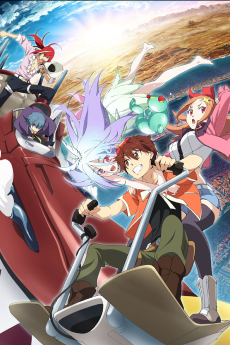
Connected through 2 aesthetic dimensions.


Match Dimensions Explained
❓Frequently Asked Questions
Why is Children of the Sea listed as similar to X Rebirth when it’s not about spaceships or combat?
Great question—it trips up a lot of people! The match isn’t about lasers or dogfights; it’s about that deep, quiet awe of cosmic scale and existential drift. Think of Ruka watching the ocean swell with impossible marine life—same vibe as piloting your M5 through the silent, star-dusted expanse near Argon Prime, feeling small amid ancient alien ruins and shifting nebulae. Both lean hard into ‘melancholic exploration’ as a mood, not a mechanic.
Is there an anime adaptation of X Rebirth?
Nope—no official anime adaptation exists, and none is planned. But here’s the fun part: Blood Blockade Battlefront & Beyond nails the *spirit* of X Rebirth’s universe: sprawling, lived-in space cities (like Hellsalem’s Lot mirroring Argon Prime), factions jockeying for influence (the Libra vs. the Split), and that same layered sense of history baked into every corridor and cockpit. It’s the closest thing we’ve got to an animated X universe.
How does Space Dandy 2 compare to X Rebirth in terms of worldbuilding?
Space Dandy 2 is way more cartoony on the surface—but dig deeper, and you’ll spot the shared DNA: both treat the galaxy as a messy, bureaucratic, deeply weird place where ancient tech hums beneath neon bazaars. Remember Dandy’s run-in with the sentient black hole cult in Episode 12? That surreal, lore-dense absurdity mirrors X Rebirth’s own moments—like stumbling across a derelict Teladi freighter broadcasting fragmented logs about the Terraformer Wars. Same ‘sci-fi & space’ dimension, just dialed to different emotional frequencies.
What if I love X Rebirth’s slow, lonely trading runs but hate fanservice or romance subplots?
Then skip To LOVE-Ru Darkness OVA—it’s got heavy harem energy and slapstick fanservice that clashes hard with X Rebirth’s contemplative pacing. Instead, go straight to Space Dandy 2 or Children of the Sea: zero romance, zero fan-service, just atmospheric voyaging (Dandy’s rusty ship drifting between planets) or wordless, watercolor-scale wonder (Ruka floating weightlessly in the abyss). Both honor that core X Rebirth feeling: solitude as a feature, not a bug.