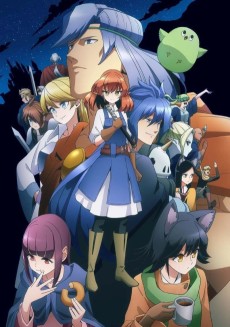
Helck
A certain country in the demon world. The Demon King was defeated by the hands of one of the heroes, and a competition was held for the title of the New Demon King. The Imperial Four Heavenly Kings Vermilio, who is in charge of the tournament, is furious at the participation of the human hero Helck, who is supposed to be her enemy. After receiving news of the fall of the castle of Urum before the final, Vermilio sets out to retake Urum Castle with Helck and other finalists. With a smile, Helck says, "Let's destroy humans." Are those words true? The truth behind the smile is...
(Source: HIDIVE)
Note: The first and second episode premiered at Anime Expo 2023 on July 1.
📺Anime Details
📝Editorial Analysis
The air in Urum Castle’s ruins tastes like burnt sugar and old iron—Helck standing silent beside Vermilio as smoke curls from shattered battlements, her sword still warm, his breath shallow, neither speaking of victory nor loss, only the weight of a throne nobody asked to inherit. That silence—not the roar of battle, not the punchline of surreal comedy—is where Helck lives: in the hollow between duty and disbelief, where war wears the face of bureaucracy and tragedy hides behind a smirk.
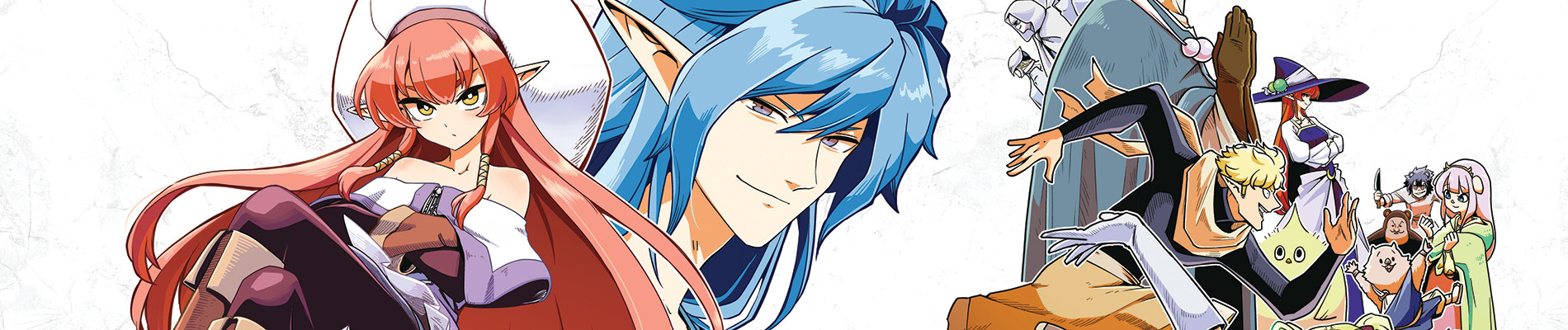
What makes Helck’s atmosphere singular isn’t its fantasy scaffolding or even its genre-blending—it’s the melancholic suspension it sustains: the feeling of moving through a world already grieving its own future. You don’t watch it for catharsis; you watch it because it treats conspiracy not as a puzzle to solve but as gravity—a slow, inescapable pull that bends loyalty, warps class lines, and turns magic into paperwork. Its comedy isn’t escapist; it’s defensive, surreal precisely because reality keeps fracturing at the edges—like Vermilio’s fury dissolving mid-rant when she realizes her enemy is the only one who remembers how to patch a roof. This isn’t irony for laughs. It’s exhaustion wearing a crown.
That emotional DNA pulses strongest in Disco Elysium - The Final Cut, where every dialogue branch feels like stepping deeper into a system already rotting from within. The game’s description calls it “a groundbreaking role playing game” where you carve a path across “a whole city”—and just like Helck, that city isn’t neutral terrain. It’s layered with political thrum and inherited trauma. A player review quotes: “Capital has the ability to subsume all critiques into itself. Even those who would critique capital end up reinforcing it instead.” That’s Vermilio’s dilemma in miniature—the Imperial Four Heavenly Kings uphold order while the empire collapses beneath them, their authority both weapon and wound. Both Helck and Disco Elysium make ideology feel tactile: not abstract doctrine, but the grit under your nails when you’re forced to negotiate peace in a war room built on slave-labor foundations.
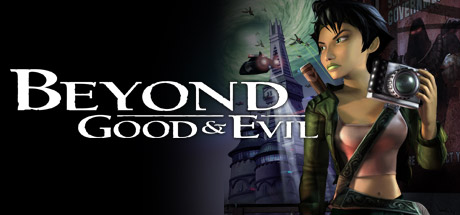
Then there’s Beyond Good and Evil™, where Jade investigates “a terrible government conspiracy” alongside her pig friend Pey’j—not as a chosen savior, but as a reporter with a deadline and a leaking roof. The description frames it as a mission to “save your planet and its inhabitants,” but the player review’s urgency—“Crazyyy game! Play the 20th Anniversary edition tho. The original is too buggy…”—mirrors Helck’s own tonal friction: sincerity wrapped in jank, idealism tested by infrastructure failure. Jade doesn’t wield divine power; she uses a camera, a stun gun, and stubbornness. Helck doesn’t rule by bloodright—he negotiates ceasefire terms over lukewarm tea while demons argue about ration quotas. Both works root resistance in the mundane: the act of showing up, documenting, repairing, surviving—not because it wins, but because it refuses erasure.
And then there’s Tank Universal, whose description positions it as “an action FPS tank wargame inspired by Tron and Battlezone,” yet the player review fractures open its heart: “Play cool tank game with dad when you were 6… time goes on; loose access to game. Grew up dad passes away…” That line—unpolished, raw, anchored in real loss—echoes Helck’s quietest ache: the way war hollows out memory, how legacy isn’t inherited, it’s reconstructed. Vermilio doesn’t mourn the old Demon King in soliloquy—she reassigns his old guard to sanitation duty and winces when she sees their boots are scuffed. Helck shares Tank Universal’s melancholic exploration: not of maps, but of aftermath. Not of conquest, but of what remains when the tanks stop rolling—and who’s left holding the keys.
This pairing isn’t for fans of “epic battles” or “hero’s journeys” as spectacle. It’s for the person who rewatches the scene where Helck helps a demon child fix a broken music box—not because it advances the plot, but because the tinny, off-key chime sounds exactly like hope trying, and failing, and trying again. It’s for the player who lingers in Hollow Knight’s City of Tears not to fight, but to watch rain pool in cracked pavement, or who replays Disco Elysium’s “Shivers” skill check just to hear the voice crack on “I’m not okay.” They’re drawn to stories where dignity is the rarest magic, where politics live in shared glances and unspoken debts, where laughter arrives not to lighten the load—but to prove you’re still breathing under it.
🎮31 Games That Match the Vibe




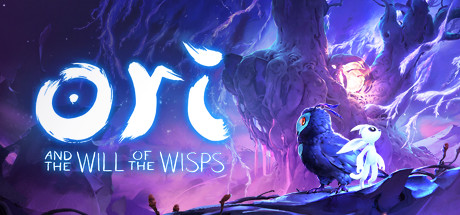
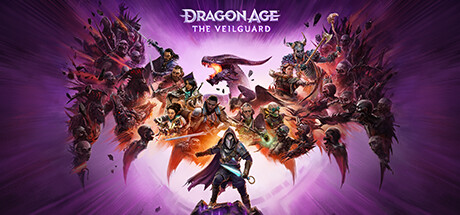
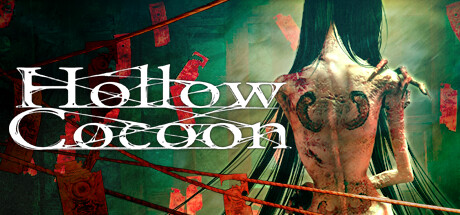
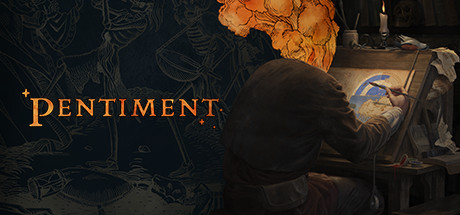

Match Dimensions Explained
❓Frequently Asked Questions
Why does Helck feel so similar to Disco Elysium even though one’s a fantasy manga and the other’s a detective RPG?
It’s all about that layered melancholic exploration and political thriller DNA—both dig deep into broken systems and morally ambiguous characters. Helck’s grim world-building, like the crumbling empire and morally gray alliances, mirrors Disco Elysium’s Rainy City: think of how Helck’s confrontation with the corrupt Holy Knight Order echoes your tense interrogations of union leaders or city officials in Disco Elysium, where every choice unravels another layer of institutional rot.
Is there an anime or live-action adaptation of Helck that captures its tone, like Beyond Good and Evil’s cinematic conspiracy vibe?
Not yet—but if you love how Beyond Good and Evil™ weaves investigative urgency with emotional weight (like Jade uncovering the DomZ cover-up while grieving her missing brother), you’ll recognize that same blend in Helck’s pacing and stakes. The game’s political thriller dimension—especially its themes of propaganda, rebellion, and sacrifice—lines up tightly with BG&E’s tone, not just its art style.
How accurate is the comparison between Helck and Hollow Knight for someone who loves atmospheric sadness and quiet heroism?
Very accurate—both lean hard into melancholic exploration and emotional narrative, but in different ways: Hollow Knight’s silent protagonist navigating Hallownest’s decaying ruins (like the Abyss or City of Tears) mirrors Helck’s lone-wolf resolve amid fallen kingdoms and hollowed-out ideals. That bittersweet beauty in Hollow Knight’s OST and art style? It’s the same vibe as Helck’s quieter, character-driven moments—like when Helck pauses mid-battle to reflect on lost comrades, much like the Knight remembering the Pale King’s legacy.
What if I love Tank Universal’s mix of neon sci-fi combat and emotional weight—what’s the best Helck-like game for that specific combo?
Tank Universal stands out for blending tactical tank warfare with raw emotional narrative—and the closest match on this list is Assassin’s Creed™: Director’s Cut Edition. Its political thriller dimension (think Altaïr exposing Templar corruption in Jerusalem) plus melancholic exploration (wandering ancient cities at dusk, reflecting on betrayal and purpose) hits that same dual note: high-stakes action grounded in personal loss and ideological tension—just swap tanks for hidden blades and Tron grids for Masyaf rooftops.