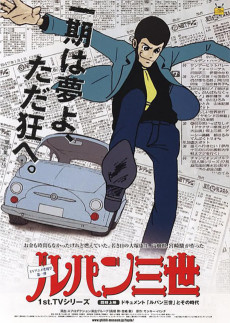
Lupin the 3rd
Hard-boiled, cocky, classy and silly. These words only begin to describe the amazing master thief Lupin the Third. With the help of some quick gunplay by his partner Jigen, Lupin takes on the world in elaborate heists, classic car chases, and nasty explosions. Fujiko, a buxom redhead with a penchant for betrayal, always gets tangled up in Lupin's capers. The stoic but swift swordsman Goemon is just as inclined to kill Lupin as he is to help him. And Lupin can never seem to lose the relentless Tokyo Police Inspector Zenigata. What sort of trouble will this band of misfits get into next?
(Source: Discotek Media)
📺Anime Details
📝Editorial Analysis
The screech of tires on wet asphalt—Lupin’s red Fiat 500 fishtailing around a Tokyo corner, rear window shattered, Jigen leaning out with a revolver spitting fire, Fujiko’s laugh cutting through the rain like a shard of glass. Lupin’s grin is all teeth and zero apology, one hand on the wheel, the other holding a Fabergé egg he just lifted from a moving armored van. A police siren wails—not urgently, but habitually, like background static in a jazz club. This isn’t chaos. It’s rhythm: cocky, classy, silly, hard-boiled—all at once, never resolving.

That’s the feeling Lupin the 3rd lives inside: irreverent momentum. Not hope, not despair—but velocity with style. It doesn’t ask you to believe in justice or redemption. It asks you to feel the wind in your hair as you vault over a balcony rail, pistol-whip a guard mid-air, and land rolling into a tuxedoed crowd where no one blinks. The world isn’t moral—it’s textured: cigarette smoke in a mahogany lounge, the clink of ice in a highball glass, the weight of a vintage Beretta in your palm, the way Goemon’s katana hums before it cuts. It’s adult not because it’s grim, but because it assumes you understand that loyalty is negotiable, betrayal is choreographed, and every heist is both a con and a confession. You don’t root for Lupin—you root for the flair of his refusal to be pinned down. That’s the ache beneath the laughter: freedom as performance, fragile and dazzling.
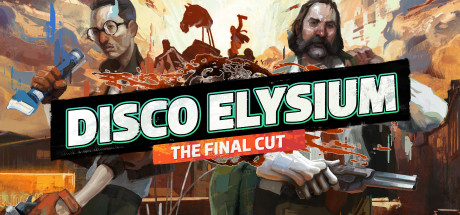
Disco Elysium - The Final Cut shares that same melancholic exploration—not of ruins or tombs, but of self-erasure in a city that eats ideologies for breakfast. Its description calls it a “Political Thriller, Neon Noir, Melancholic Exploration,” and the player review nails the resonance: “Capital has the ability to subsume all critiques into itself. Even those who would critique capital end up reinforcing it instead.” That’s Lupin’s entire existence—dodging Interpol, mocking the mafia, stealing from oligarchs—yet never dismantling the system, only dancing on its fault lines. Both works treat institutions as scenery, not stakes. Lupin’s chases feel like HM’s internal monologues made kinetic: all swagger masking exhaustion, all wit a shield against meaninglessness.
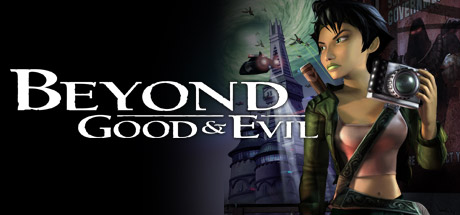
Beyond Good and Evil™ mirrors Lupin’s neon noir texture and political thriller pulse—but through Jade’s eyes, not Lupin’s smirk. She’s no thief, but she’s just as fugitive: a reporter unspooling state lies while dodging surveillance drones and propaganda broadcasts. The description says she must “expose a terrible government conspiracy” with her “loyal pig friend Pey’j”—a dynamic echoing Lupin’s ragtag crew, where trust is tactical, not sentimental. And that player review—“Crazyyy game! Play the 20th Anniversary edition tho…”—captures the same affectionate, slightly exasperated devotion fans bring to Lupin the 3rd: loving the mess, the charm, the stubborn refusal to polish away the rough edges. Both reject binary morality; both find poetry in the grime of resistance that looks, at first glance, like just another job.
The Tomb Raider trilogy—Legend, Anniversary, and Underworld—all carry Lupin the 3rd’s adult & dark seinen gravity and tactical warfare precision, but folded into archaeology instead of larceny. Their descriptions emphasize Lara “travel[ing] the globe to remote, exotic locales,” “retrac[ing]… original genre-defining adventure,” and “explor[ing] exotic locations… designed with incredible attention.” That’s Lupin’s world too—Kyoto temples, Monte Carlo casinos, Casablanca docks—not as backdrops, but as characters: intricate, dangerous, alive with history and hidden doors. The player reviews lean into this: “It is a nice game not great but one will enjoy…” and “In my mind this is the best Tomb Raider game…”—that split between reverence and realism, between awe and weariness, is pure Lupin. He doesn’t conquer places—he converses with them, pistol in hand, hat tilted just so. Lara’s silent intensity and Lupin’s flamboyant restlessness are two sides of the same coin: the solitary expert moving through a world that rewards neither purity nor surrender, only grace under pressure.
This pairing sings for the viewer who watches Lupin leap off a train and thinks not “How did he survive?” but “What did that wind smell like?”—for the player who reloads a failed dialogue check in Disco Elysium not to win, but to hear the detective’s voice crack one more time. It’s for people who love style as substance, who find dignity in the getaway, poetry in the pistol slide, and deep, quiet comfort in stories where no one gets saved—but everyone, somehow, gets seen.
🎮74 Games That Match the Vibe



















































Match Dimensions Explained
❓Frequently Asked Questions
Why does Beyond Good and Evil feel like Lupin the 3rd despite having no heists?
It’s all in the vibe: Jade’s sly, resourceful journalism—smuggling intel past authoritarian guards, improvising with her camera and stun gun, and bantering with Pey’j like Lupin does with Jigen—hits that same breezy-but-brainy caper energy. The neon-noir city of Hillys, political thriller stakes, and melancholic exploration (like sneaking through the Security Tower or uncovering propaganda reels) mirror Lupin’s blend of wit, rebellion, and world-weariness—no lockpicks required.
Is there a Lupin the 3rd video game adaptation?
No official Lupin the 3rd video game exists—not on modern consoles or PC. But if you’re craving that exact flavor (charming rogue, globetrotting intrigue, stylish action), Tomb Raider: Legend nails the *spirit*: Lara’s confident swagger, globe-hopping artifact hunt, and moody, adult-seinen tone (especially in her flashbacks to her father’s disappearance) channel Lupin’s mix of suave mystery and emotional weight.
Beyond Good and Evil vs. Disco Elysium—which is better for Lupin-style cleverness?
Go with Beyond Good and Evil if you want Lupin’s playful, agile cleverness—Jade disarms guards with quick thinking, hacks security systems mid-chase, and outmaneuvers propaganda bots like Lupin dodges Interpol. Disco Elysium trades that kinetic charm for deep, melancholic, politically sharp detective work—more like a brooding, hungover Arsène Lupin writing manifestos in a rain-soaked alley than pulling off a glittering heist.
What’s the best ‘Lupin the 3rd’-like game when you want stylish, globe-trotting adventure with emotional weight?
Tomb Raider: Anniversary is your pick—it’s got that classic Lupin rhythm: Lara jetting from coastal ruins to jungle temples, solving environmental puzzles with panache, and wrestling with legacy and loss (her mother’s fate, her father’s obsession) just like Lupin grapples with his lineage and code. The enhanced controls, tight platforming, and adult-seinen tone make every tomb feel like a set piece from a Lupin film—dramatic, precise, and quietly soulful.