Kane and Lynch: Dead Men™
Kane and Lynch: Dead Men is the new action shooter franchise by Io-Interactive, creators of the multi-million selling Hitman series. Kane & Lynch: Dead Men follows the violent and chaotic journey of two men - a flawed mercenary and a medicated psychopath - and their brutal attitude towards right and wrong.
🎮Game Details
💬What Players Say
"Good action game with that feels like a best-of of gunfight action movies. You are fighting in the jungle, in a prison, in a skyscraper, on the street of a city – all locations that have been used in movies. But it is great to have the freedom to decide yourself how to manage these situations...."
"At points, this game rips off the film Heat in more ways than The Dark Knight did in 2008. But I love coming back to this one and getting a replay in. It's so gritty and unforgiving in its storytelling...."
"Es un juego simple, de disparar a todo lo que se mueva. Es una versión simplificada y peor del Freedom Fighters, aunque con mejores gráficos. Si juegas a algo tan antiguo, entonces no te importan mucho los gráficos, juega al Freedom Fighters...."
📝Editorial Analysis
Rain slicks the asphalt of a nameless city street—not neon-drenched, not cinematic, but wet, heavy, and cold. You’re Kane, breathing hard, shotgun shell casing still warm in your palm, Lynch screaming something unintelligible over gunfire that doesn’t stop—not for cover, not for breath, not for logic. The camera shakes like it’s holding its breath too. This isn’t a set-piece; it’s a rupture. It’s the jungle heat pressing in like a fever dream, then the prison’s concrete stench, then the vertigo of a skyscraper ledge—each location ripped from the same raw nerve as Heat, as one player said, “in more ways than The Dark Knight did in 2008.” That’s the feeling: no reprieve, no moral intermission—just two men moving through violence like it’s gravity.
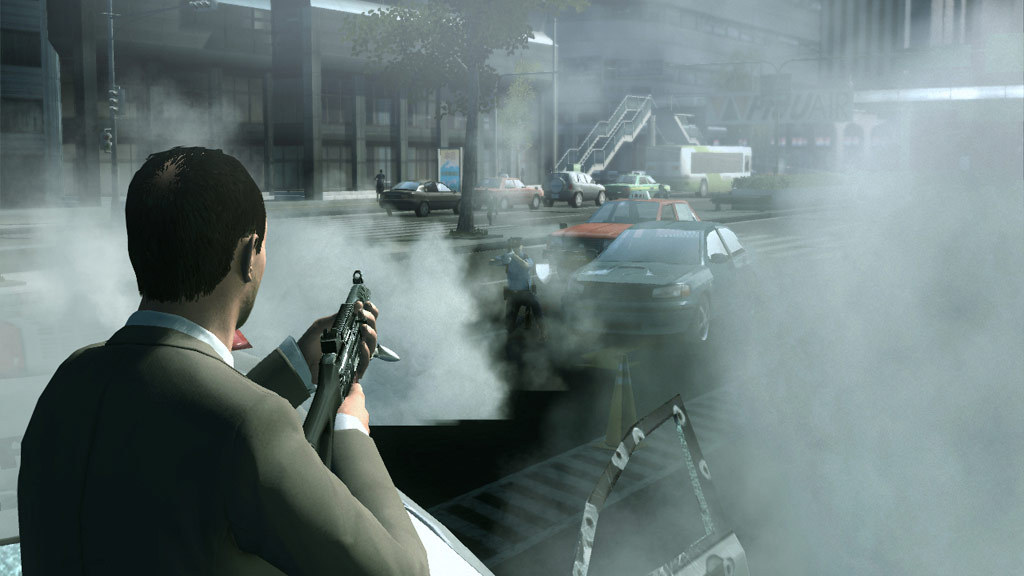
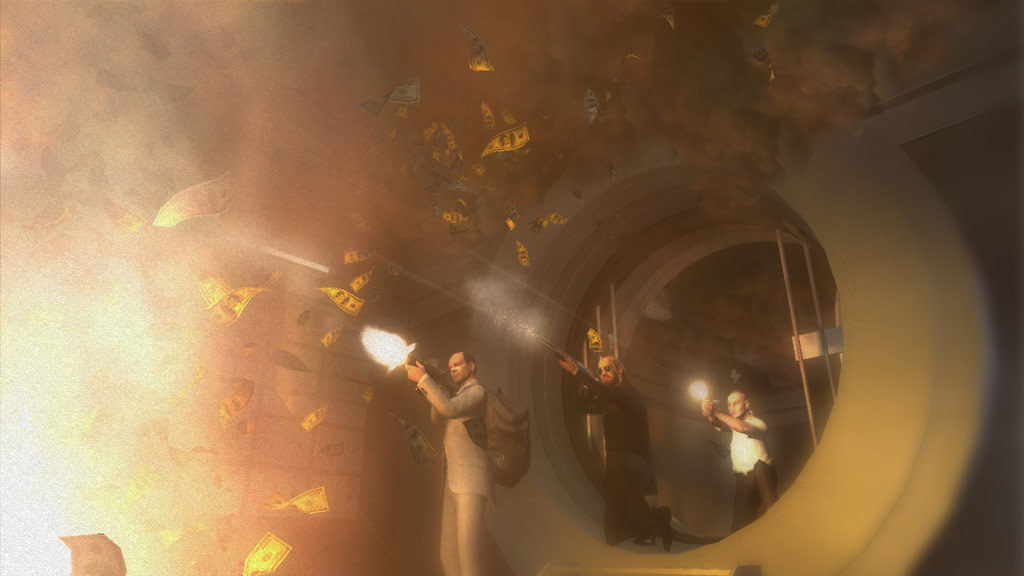
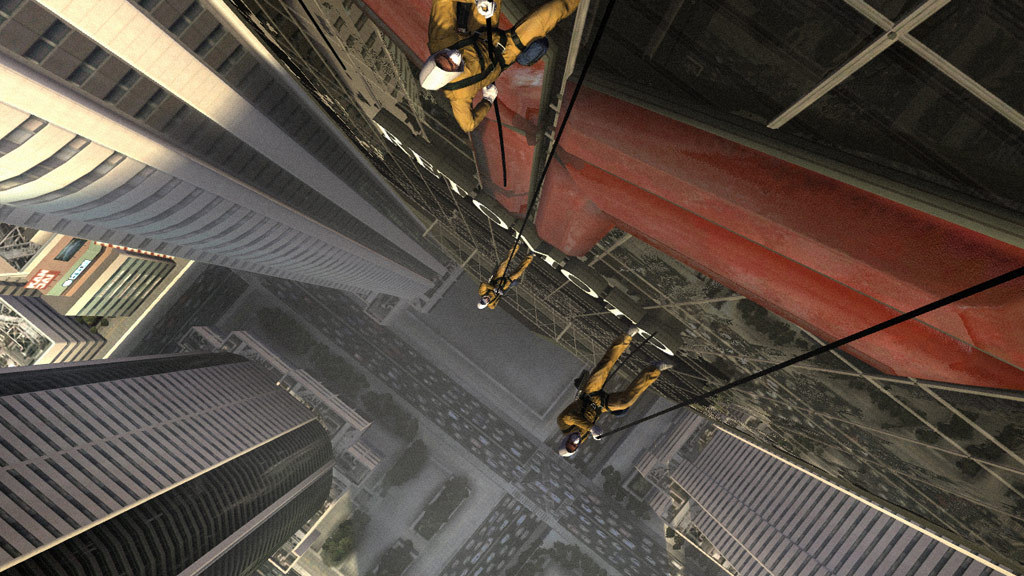
What makes Kane and Lynch: Dead Men™ unique isn’t its gunplay or its plot—it’s how relentlessly uncomfortable it is to inhabit. It doesn’t ask you to empathize. It forces you to endure. Kane’s weary pragmatism and Lynch’s medicated volatility aren’t character arcs—they’re pressure valves on a system already leaking. There’s no “right” here, only survival calibrated to the nearest muzzle flash. The storytelling is gritty and unforgiving, as one reviewer put it—not because it’s cruel, but because it refuses to soften the weight of consequence. You don’t feel heroic. You feel exposed. Every reload, every misstep, every moment Lynch snaps mid-fight—it all lands with the physicality of a punch you didn’t see coming. It’s less about action as spectacle, more about action as erosion: of trust, of sanity, of self.
That emotional DNA pulses strongest in GANGSTA., where the neon doesn’t glamorize—it stains. The alleys of Ergastulum aren’t backdrops; they’re psychological terrain, just like the jungle or the prison in the game. Both trade in Adult & Dark Seinen realism—not fantasy, not allegory, but the slow burn of compromised people making ugly choices in systems that offer no clean exits. The tactical warfare isn’t about precision—it’s about improvisation under duress, shotguns jamming, allies turning, plans collapsing into chaos. You feel the same claustrophobia in Nichola’s exhausted glances as you do when Kane’s radio crackles with static instead of orders.
Then there’s AJIN: Demi-Human, where immortality isn’t power—it’s burden. Like Lynch’s fractured psyche or Kane’s hollow-eyed resignation, Kei Nagai’s existence is defined by what he can’t unsee, what he can’t undo. The neon noir isn’t aesthetic—it’s the visual echo of dissociation: flickering lights, distorted reflections, streets that look beautiful until you realize no one’s safe in them. Tactical warfare here isn’t strategy—it’s triage. Every fight is a desperate bid to stay human while the world treats you as disposable. That same unforgiving rhythm lives in both: no checkpoints in morality, no respawns in conscience.
And Bungo Stray Dogs 2: Walking Alone—not the flashy ensemble, but this specific season, where the neon bleeds into shadow and even the most gifted fighters move like they’re carrying something too heavy to name. The adult & dark seinen tone isn’t about gore; it’s about consequence made visible: a scar, a hesitation, a line crossed that can’t be uncrossed. Like Kane choosing loyalty over survival—or Lynch choosing chaos over silence—the characters operate inside ethical freefall. Their tactical warfare feels physical, urgent, improvised—not choreographed, but lived. You see the tremor in their hands before the shot. You hear the breath catch before the lie.
This isn’t for the viewer who wants catharsis. It’s for the one who watches Lupin the 3rd not for the heists, but for the way Jigen’s cigarette smoke hangs in the air after the gunshot—thick with exhaustion, with history, with the quiet understanding that no win lasts. It’s for the player who replays Kane and Lynch: Dead Men™ not for high scores, but because that rain-slicked street still feels real, because Lynch’s laugh still unsettles, because Kane’s silence still speaks louder than any cutscene. It’s for the person who knows that gritty, unforgiving, neon noir isn’t style—it’s a frequency. And once you tune in, you don’t just watch or play—you recognize yourself in the fracture.
→5 Anime That Match the Vibe

Shadows, cigarettes, and moral ambiguity — noir at its most stylish.
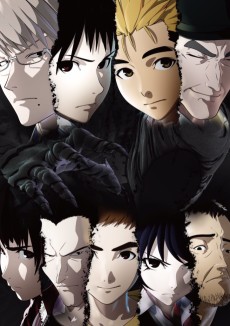
Neon-drenched alleyways pulse with the same suffocating dread in Kane’s blood-slicked escape from Tokyo’s Yakuza and Kei Nagai’s first disorienting resurrection—both trapped in bodies that refuse to stay dead. 🌃 Neon Noir isn’t just backdrop; it’s moral static, warping loyalty and identity as Kane’s fractured psyche mirrors Kei’s alienation after becoming Ajin. Unlike most survival narratives, neither work romanticizes resilience—they weaponize exhaustion, making tactical warfare feel less like strategy and more like desperate, instinctual flinching.

Ergastulum’s rain-slicked alleys, choked with neon reflections and moral static, mirror the crumbling Miami high-rises where Kane and Lynch trade bullets and betrayals. This isn’t just shared 🌃 Neon Noir—it’s a mutual exhaustion with redemption arcs: Nicolas Wiggins’ weary pragmatism echoes Lynch’s unraveling psyche, while both reject heroic posturing in favor of tactical, brutal survival. Surprisingly, their resonance lies in how neither flinches from the cost of loyalty—paid in blood, silence, or the slow erosion of self.
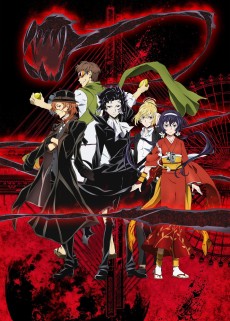
Neon-drenched alleyways in *Kane and Lynch: Dead Men*—where Kane’s cold pragmatism clashes with Lynch’s unraveling psyche—echo the fractured, rain-slicked Tokyo of *Bungo Stray Dogs 2: Walking Alone*, an OVA steeped in **Neon Noir** tension as Dazai confronts his own violent past. Unlike most supernatural anime, this OVA leans into psychological grit rather than spectacle, mirroring the game’s unflinching **Adult & Dark Seinen** tone. The resonance isn’t in plot, but in how both weaponize disorientation—Lynch’s hallucinations, Dazai’s calculated self-erasure—to make trauma feel tactile, immediate, and dangerously stylish.
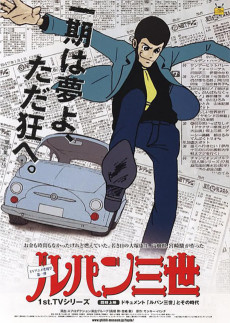
Lupin’s rooftop chase in *Part II*’s “The Woman Called K” — all rain-slicked neon and split-second pistol work — hits the same *Neon Noir* pulse as Kane’s blood-soaked, strobing casino heist. Where Jigen’s calm lethality mirrors Lynch’s unstable precision, both works weaponize chaos not for spectacle alone, but as existential texture: survival isn’t heroic, it’s a grim, tactical calculus under flickering urban decay. That shared *Adult & Dark Seinen* grit—unflinching, morally frayed, darkly comic—makes their resonance startlingly coherent.
Match Dimensions Explained
❓Frequently Asked Questions
Why does GANGSTA. feel so much like Kane and Lynch: Dead Men?
Because both throw you into morally bankrupt, neon-drenched urban chaos where loyalty is fragile and violence is transactional—like when Nicolas Brown and his crew execute a brutal, rain-slicked ambush in the St. Kilda district, mirroring Kane & Lynch’s prison break shootout where every cover point feels desperate and every ally might betray you on a whim.
Is there an anime adaptation of Kane and Lynch: Dead Men?
No—there’s never been an official anime adaptation, but AJIN: Demi-Human hits that same visceral, tactical grit: just like Kane & Lynch’s ‘Dead Man Walking’ finale where Lynch’s unstable psyche fractures under pressure, Kei Nagai’s deteriorating control over his demi-human powers creates that same raw, unpredictable tension in high-stakes urban firefights.
How does Bungo Stray Dogs 2: Walking Alone compare to Lupin the 3rd for Kane and Lynch fans?
Lupin leans into stylish heist chaos—think Fujiko’s double-crosses and Jigen’s sniper precision echoing Kane’s cold pragmatism—while Bungo Stray Dogs 2 doubles down on psychological warfare and squad-based betrayal, like Atsushi’s breakdown during the Port Mafia siege mirroring Lynch’s unraveling in the skyscraper assault, both with that same unforgiving, adult-seinen edge.
What’s the best anime like Kane and Lynch for that gritty, no-hope-in-the-rain vibe?
GANGSTA. nails it—especially the ‘Night Shift’ arc where Worick and Nicolas storm a drug lord’s compound in torrential downpour, silencers hissing, flashlights cutting through fog, and every bullet carrying real consequence—exactly like Kane & Lynch’s jungle extraction where the camera shakes, ammo runs low, and trust evaporates faster than blood dries.