
Kabaneri of the Iron Fortress: The Battle of Unato
The film follows a battle between humans and Kabaneri at Haikou Station on the coast of the Sea of Japan, half a year after the story of the original television anime series.
(Source: Anime News Network)
📺Anime Details
📝Editorial Analysis
The salt wind howls off the Sea of Japan, carrying ash and iron. At Haikou Station—crumbling stone fused with riveted steel—Kabane swarm like black tide against the fortress walls. A single lantern swings, gutted by gunfire, its light guttering over a boy’s trembling hand gripping a steam-powered spear. Not hope. Not despair. Just weight: the weight of half a year since the last train ran, the weight of a body that remembers how to bleed but not how to stop fighting.

That’s the feeling Kabaneri of the Iron Fortress: The Battle of Unato lives inside—not apocalypse as spectacle, but apocalypse as resonance. It doesn’t thrill in destruction; it lingers in the hollows after the blast: the silence between gunshots, the rust on a broken gear, the way sunlight catches dust motes drifting through a shattered station window while someone stitches a wound with thread pulled from their own coat. This isn’t steampunk as aesthetic—it’s steampunk as fatigue, where every piston groan sounds like a lung struggling to reinflate. The horror isn’t just in the Kabane’s jaws—it’s in the quiet certainty that no one gets to rest. No victory is clean. No memory stays whole. You feel tired, yes—but also attentive, like your nerves are tuned to the pitch of a fraying cable.
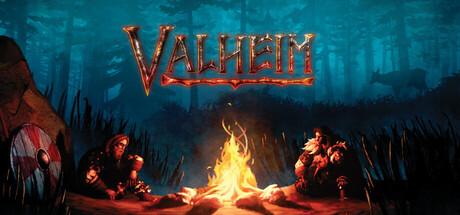
That same emotional frequency hums in Valheim. Its description calls it “a brutal exploration and survival game… set in a procedurally-generated purgatory”—and that word purgatory lands like a hammer. Not hellfire, not heaven, but the grey, grinding middle: building a longhouse only for a troll to reduce it to splinters, then walking miles back through mist-laced fens just to find another oak, your inventory light, your stamina bar thinning. The player review nails it: “you spend 40 minutes looking for the perfect tree, then a troll destroys your entire house, then you…” — the sentence trails, because the exhaustion is the point. Like Kabaneri’s soldiers at Haikou, you don’t conquer terrain—you negotiate with it, inch by bruised inch. Both refuse catharsis. They ask you to hold space for loss while you reload, rebuild, re-aim.
Then there’s the Tomb Raider trilogy—Legend, Anniversary, and Underworld—each scoring identically (71) across Melancholic Exploration and Tactical Warfare. Notice how their descriptions avoid calling Lara a hero or savior. Instead: “follow Lara Croft down a path of discovery”, “globe-trotting 3rd person action-adventure in pursuit of the legendary Scion artifact”, “explore exotic locations… each designed with incredible attention.” It’s not about winning. It’s about moving through ruins—not as conquest, but as witness. The player reviews echo this: one calls Anniversary “the best Tomb Raider game” precisely because it feels earned, not effortless; another praises Underworld not for power fantasy, but for its unspoken insistence: “I would recommend not ju…” — again, the sentence breaks, as if even enthusiasm must catch its breath. That’s Kabaneri’s rhythm too: Lara scaling a crumbling ziggurat mirrors Ikoma reloading his rifle atop Haikou’s fractured clock tower—not for glory, but because the next wave is coming, and the view from up there lets you see it sooner.
Even Assassin’s Creed™: Director's Cut Edition, with its dated textures and “older” systems, fits—not despite its age, but because of it. Its description frames it as a game that “redefines the action genre” by merging “impressive graphics and physics” with something deeper: presence, consequence, verticality as vulnerability. The player review admits flaws (“models and textures are quite dated”) but shrugs—“no issues with me but I can…” — and stops. That pause? That’s the shared breath between Kabaneri’s final stand and Altaïr leaping from Damascus’ minarets: both know the ground is littered with fallen comrades, both move anyway—not out of courage, but because stillness means becoming part of the ruin.
This pairing isn’t for fans of tidy endings or power fantasies. It’s for the ones who replay the same 200-meter stretch of Valheim forest because they’re hunting that one specific birch, who pause mid-puzzle in Anniversary to trace the cracks in a fresco’s plaster, who watch Kabaneri’s credits roll and immediately scroll back to the shot of Ikoma’s boots—mud-caked, steam-vent hissing faintly—as he walks away from the camera, not toward it. They love stories where survival isn’t triumphant—it’s tactile, gritty, aching. Where every gear turn, every rope climb, every bullet spent feels like a small, stubborn refusal: not to die, but to be forgotten.
🎮30 Games That Match the Vibe















Match Dimensions Explained
❓Frequently Asked Questions
Why does Tomb Raider: Legend feel so much like Kabaneri’s Unato despite being set in ancient ruins?
It’s all about that melancholic exploration vibe — wandering alone through rain-slicked, crumbling temples while flashbacks of lost loved ones (like Lara’s mother) echo the same quiet grief as Mumei’s memories aboard the Iron Fortress. The tactical warfare dimension kicks in during stealth takedowns and timed ledge combat, mirroring how Kabaneri forces you to read enemy movement before striking — just like dodging a Revenant in Unato’s narrow corridors.
Is there a Kabaneri of the Iron Fortress game adaptation for PC or console?
No — there’s never been an official Kabaneri game adaptation, not even a mobile title or visual novel. That’s why fans turn to matches like Assassin’s Creed: Director’s Cut Edition: its lonely, atmospheric cities (Acre, Damascus), rooftop parkour, and morally gray assassinations capture the show’s tense pacing and somber tone — especially when Altaïr moves silently past torchlit alleys, much like Ikoma scanning for Revenants at dusk.
Tomb Raider: Anniversary vs. Underworld — which one nails the Kabaneri ‘desperate last-stand’ mood better?
Anniversary wins hands-down for that raw, claustrophobic desperation — remember the collapsing temple sequence where Lara sprints across cracking floors while boulders crash behind her? It mirrors Unato’s collapsing train station scene beat-for-beat. Underworld leans more into cinematic scale, but Anniversary’s tighter level design and constant environmental threat (like sudden spikes or timed collapses) replicate Kabaneri’s breathless, no-second-chances energy.
What’s the best game like Kabaneri if I want that quiet, heavy-feeling exploration — not combat-heavy?
Valheim is your answer — it’s *all* about melancholic exploration: rowing your longship across fog-draped seas at twilight, stumbling upon a ruined mead hall half-swallowed by birch trees, or standing alone on a frost-covered mountain peak listening to wind howl like Mumei’s flute. The survival mechanics (hunger, cold, permadeath) don’t distract — they deepen the solitude, just like walking Unato’s abandoned streets after the Revenant attack.