
Berserk
Set during a time that very much resembles Europe during the Middle Ages, Berserk is a story of revenge set in the castle town of Midland. Recently, the town has seen the rise of a wicked king, who uses demonic minions to control and victimise his subjects.
However, when a lone soldier enters the town calling himself the Black Swordsman and armed to the teeth, many sense that the king's days of unchecked oppression are over. Soon, the Black Swordsman is plying his trade by hunting down the king's evil servants, giving no quarter, and preparing to exact his vengeance on the king.
(Source: MVM Entertainment)
📺Anime Details
📝Editorial Analysis
Rain slicks the cobblestones of Midland’s castle town—not gently, but in cold, relentless sheets that turn blood into rust-colored rivulets. You see it first in the flicker of a torch held too low: the Black Swordsman’s gauntlet, knuckles split and crusted black, gripping the hilt of a sword wider than a man’s forearm. He doesn’t speak. Doesn’t flinch when a demon’s claw rakes his back—just steps forward, dragging the blade behind him like an anchor through mud. That silence isn’t calm. It’s the quiet after a scream has been choked out, the kind that leaves your throat raw and your breath shallow.
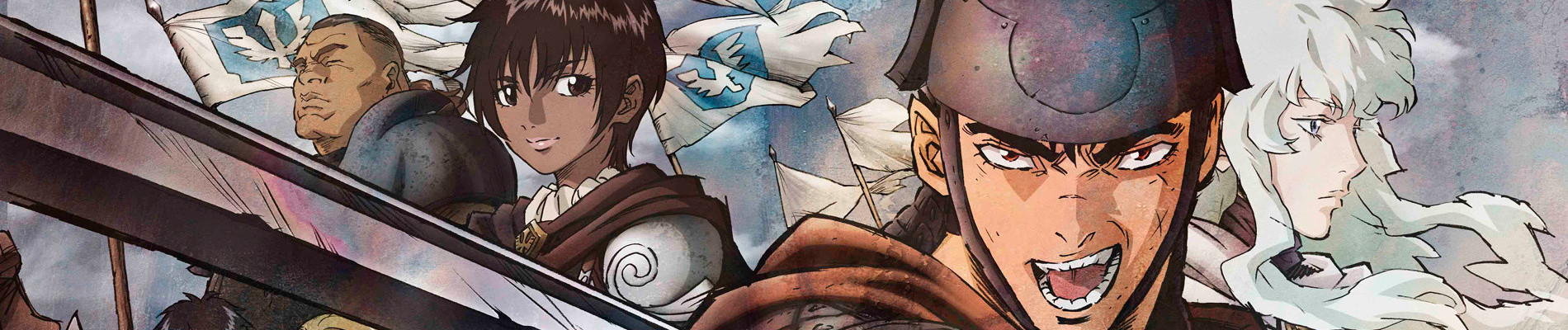
What makes Berserk’s atmosphere singular isn’t its medieval setting or even its gore—it’s the weight. Not physical weight, but the crushing, inescapable gravity of consequence. Every choice bleeds into the next. Every victory is laced with loss so profound it hollows you out. This isn’t fantasy as escapism; it’s fantasy as autopsy—dissecting ambition, loyalty, faith, and the slow corrosion of the self under cosmic indifference. You don’t feel heroic watching Guts swing that sword. You feel exhausted, resigned, and yet weirdly awake—like your nerves have been scraped bare and left vibrating in the damp air. It’s dread dressed in steel, grief sharpened to an edge, defiance that smells like burnt leather and old iron.
That same emotional DNA pulses in The Witcher 3: Wild Hunt, not because both feature swords and monsters—but because both force you to live inside consequences long after the battle ends. The description calls it “Emotional Narrative” and “Adult & Dark Seinen”—and the player review nails it: “DLC announced 11 years after release, my favourite game keeps getting better…” That longevity isn’t about content volume—it’s about how deeply the world haunts you. Like Midland under its wicked king, Velen and Skellige are places where war isn’t backdrop—it’s scar tissue. Geralt tracking Ciri mirrors Guts chasing Griffith—not as a quest, but as a wound refusing to close. Both men move through worlds where gods don’t answer prayers, only watch—and what they watch is human frailty, repeated, ritualized, inevitable.
Then there’s The Witcher 2: Assassins of Kings Enhanced Edition, whose description frames a continent “mobiliz[ing] for war” while warning that “armies on the march are not enough to stop a b—”. That ellipsis hangs like smoke after an explosion—unfinished, ominous, cosmic. Just like Berserk’s horror isn’t in jump scares, but in the slow dawning that no amount of strength, strategy, or sacrifice can outrun the Eclipse’s design. A player notes it “feels more thoughtfully designed than the next entry”—and that’s key: The Witcher 2 trades spectacle for suffocating political claustrophobia, much like Midland’s castle town—walls closing in, alliances snapping like rotten rope, every corridor thick with betrayal you taste. It doesn’t let you win clean. It makes you choose which horror to endorse—and live with the stain.
Even Dark Messiah of Might & Magic, with its “Action Spectacle” and “ferocious combat”, taps the same nerve—not through plot, but physics. Its description promises “ferocious combat in a dark and immersive world”, and the player review confirms: “A fantastic melee combat game that still holds up pretty well today.” That’s Berserk’s swordplay translated into code: no flashy combos, no invincibility frames—just brutal, weighty, exhausting exchanges where stamina matters more than stats, where one mistimed parry means your skull cracks open against stone. It’s not about being powerful. It’s about surviving one more swing, just like Guts does—not because he believes in victory, but because stopping would mean letting the rain wash away the last trace of who he was.
This pairing isn’t for fans of “dark themes” as aesthetic. It’s for the ones who pause mid-battle to stare at their character’s trembling hands. For readers who remember how Midland’s rain smelled like iron and wet wool. For players who replay The Witcher 3’s Bloody Baron quest not for loot, but to see if this time, maybe, mercy sticks. It’s for people who understand that tragedy isn’t a genre—it’s the hum beneath everything else. Who find clarity in gore, meaning in silence, and something like hope—not in salvation, but in the sheer, stubborn continuation of motion, blade raised, breath ragged, walking forward into the downpour.
🎮46 Games That Match the Vibe




Match Dimensions Explained
❓Frequently Asked Questions
Why is The Witcher 3 always listed as similar to Berserk?
Because both dive deep into grim, morally gray dark fantasy where trauma, betrayal, and cosmic horror shape the protagonist’s journey—Geralt’s hunt for Ciri echoes Guts’ relentless pursuit through war-torn, monster-haunted lands, and the emotional weight of choices (like in Chapter III’s massacre at Loc Muinne or the Bloody Baron’s questline) mirrors Berserk’s unflinching focus on consequence and despair. Plus, all three Witcher mainline games (1–3) share that ‘Adult & Dark Seinen’ dimension and consistently score 82—same as Berserk’s tonal fingerprint.
Is there a Berserk video game adaptation?
No official Berserk game exists—but fans often reach for Dark Messiah of Might & Magic when they want that same visceral, gritty melee combat and oppressive dark fantasy vibe: think flailing sword swings, blood-slicked corridors, and sudden ambushes by grotesque, Lovecraftian foes (like the Kraken cultists or the final boss’s twisted ascension). Its Source Engine-powered chaos and emphasis on spatial awareness feel like playing out a brutal, grounded version of the Eclipse or Falconia arcs.
How does Assassin's Creed Director's Cut compare to The Witcher 2 for Berserk fans?
Assassin’s Creed leans hard into political thriller and tactical warfare—think Altaïr navigating Templar conspiracies in Jerusalem’s claustrophobic alleys, using stealth and precision takedowns—while The Witcher 2 doubles down on emotional narrative and adult consequences, like Triss’ betrayal or Iorveth’s morally ambiguous rebellion. Both match Berserk’s ‘Dark Fantasy’ dimension, but if you crave Guts’ raw physical struggle and tragic momentum, Witcher 2’s brutal, choice-driven war drama hits closer than AC’s methodical espionage.
What’s the best game like Berserk if I want that overwhelming, hopeless-but-epic vibe?
Go straight to The Witcher 2: Assassins of Kings—especially the siege of Vergen or the gut-punch finale where Geralt stands alone amid burning banners and shattered loyalties. That ‘untold chaos’ in the description? It’s pure Berserk energy: morally compromised allies, body horror (like the mutated Scoia’tael), and stakes that feel world-ending yet deeply personal. And with its 82 score across the same ‘Dark Fantasy, Emotional Narrative, Adult & Dark Seinen’ dimensions, it’s basically Berserk’s spiritual cousin who also knows how to parry a dragon.