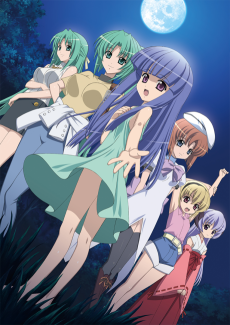
When They Cry Rei
The endless cycle of murders has been broken and Rika is finally able to settle down for a normal life with her friends. However, she is involved in a traffic accident and wakes up in a world where everything is different. A world where no one commited the sins that shaped them into the persons they are. It's up to Rika to discover the truth behind this world and whether or not it truly is perfect.
📺Anime Details
📝Editorial Analysis
The screech of tires isn’t loud—it’s muffled, like hearing it through water. Then silence, thick and warm, like sinking into a sunlit pond. Rika opens her eyes to a sky that’s too blue, birdsong too crisp, the scent of cherry blossoms too sweet. Her hand rests on pavement that feels unnervingly smooth—not cracked, not stained with old rain or tire marks. No blood. No panic. Just the quiet hum of a world that remembered how to breathe—but forgot why it ever held its breath.

That moment isn’t relief. It’s disorientation so deep it vibrates in your molars. When They Cry Rei doesn’t trade in jump scares or grand revelations—it trades in absence. The absence of trauma’s residue: no flinches at slammed doors, no sideways glances at mirrors, no unspoken contracts of vigilance between friends. This world is polished, placid, unburdened—and that’s what makes it terrifying. It doesn’t feel safe. It feels edited. You don’t just watch Rika question whether this peace is real—you feel the weight of every erased scar, every softened edge of personality, every friendship that never had to be forged in fire. It’s philosophy wearing slippers: quiet, domestic, but humming with ontological static. You think about causality not as physics, but as tenderness—how love, grief, and guilt aren’t flaws in the system, but the very syntax of becoming human.
Among the games that echo this frequency, BioShock Infinite stands out—not for its soaring city or gunplay, but for how its description frames Booker DeWitt as “indebted to the wrong people, with his life on the line,” forced to “rescue Elizabeth, a myst[ical]…” That phrase—a myst[ical]—trails off like a half-remembered dream, mirroring Rika’s own fractured grasp on what’s foundational and what’s fabricated. A player review admits, “I know that some people are still bitter about the Bioshock Infinite we could have gotten.” That wistfulness—the ache for an alternate version of a story, one where choices land softer, where consequences don’t metastasize—is pure Rei. Both ask: What if the wound had never opened? Would the person who grew around it even recognize themselves?
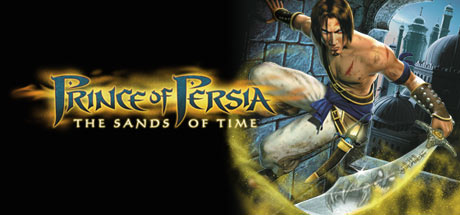
Then there’s the Prince of Persia trilogy—Warrior Within, The Two Thrones, and The Sands of Time—all sharing the same dimensional tag: Time & Memory, Adult & Dark Seinen. Their descriptions orbit inevitability: the Prince hunted by “Dahaka, an immortal incarnation of Fate”; returning home to find “his homeland ravaged by war”; drawing “a magic dagger” that unravels time itself. A review calls Warrior Within “a journey” defined by the Dahaka’s chase—still as goated as it was before. That persistence—the sense of being dogged by consequence, even across lifetimes—is kin to Rika’s quiet dread in Rei: she isn’t running from a monster, but from the lack of one. The Dahaka is memory given teeth; Rika’s new world is memory surgically removed. Both are haunted—not by ghosts, but by the shape of what’s missing.
Even Chains, the match-3 arcade game, resonates in its quietest dimension: Healing & Slow Life, Emotional Narrative. Its description is almost comically mundane—“link adjacent bubbles… clear enough till you can proceed”—yet players describe it as “connect 4 in nutshell,” a phrase that lands with startling tenderness. One review ends mid-thought: “- Des…” — cut off, unresolved, like a breath held too long. That’s the emotional texture of Rei: small, repetitive acts (making tea, walking to school, laughing with Keiichi) that feel sacred because they’re unburdened—yet fragile because they lack history’s anchor. Healing here isn’t dramatic—it’s tactile, rhythmic, nearly invisible. Like lining up three bubbles and watching them dissolve into light.
This pairing isn’t for fans of catharsis or closure. It’s for the ones who pause mid-step when sunlight hits dust motes just right—and wonder, What version of me made this moment possible? Who replay childhood games not for nostalgia, but to retrace the exact moment their heart first learned how to break and keep beating. Who read philosophy not to find answers, but to savor the weight of the question. They’re the quiet observers, the twin-souled thinkers, the shrine maidens tending altars to what almost was. They don’t want perfection. They want the tremor in the hand that holds it.
🎮23 Games That Match the Vibe




Match Dimensions Explained
❓Frequently Asked Questions
Why does When They Cry Rei match with BioShock Infinite and the Prince of Persia games?
It’s all about that heavy 'Time & Memory' dimension — Rei’s fragmented storytelling, unreliable narration, and looping revelations (like Rika’s repeated deaths and Hanyuu’s whispers) mirror how BioShock Infinite uses Elizabeth’s tears to fracture reality and Booker’s erased memories. Likewise, the Sands of Time trilogy leans hard into time manipulation as both mechanic and metaphor: the Prince rewinds seconds mid-combat just like Rei’s characters re-live trauma, and Dahaka’s relentless pursuit in Warrior Within echoes the inescapable cyclical dread of Hinamizawa’s curse.
Is there a visual novel adaptation of When They Cry Rei?
No — Rei is *itself* a visual novel, the sixth main entry in the When They Cry series, released in 2016 as a direct continuation of Higurashi’s lore. It’s not adapted *from* anything else, though fans often compare its emotional weight and slow-burn healing arc to Chains — which, despite being a match-3 game, scores 84 for 'Healing & Slow Life' and has players describing it as 'connect 4 in a nutshell', where calm repetition mirrors Rei’s quiet moments of recovery between horrors.
How does When They Cry Rei compare to Prince of Persia: The Sands of Time in terms of tone and pacing?
Both use time manipulation to explore guilt and consequence, but their vibes diverge sharply: Rei unfolds in hushed, dialogue-heavy scenes — think Rika sitting alone at the shrine gate or Keiichi’s fragile hope in the final arc — while Sands of Time balances tense acrobatic combat with witty banter (like the Prince and Farah’s bickering) and tactical platforming where 'locked directions' make every jump feel deliberate. Rei’s tension is psychological and internal; Sands’ is physical and kinetic — yet both earn their 83 score in 'Time & Memory' for how deeply time shapes identity.
What’s the best game like When They Cry Rei if I want something calming but emotionally resonant?
Chains is your perfect fit — it’s got that rare 84 score in 'Healing & Slow Life', and players call it 'relaxing' while still delivering emotional narrative weight. Unlike Rei’s oppressive dread, Chains gives you gentle physics-driven bubble-linking (think connecting 3+ same-color orbs to clear stages), creating a meditative rhythm that mirrors Rei’s quieter moments of reflection — like when Satoko tends the flowers at the Furude shrine, or when the group shares tea after surviving another cycle. It’s not dark, but it *feels* meaningful.